print, engraving
#
portrait
#
baroque
# print
#
old engraving style
#
portrait reference
#
pencil drawing
#
history-painting
#
engraving
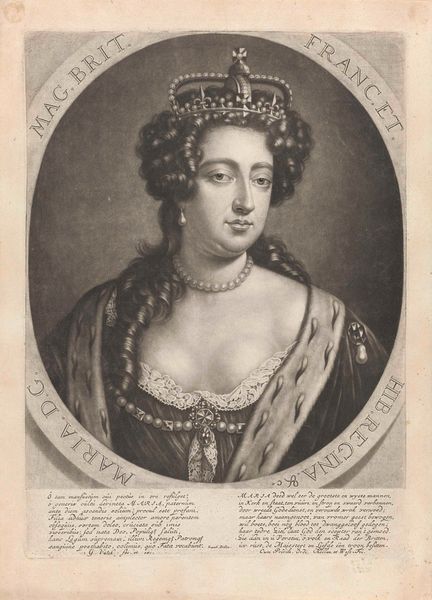
Dimensions: height 196 mm, width 135 mm
Copyright: Rijks Museum: Open Domain
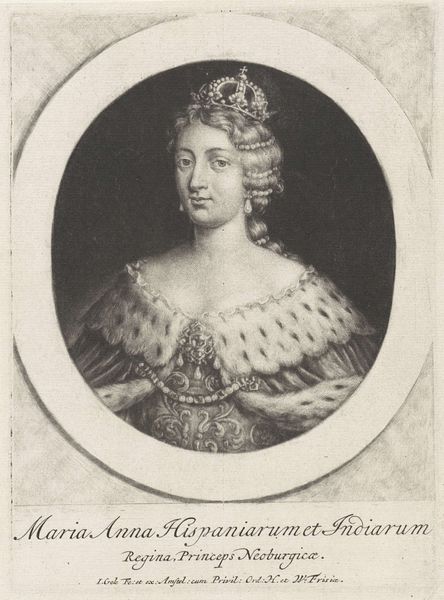
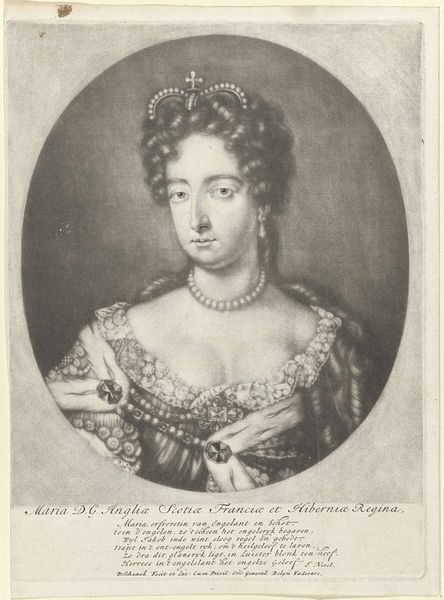
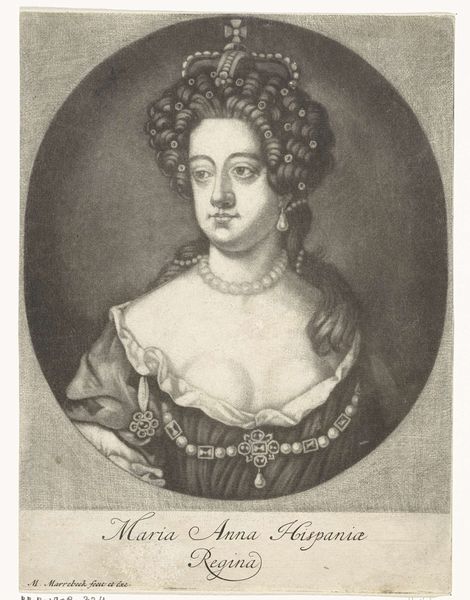
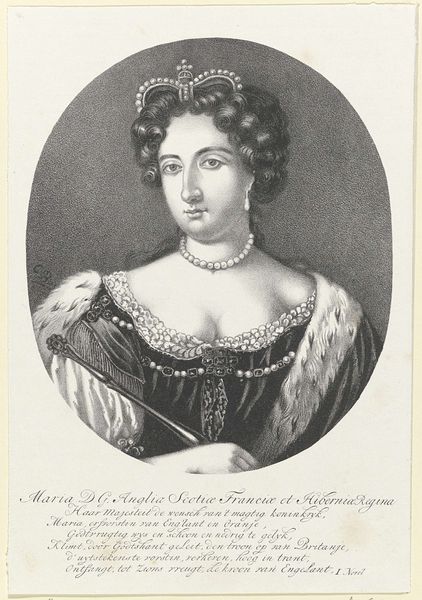
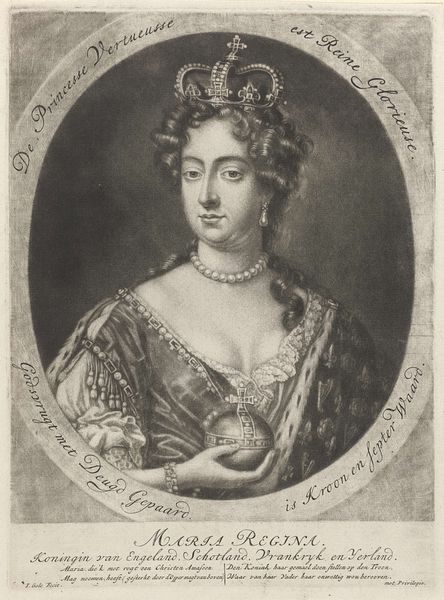
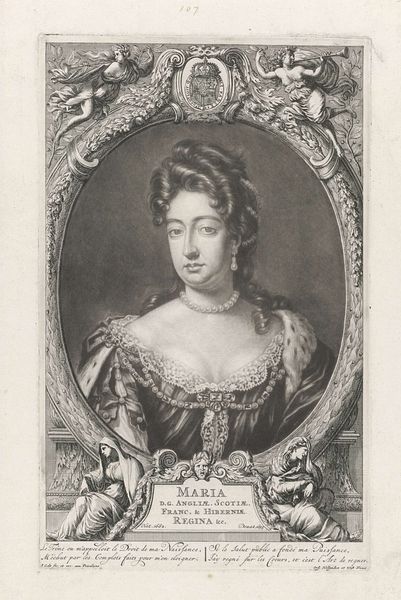
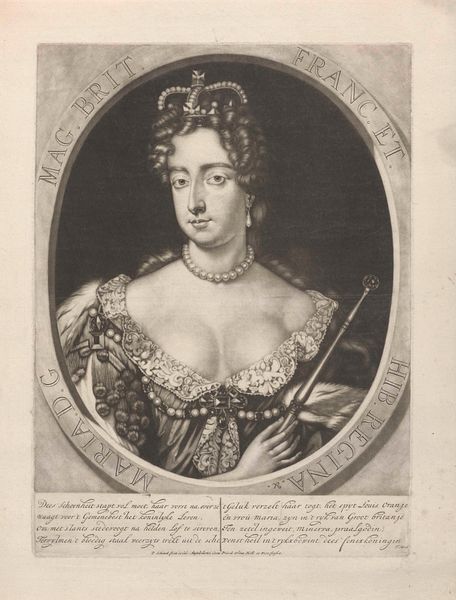
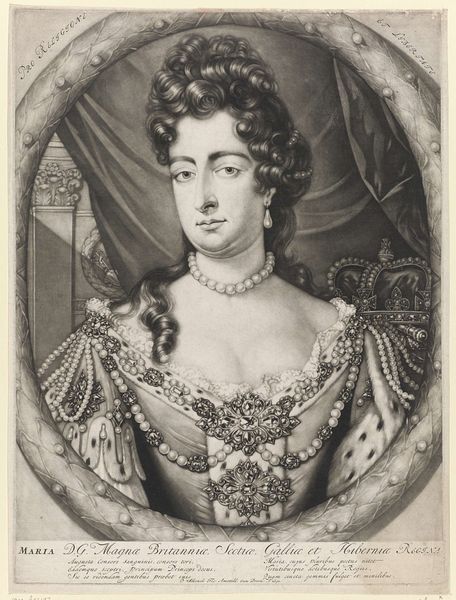
Curator: Pieter Schenk's engraving presents us with a formal portrait of Mary II Stuart, likely produced sometime between 1688 and 1711. You can find it here in the Rijksmuseum. Editor: My first impression is the overall softness, it’s delicate, almost dreamlike. The subtle gradations achieved in this print are remarkable. Curator: Indeed. The image is steeped in political symbolism. Mary, as Queen, became a figurehead of a new era in England following the Glorious Revolution, the context that shaped artistic production and reception during this period. Editor: Right, and Schenk renders her with incredible detail—the elaborate lace trimming her gown, the meticulous curls of her hair, her pearl jewelry—it's all quite elegant. The oval frame focuses attention right to the center, toward her face. It feels both intimate and stately. Curator: Consider also, the verses included below the portrait: an attempt, to cast her as a wise and beautiful ruler chosen by divine hand. Printmaking at the time was also experiencing rapid changes with innovative approaches spreading far and wide influencing more artists than ever before Editor: That contextual detail adds a richer dimension. But formally, it is really a lovely example of engraving. The textures he’s able to produce create this sense of depth within a primarily tonal composition. The almost fuzzy texture of the ermine trim along the dress adds a real level of visual intrigue. Curator: By understanding how engravings like these circulated, and how people were meant to perceive their monarchs, we gain greater insights into 17th and early 18th century Europe. It provides the contemporary audience insight into this relationship, despite their removal. Editor: Precisely. Analyzing the historical context in conjunction with artistic interpretation certainly enhances one's perception and broadens their knowledge regarding works like this.
Comments
No comments
Be the first to comment and join the conversation on the ultimate creative platform.
 Collect
 React
React Comment
More like this