
Curatorial notes
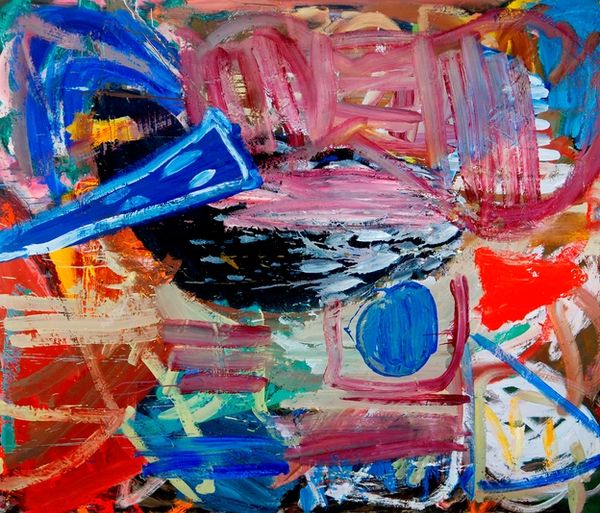
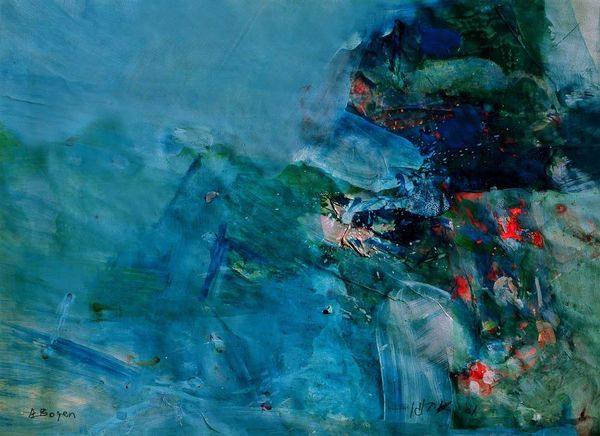
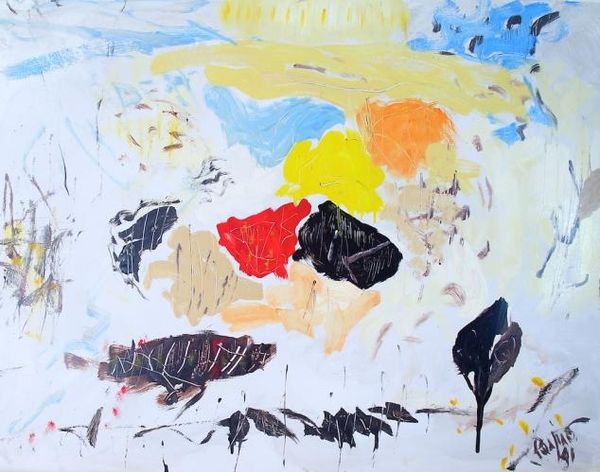
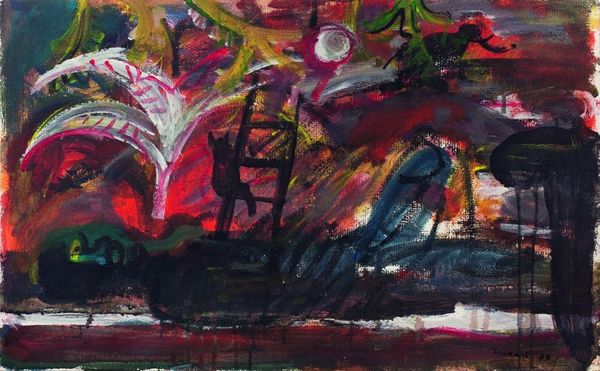
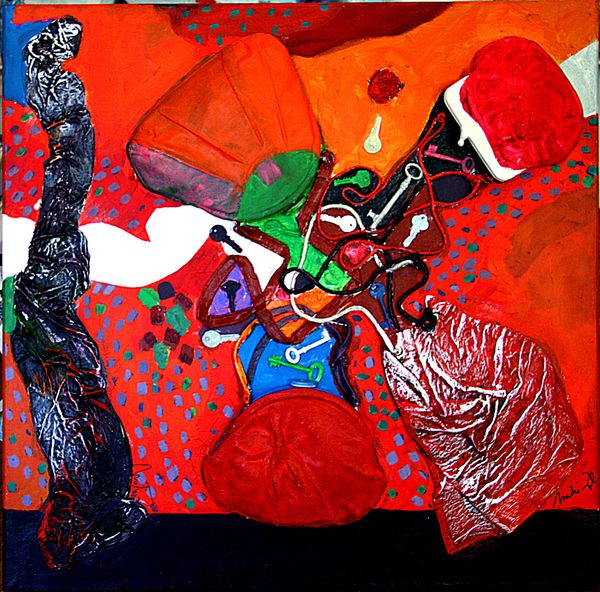
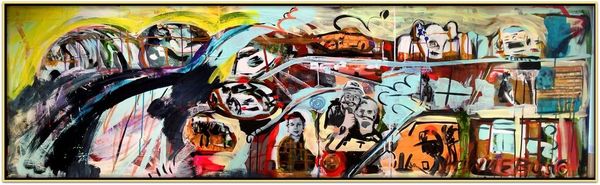
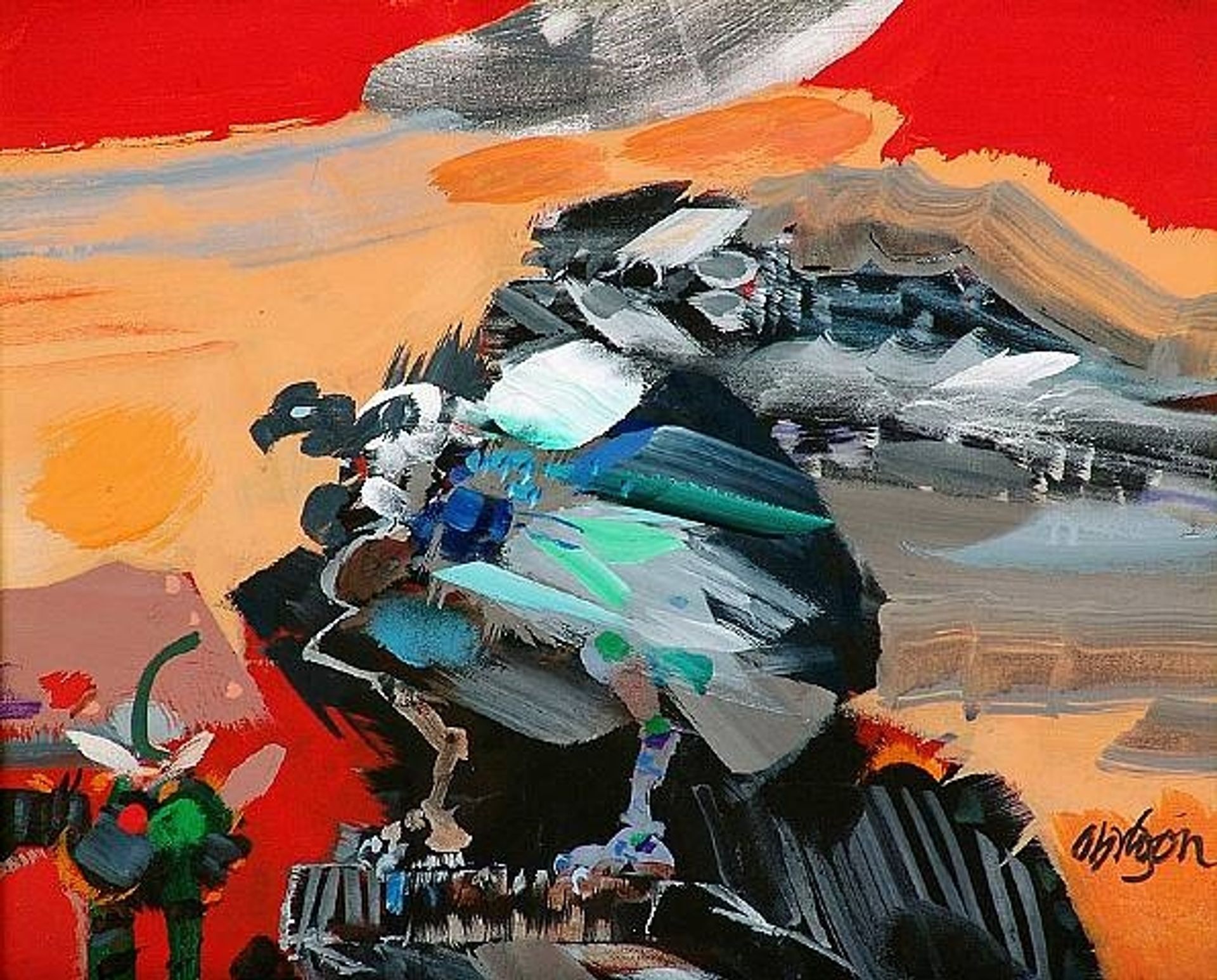
Curator: What an energetic piece! I am immediately struck by the use of raw colors in Alejandro Obregon's "Untitled" painting from 1982. What do you think? Editor: The boldness is arresting. Seeing those layered colors—especially the juxtaposition of the cool blues and greens against the fiery reds—speaks to a sort of visual tension, wouldn’t you agree? Given the year it was created, it could definitely represent some degree of political turbulence or maybe a cultural clash of ideologies. Curator: Absolutely. I see echoes of Neo-Expressionism in that raw application of acrylic on canvas. The graffiti art influences really push through. Note the abstract symbols throughout the composition that can trigger diverse emotional responses and interpretations, from urban decay to resilience. I feel a push and pull between hope and despair, it could speak to the transient nature of existence or reflect broader human struggles. Editor: Precisely. Looking at it through a socio-political lens, one can’t ignore the context of its creation. South America in the 1980s was a cauldron of social unrest and revolution. Obregon might be reflecting this turmoil, portraying it through these almost violent slashes of color and frenetic energy, questioning authoritarian narratives via abstraction. Curator: The symbols could hold encoded meanings pertinent to those specific cultural contexts. It would be a matter of cultural archeology, if you will, as shapes like the sun are present, which is a recurrent symbol throughout human history, with very powerful meanings. The painting really pushes to the limits of abstract symbols! Editor: And maybe there’s something liberating about abstraction itself. During times of oppression, symbolism and ambiguity are a language of resistance, a way of sidestepping censorship and direct reprisal by powerful people. So, while seemingly just colors, it acts as a commentary about censorship in authoritarian states. Curator: Agreed. A visual code understood by those living through such times. And the lack of a specific title may further universalize the subject to different cultures, making the visual vocabulary all the more potent. Editor: Absolutely, it lets the observer actively participate. These kinds of open works reject singular meanings, empowering us to forge our own interpretations out of that complex landscape of color and shape. Curator: Obregon’s work is really fascinating. It reveals the profound ways personal artistic style engages historical and socio-political context through iconic imagery. Editor: It is amazing how potent raw abstraction can become a tool for bearing witness and sparking necessary dialogue, turning individual stories into broader discourses of humanity and power.