About this artwork
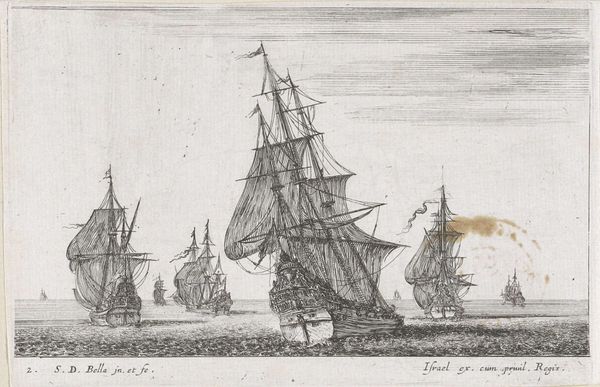
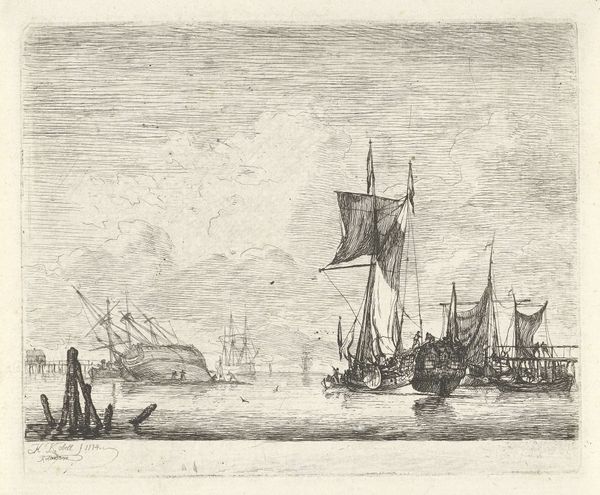
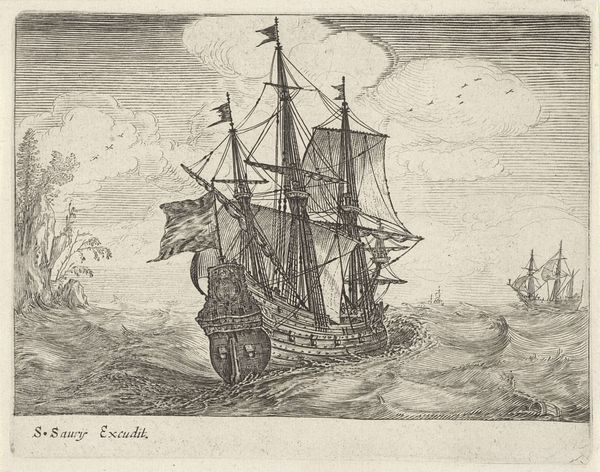
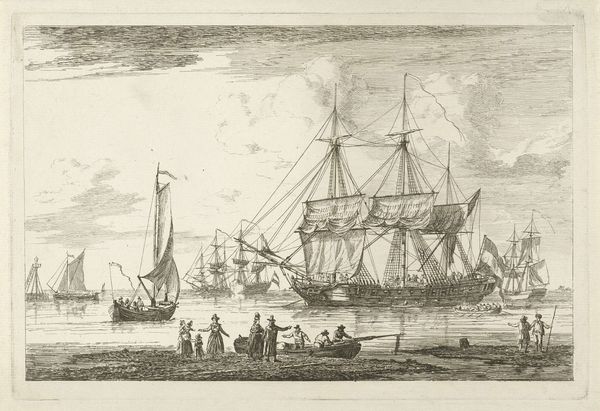
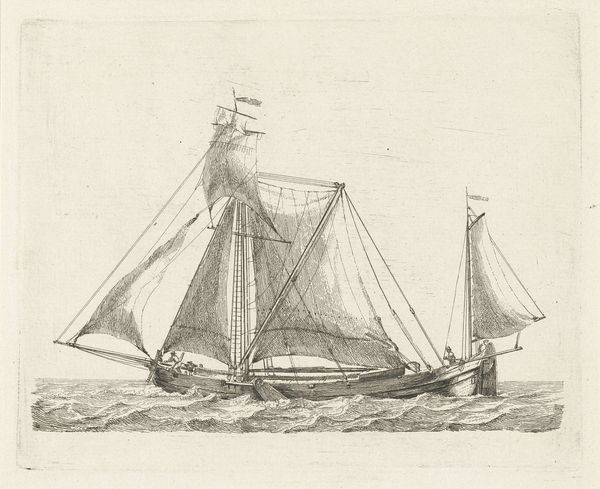
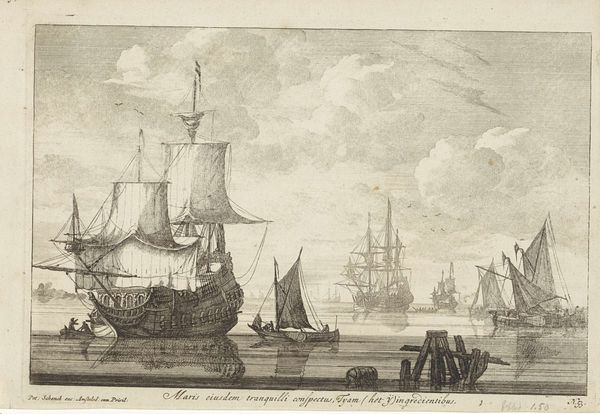
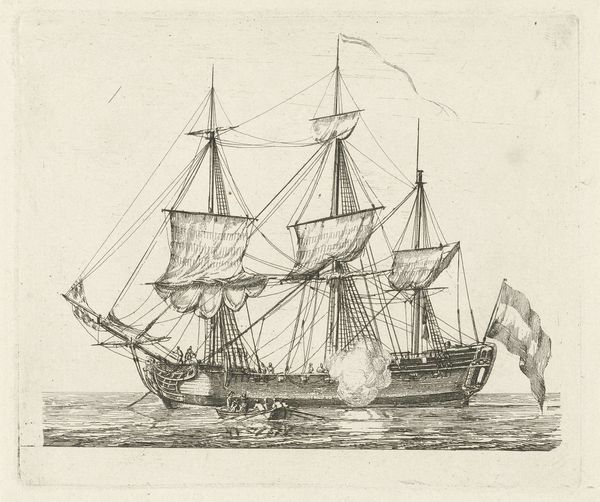
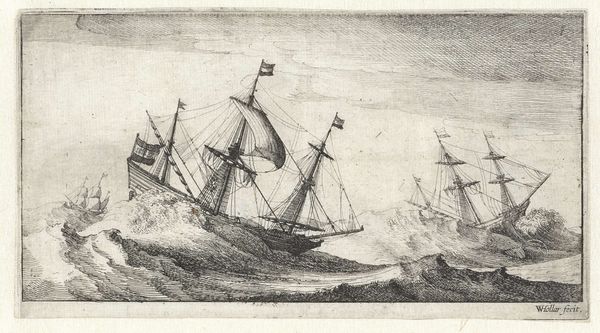
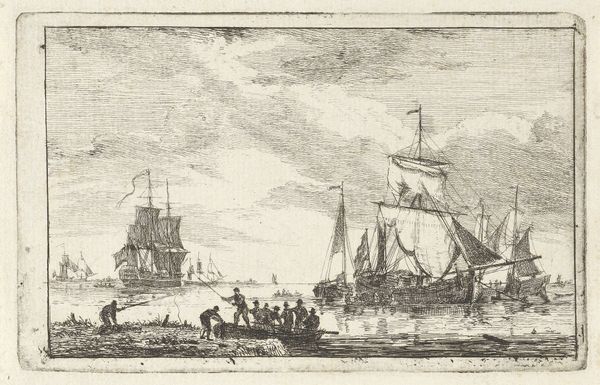
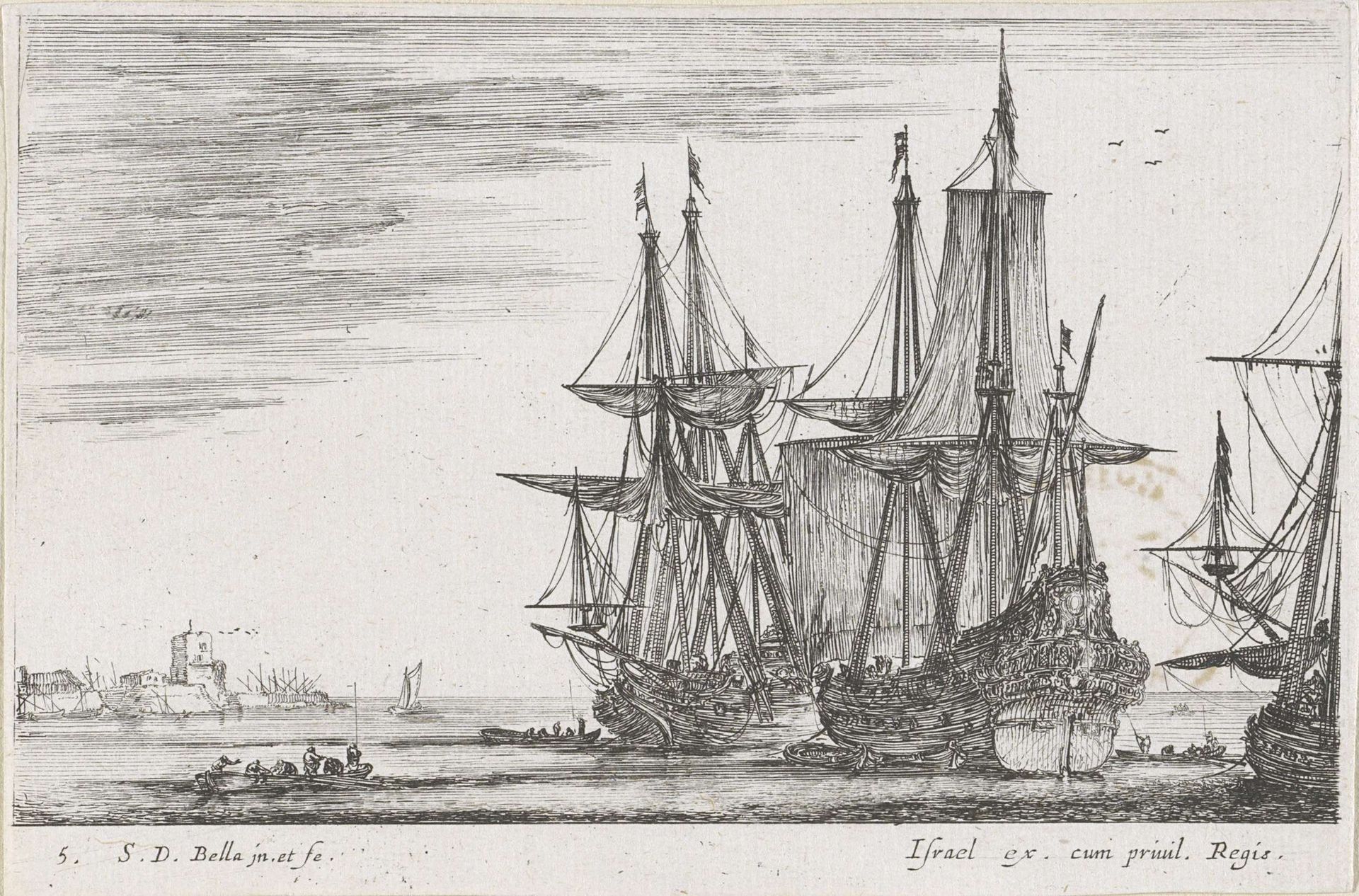
Stefano della Bella created this print of sailing ships off the coast using etching, a process dependent on the controlled corrosion of metal. The image begins with a polished copper plate, its surface coated with a waxy, acid-resistant substance. The artist then draws through this ground with a sharp needle, exposing the metal. Immersing the plate in acid results in incised lines. By repeating this process, the etcher can create an image with remarkable tonal range and fine detail, as we see here in the rigging of the ships and the rippling surface of the water. Considered in terms of labor, this etching is fascinating. It reflects the intricate craftsmanship of shipbuilding but also Della Bella’s mastery of the etcher’s art. The print could be reproduced in multiples, making it accessible to a wide audience, unlike the unique, hand-built vessels it depicts. This contrast embodies the shift from craft to industry, a hallmark of early modern Europe.

Artwork details
- Dimensions
- height 83 mm, width 125 mm
- Location
- Rijksmuseum
- Copyright
- Rijks Museum: Open Domain
Tags
amateur sketch
quirky sketch
pen sketch
pencil sketch
incomplete sketchy
personal sketchbook
sketchwork
pen-ink sketch
sketchbook drawing
initial sketch
Comments
No comments
About this artwork
Stefano della Bella created this print of sailing ships off the coast using etching, a process dependent on the controlled corrosion of metal. The image begins with a polished copper plate, its surface coated with a waxy, acid-resistant substance. The artist then draws through this ground with a sharp needle, exposing the metal. Immersing the plate in acid results in incised lines. By repeating this process, the etcher can create an image with remarkable tonal range and fine detail, as we see here in the rigging of the ships and the rippling surface of the water. Considered in terms of labor, this etching is fascinating. It reflects the intricate craftsmanship of shipbuilding but also Della Bella’s mastery of the etcher’s art. The print could be reproduced in multiples, making it accessible to a wide audience, unlike the unique, hand-built vessels it depicts. This contrast embodies the shift from craft to industry, a hallmark of early modern Europe.
Comments
No comments