graphic-art, print, paper
#
graphic-art
# print
#
paper
#
geometric
#
line
#
symbolism
#
monochrome
Dimensions: height 320 mm, width 310 mm
Copyright: Rijks Museum: Open Domain
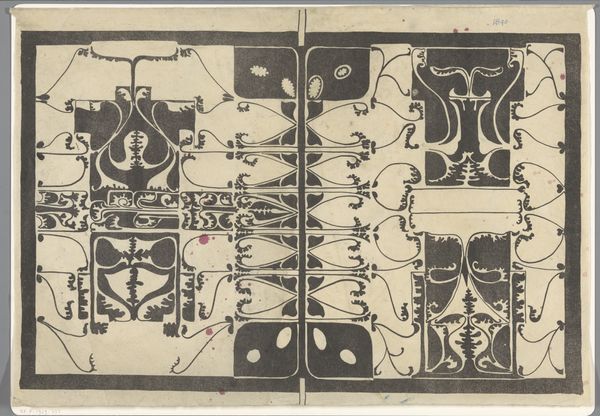
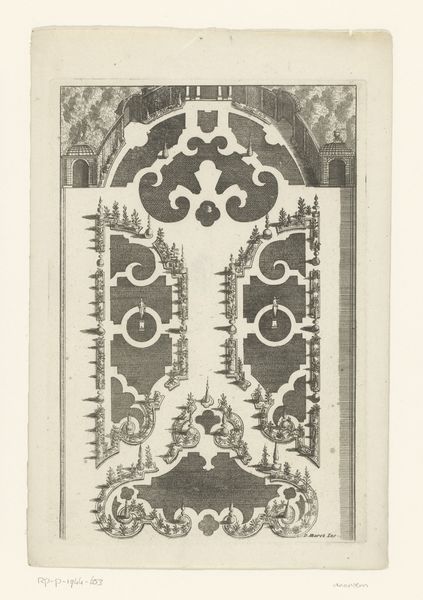
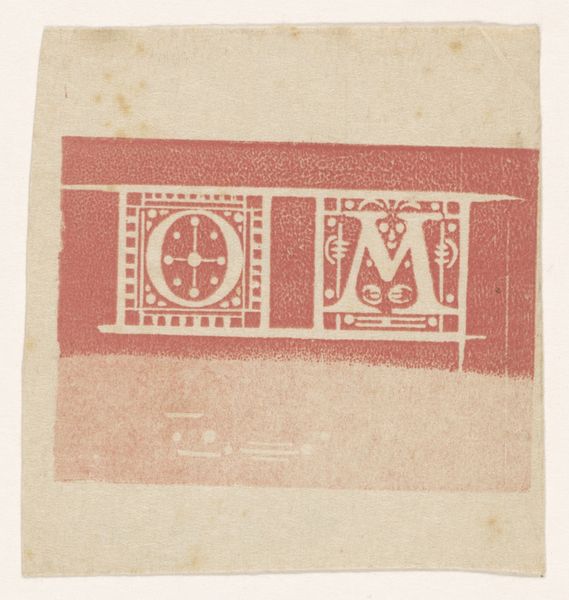
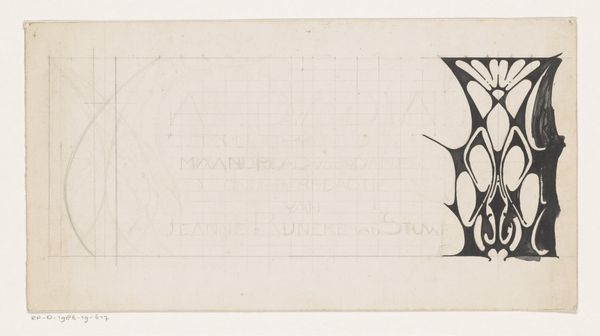
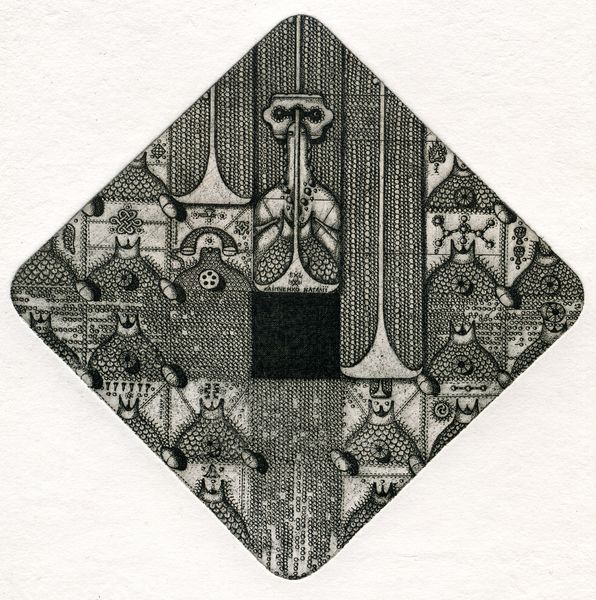
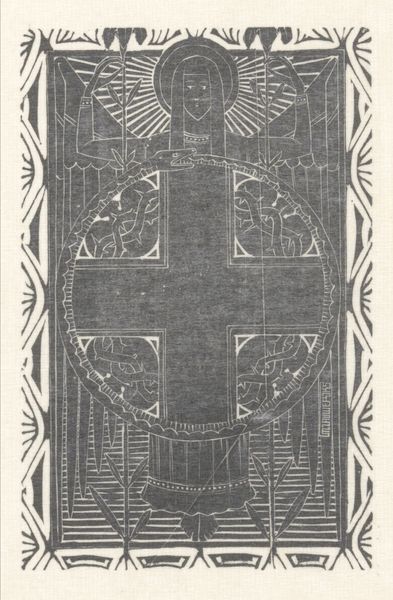
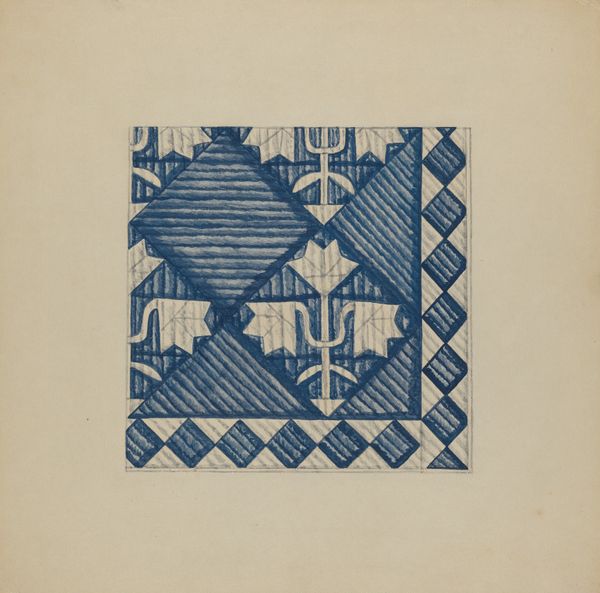
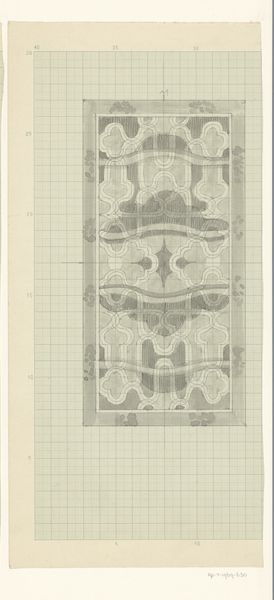
Editor: So, this print from 1919 is called "Twee theosofische voorstellingen" by Mathieu Lauweriks. It is a monochrome print on paper showing geometric and symbolic forms. I'm immediately struck by how stylized and almost archaic it feels. What sense do you make of it? Curator: Well, let’s unpack this a little. Given its date and title, and your description, the key here is Theosophy, right? Lauweriks was deeply involved with the Theosophical Society. It wasn’t just a personal interest but a vital, organized cultural force in the late 19th and early 20th centuries. Consider its appeal to artists and intellectuals: Theosophy offered an alternative to traditional religious dogma at a time of immense social change and disillusionment after World War One. Editor: So, how does that influence the imagery we're seeing? The geometric forms… is it about some universal language? Curator: Exactly! Theosophists believed in an underlying unity of all religions and sought a universal, symbolic language. The geometric shapes aren’t just decorative; they’re meant to be read as keys to deeper, spiritual truths. This yearning for universality arose from a cultural landscape reshaped by globalization, urbanization, and disenchantment with established institutions. Do you see hints of other movements maybe at play here? Editor: Now that you mention it, the starkness of the print reminds me a bit of some German Expressionist woodcuts... Did Theosophy have links to other contemporary artistic movements? Curator: Absolutely! Theosophy significantly influenced early abstract art, Expressionism and even architects. Artists found in it a validation for non-representational forms, believing these forms could express spiritual realities beyond the material world. The institution of the Theosophical Society played a huge part in popularizing this connection between art and spirituality. Editor: That’s fascinating! It completely changes how I see this piece, thinking about the wider social currents influencing it. Curator: Right? The public role of art shifts, it reflects our social-cultural yearnings. We realize the art reflects back on those public spaces and dialogues that help give it meaning in the first place.
Comments
No comments
Be the first to comment and join the conversation on the ultimate creative platform.
 Collect
 React
React Comment
More like this