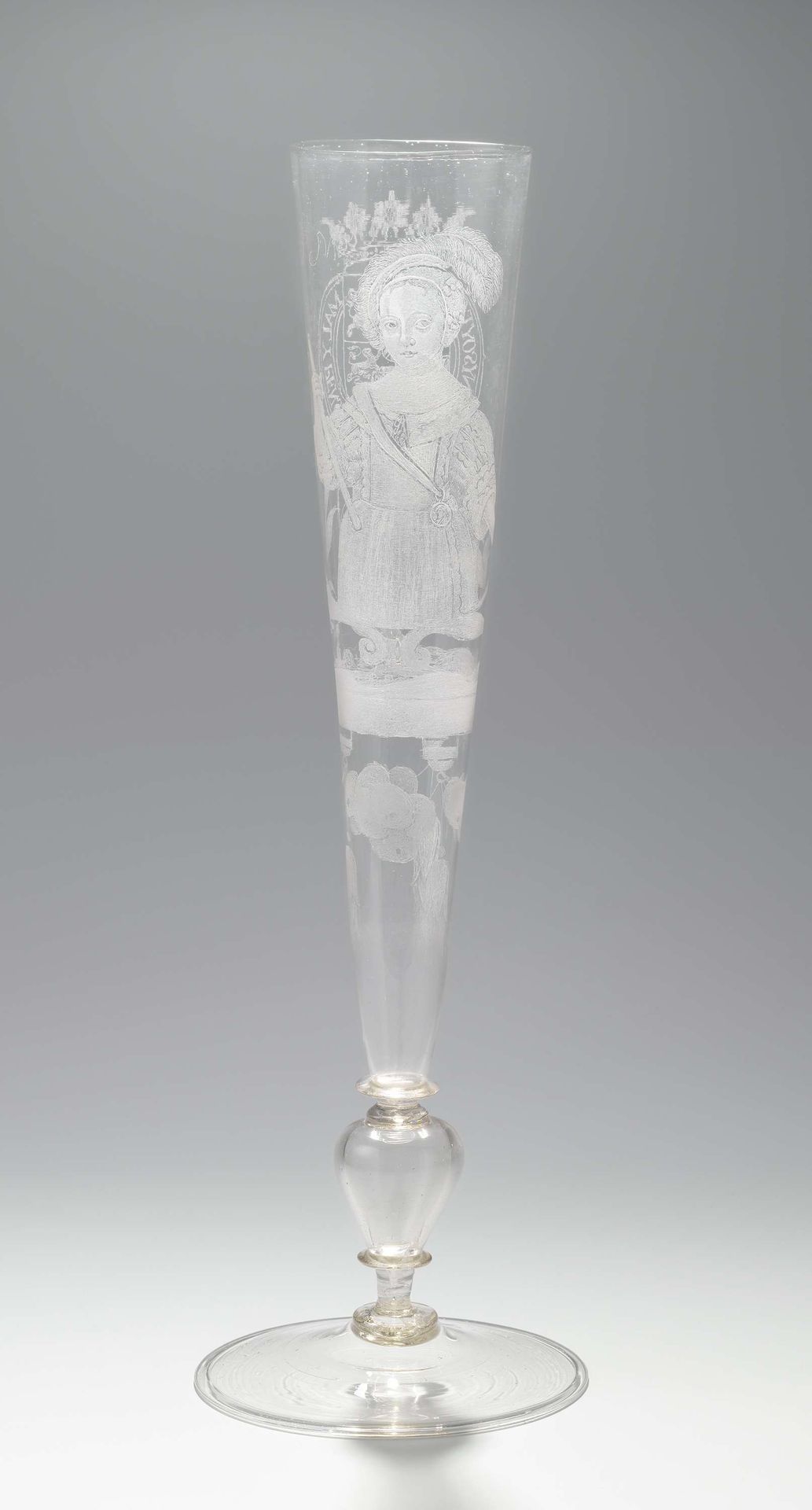
c. 1655 - 1660
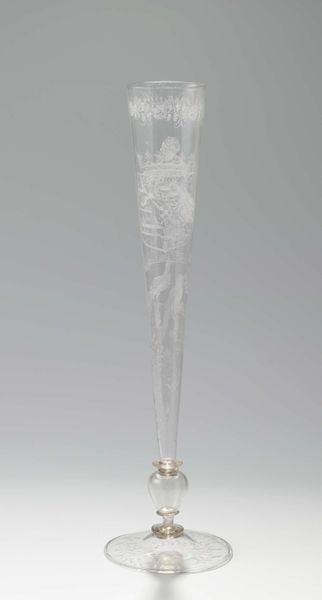
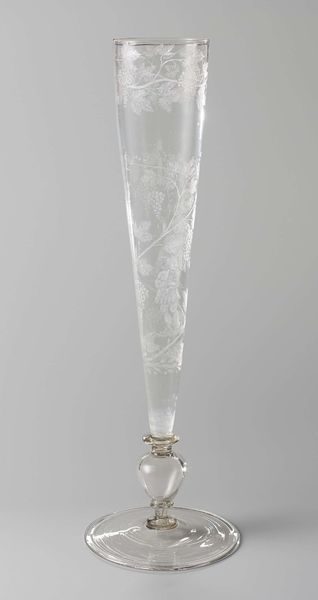
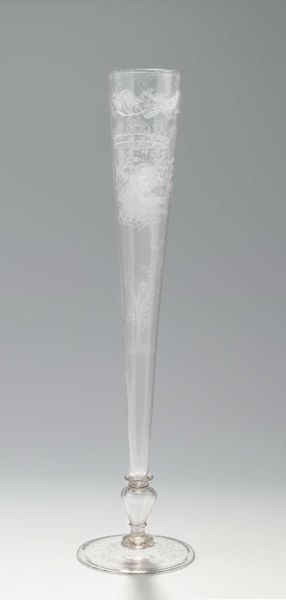
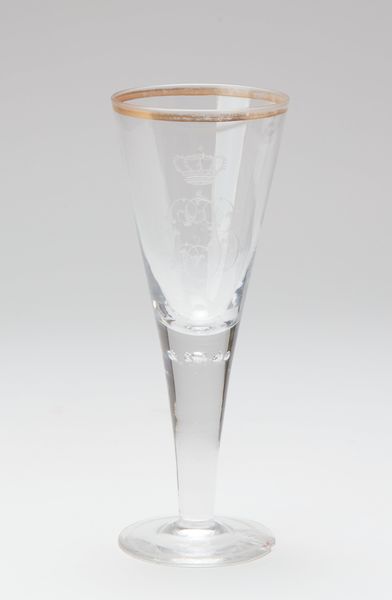
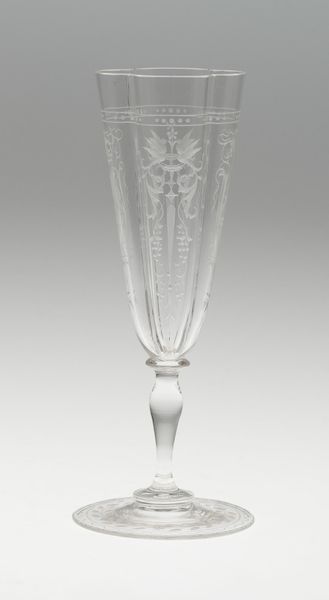
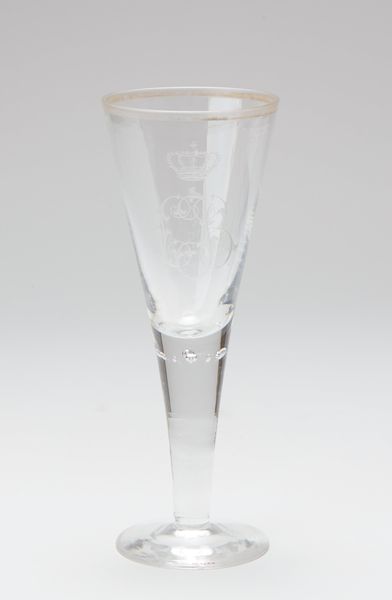
Flute glass with a portrait of William III

Listen to curator's interpretation
Curatorial notes
Editor: Here we have an engraved flute glass dating from around 1655 to 1660, featuring a portrait of William III. What strikes me most is how detailed the portrait is, given the difficulty of working with glass. What can you tell me about this piece? Curator: Look closely at the method of production, it's not merely decorative. The very act of carving into the glass, removing material, speaks to power dynamics. Glassblowing in itself was a specialized, guild-controlled practice. This flute glass wasn't simply blown, but engraved, probably with diamond point, reflecting elite patronage. Think about the consumption practices around luxury goods like these at the time. Who could afford such a delicate and visually complex object? And why immortalize William III on a drinking vessel? Editor: So, the glass itself becomes a status symbol. I hadn’t considered how much labor went into it. It also seems fragile to be used daily for drinking! Curator: Exactly! Consider also the social and political climate. William III, as a historical figure, became a contested symbol. Owning this glass signified alignment with certain political and economic factions. Its very existence embodies early modern consumerism but it goes beyond pure consumption to reveal vested interest in labor investment, manufacture, distribution, access and preservation of privilege. Editor: That's fascinating. So, more than just a pretty glass, it's a tangible artifact that tells us about the distribution of wealth and power. Curator: Precisely! The material itself becomes a historical document, revealing a layered narrative about production, consumption, and political allegiance. Editor: I'll never look at glassware the same way again! Thank you!