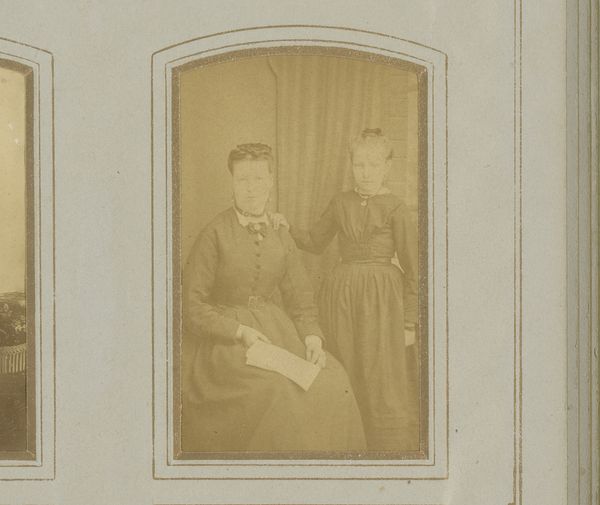
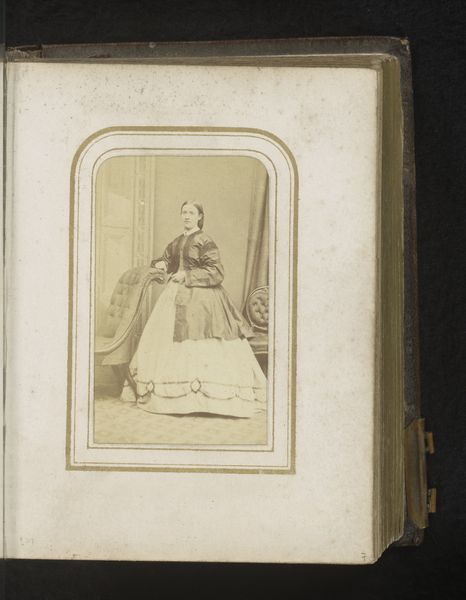
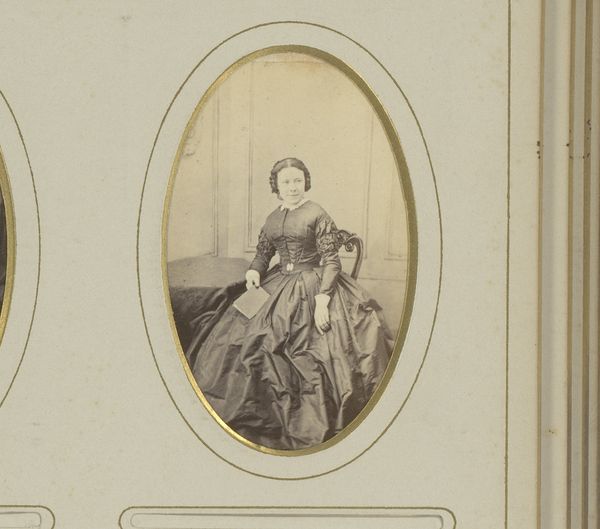
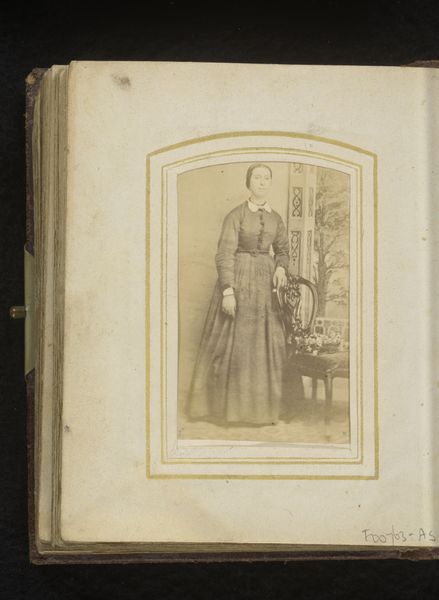
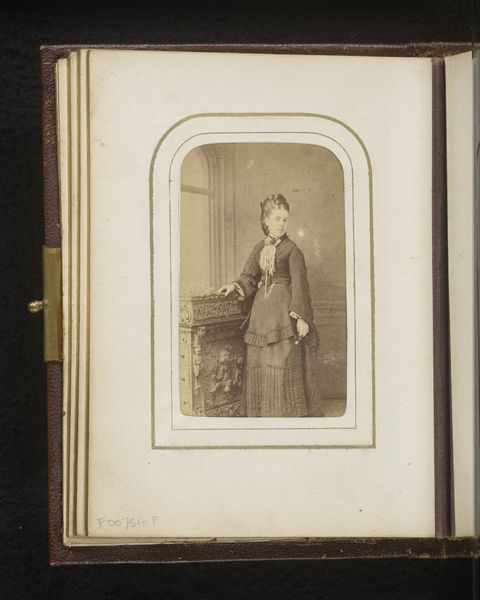
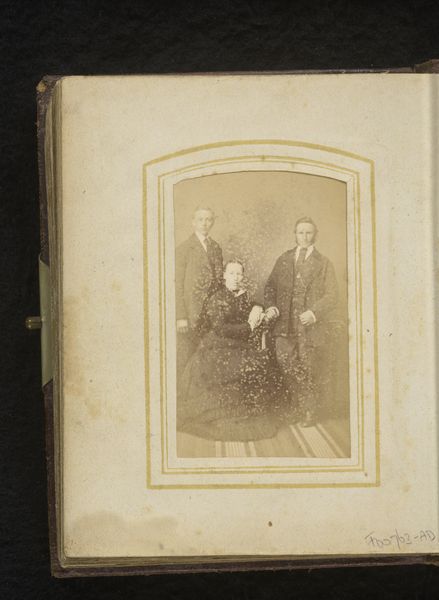
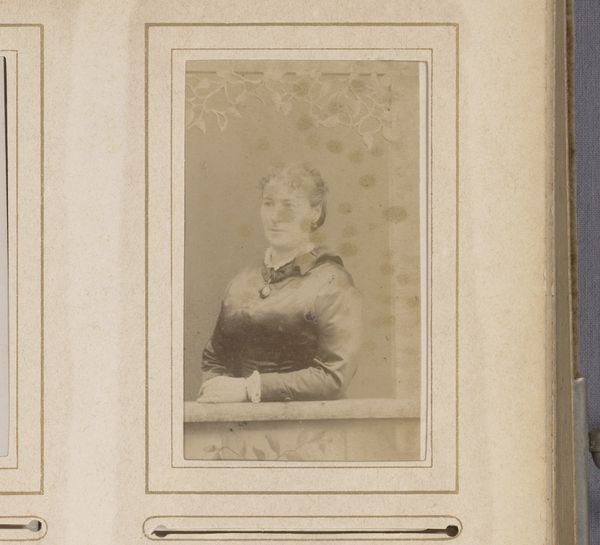
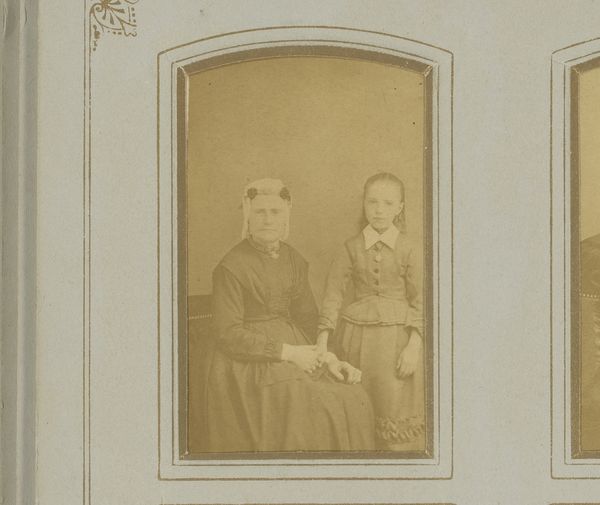
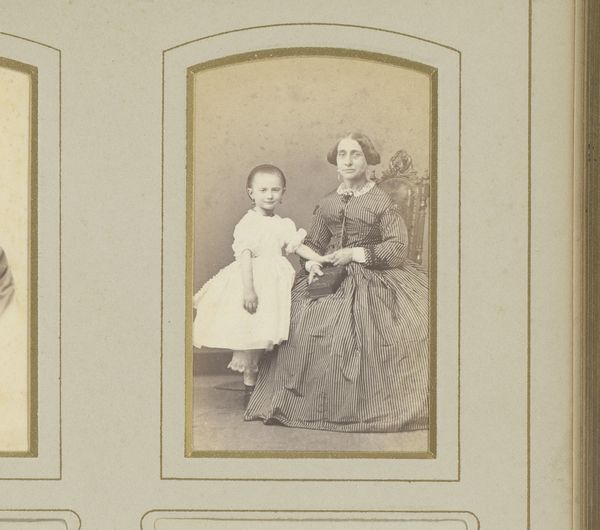
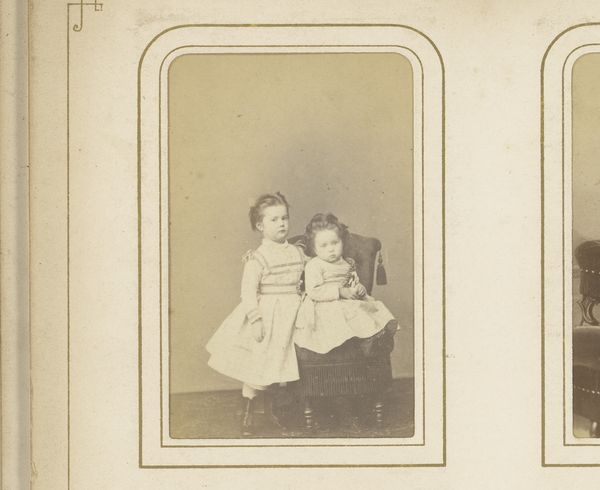
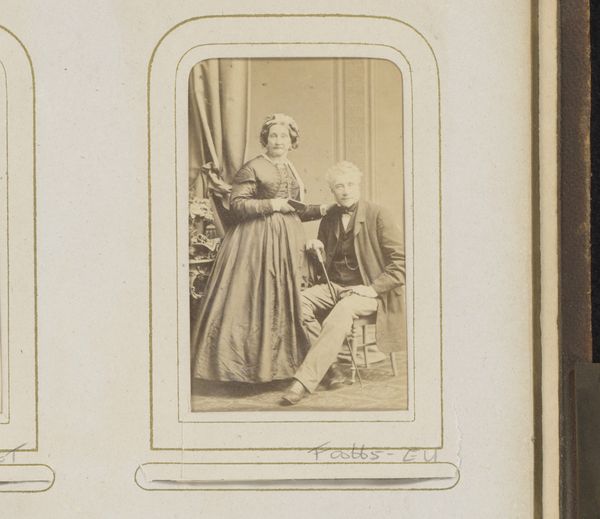
Portret van een zittende en een staande vrouw bij een schrijftafel 1877 - 1890
0:00
0:00

albertgreiner
Rijksmuseum
photography
#
portrait
#
photography
Dimensions: height 83 mm, width 50 mm
Copyright: Rijks Museum: Open Domain
Curator: Here we have a captivating portrait from the late 19th century, taken sometime between 1877 and 1890. It's a photograph by Albert Greiner, currently residing at the Rijksmuseum. The title translates to "Portrait of a Sitting and a Standing Woman by a Writing Table." Editor: My immediate impression is one of subdued formality. The sepia tones lend a solemn air, almost like peering into a private, significant moment in history. Curator: Indeed. The composition speaks volumes about the era's societal structures. The seated woman, presumably older or of higher status, takes precedence while the standing figure is slightly in the background, with a gentle, supporting hand on the other’s shoulder. It’s carefully arranged to convey a sense of order and respectability. Editor: That's a striking touch, isn't it, that supportive gesture? It’s such a human detail. Notice also the writing table. Writing was a deeply gendered symbol, so one might speculate that it signifies literacy or intellectual pursuits on the part of women. Curator: An excellent point. Consider the rise of literacy among women during this period and the simultaneous anxieties around their participation in the public sphere. Photography was becoming a tool for asserting identity, negotiating changing social roles. It was affordable in its time for an upper middle class. This image can tell a lot about those women in their era, in that society. Editor: What intrigues me is how photography itself becomes part of the iconography. In their dresses there are symbolic gestures – visual markers. I wonder what memories are attached to them? The image contains a unique kind of weight. It serves as a symbol for these ladies and the society around them. Curator: And isn't that precisely the enduring power of such portraits? It's more than capturing a likeness; it's about the sitter's awareness of themselves within their specific social and historical context. Editor: Absolutely. It's a record of time and cultural aspiration. Curator: Looking at this piece makes me consider the role of photography in shaping our understanding of gender roles within the societal contexts of past eras. Editor: I agree. The symbolic weight contained within the image transcends a mere snapshot in history, making me more aware of the subtle ways we've unconsciously retained cultural memories and ideals.
Comments
No comments
Be the first to comment and join the conversation on the ultimate creative platform.
 Collect
 React
React Comment
More like this