About this artwork
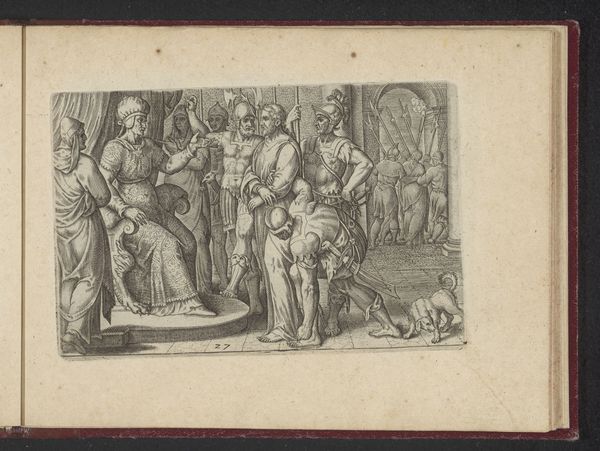
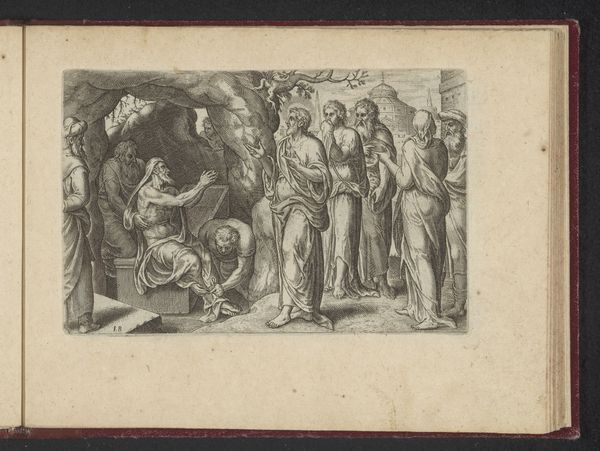
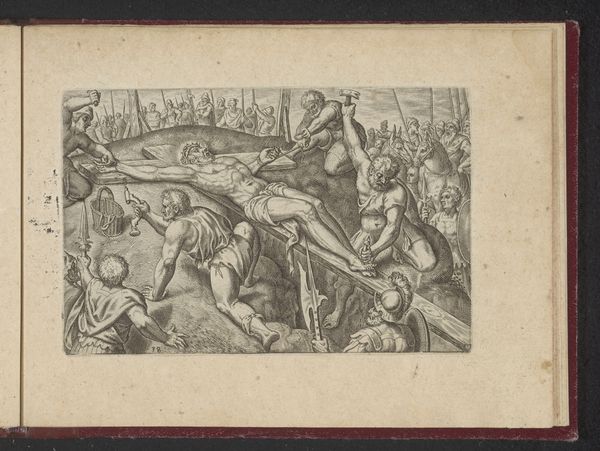
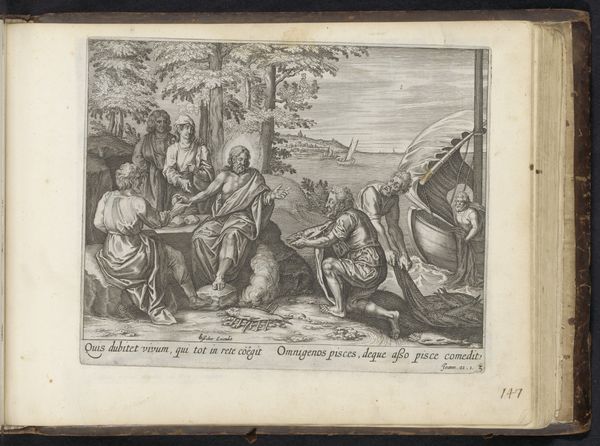
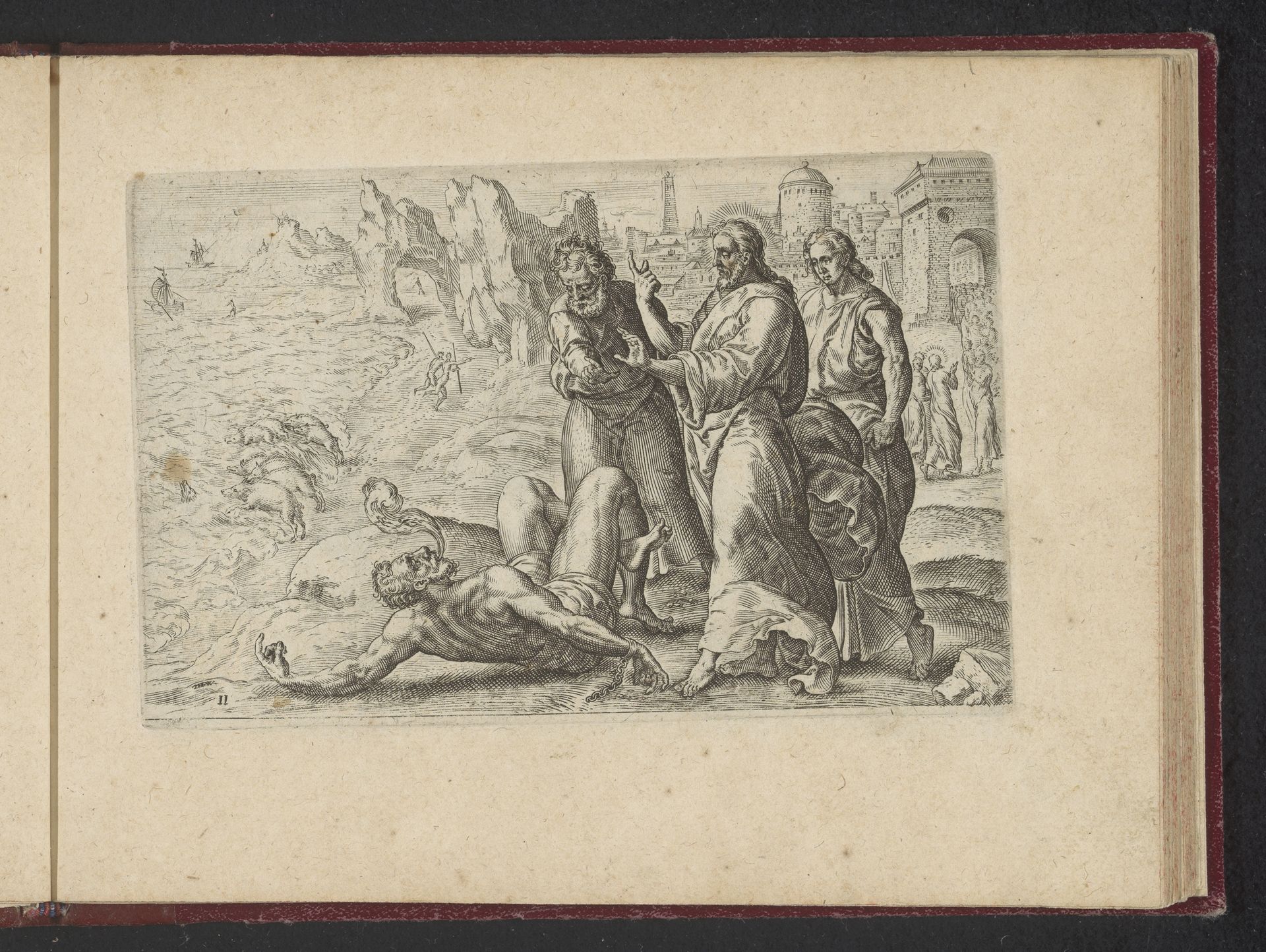
This engraving by Wierix depicts Christ healing a possessed man in the region of the Gerasenes. Look closely at the figure of the possessed man, writhing on the ground, his body contorted. The demons expelled from him rush into a herd of swine, plunging them into the sea. The motif of demonic possession and exorcism is ancient, appearing in various forms across cultures. In medieval art, demons were often depicted as grotesque creatures, embodiments of humanity's deepest fears and desires. The exorcism ritual itself is a powerful symbol of purification, the triumph of order over chaos. Observe how the dramatic gesture of Christ, with his raised hand, is reminiscent of ancient depictions of emperors or gods asserting their authority. It's a gesture that resonates through time, reappearing in countless images of power and deliverance. This is an example of how primal symbols resurface, continually evolving as they navigate the labyrinth of cultural memory.
Christus geneest een bezetene in het gebied van de Gerasenen
1573

Wierix
1550 - 1620Location
RijksmuseumArtwork details
- Medium
- drawing, print, engraving
- Dimensions
- height 92 mm, width 139 mm, height 137 mm, width 183 mm
- Location
- Rijksmuseum
- Copyright
- Rijks Museum: Open Domain
Tags
Comments
Share your thoughts
About this artwork
This engraving by Wierix depicts Christ healing a possessed man in the region of the Gerasenes. Look closely at the figure of the possessed man, writhing on the ground, his body contorted. The demons expelled from him rush into a herd of swine, plunging them into the sea. The motif of demonic possession and exorcism is ancient, appearing in various forms across cultures. In medieval art, demons were often depicted as grotesque creatures, embodiments of humanity's deepest fears and desires. The exorcism ritual itself is a powerful symbol of purification, the triumph of order over chaos. Observe how the dramatic gesture of Christ, with his raised hand, is reminiscent of ancient depictions of emperors or gods asserting their authority. It's a gesture that resonates through time, reappearing in countless images of power and deliverance. This is an example of how primal symbols resurface, continually evolving as they navigate the labyrinth of cultural memory.
Comments
Share your thoughts