c. 17th century
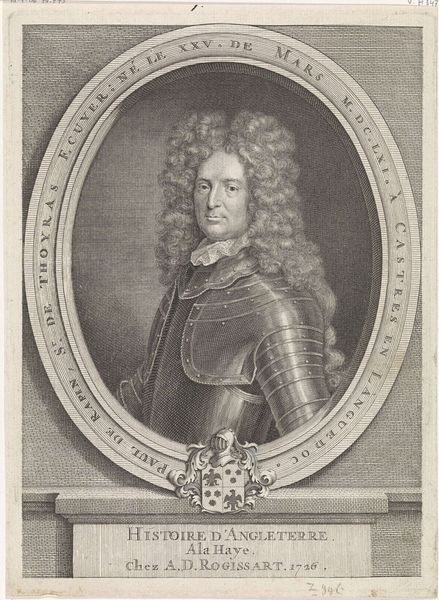
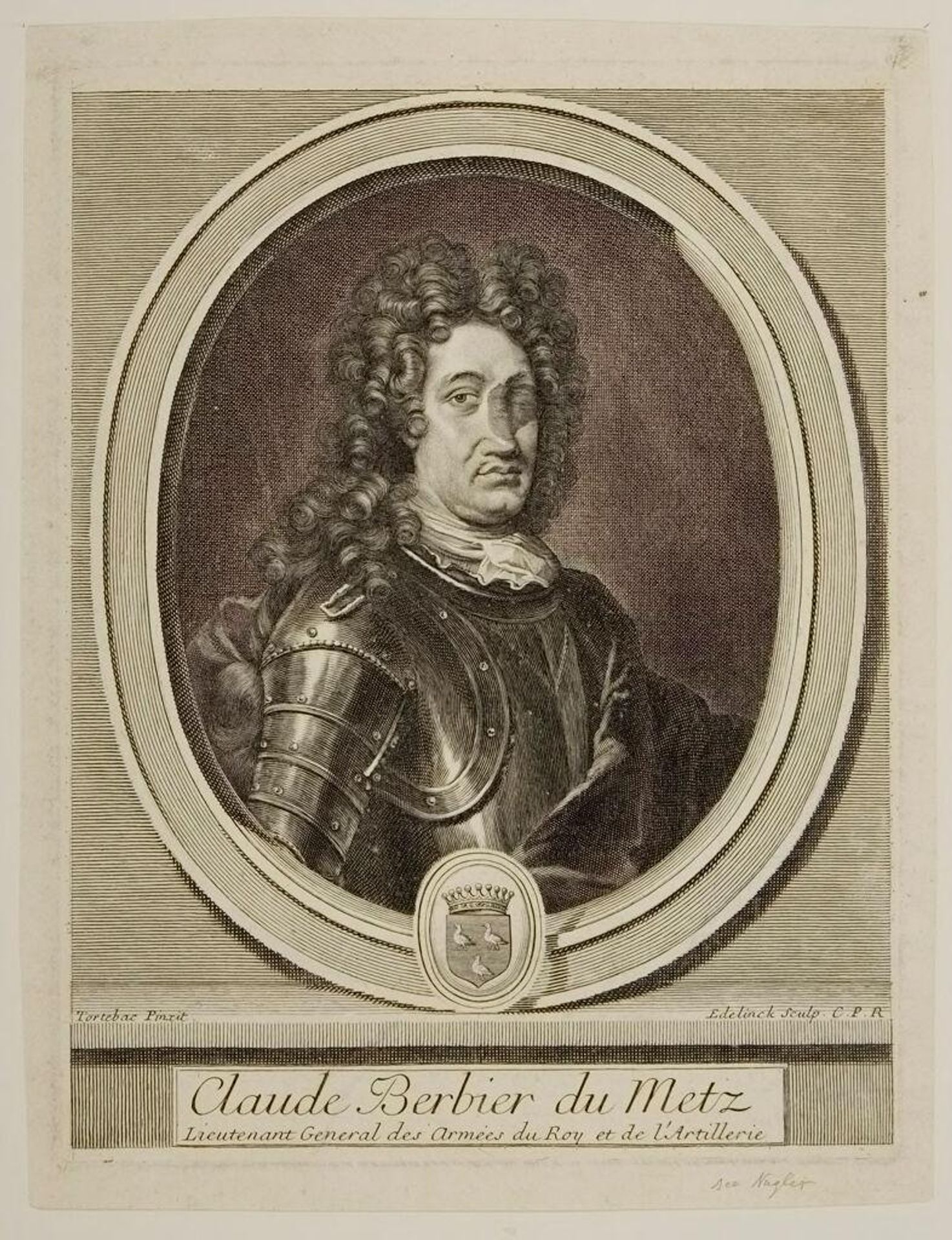
Claude Berbier of Metz


Listen to curator's interpretation
Curatorial notes
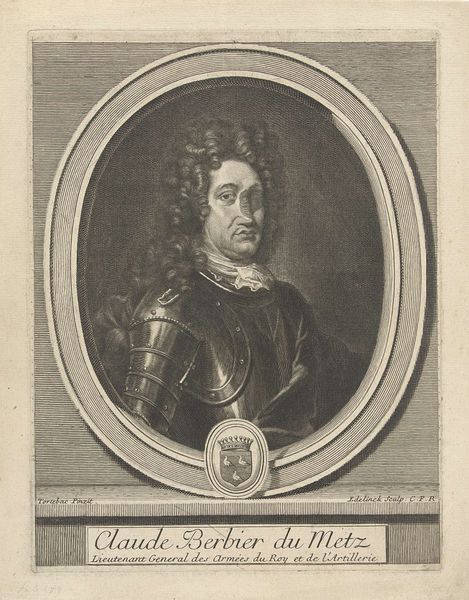
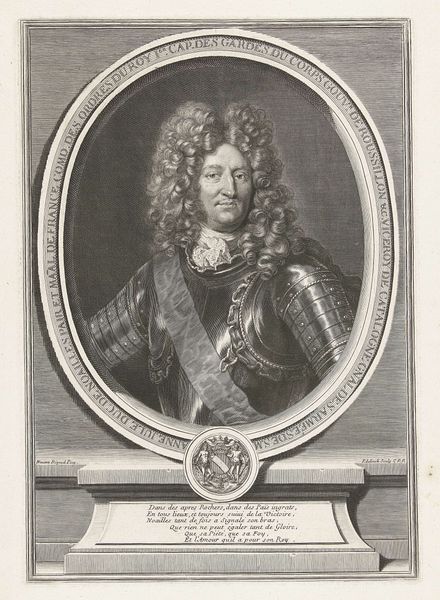
Curator: Let's examine this striking engraving, "Claude Berbier of Metz" by Gérard Edelinck. Editor: The darkness of the print, combined with the unflinching gaze of the subject, give me a sense of almost severe authority. What's the story here? Curator: Edelinck, born in 1640, was a master of portrait engraving. This piece depicts Claude Berbier, a Lieutenant General in the King's army. It reflects the power dynamics of 17th-century France. Editor: I notice the armor and the rather ostentatious wig. It reads as a deliberate performance of masculinity, almost a caricature of military might. How does it intersect with ideas of power and identity back then? Curator: Absolutely. The armor and wig were symbols of status, visually communicating Berbier's position in the military hierarchy and his allegiance to the crown. The image reinforced the established social order. Editor: It makes me think about how images like this were used to construct and reinforce dominant narratives about leadership and who gets to be seen as powerful. Curator: Precisely. It's a reminder of how art played a role in shaping public perception and maintaining social structures. Editor: A stark reminder that even portraits can be powerful instruments of control.