1650
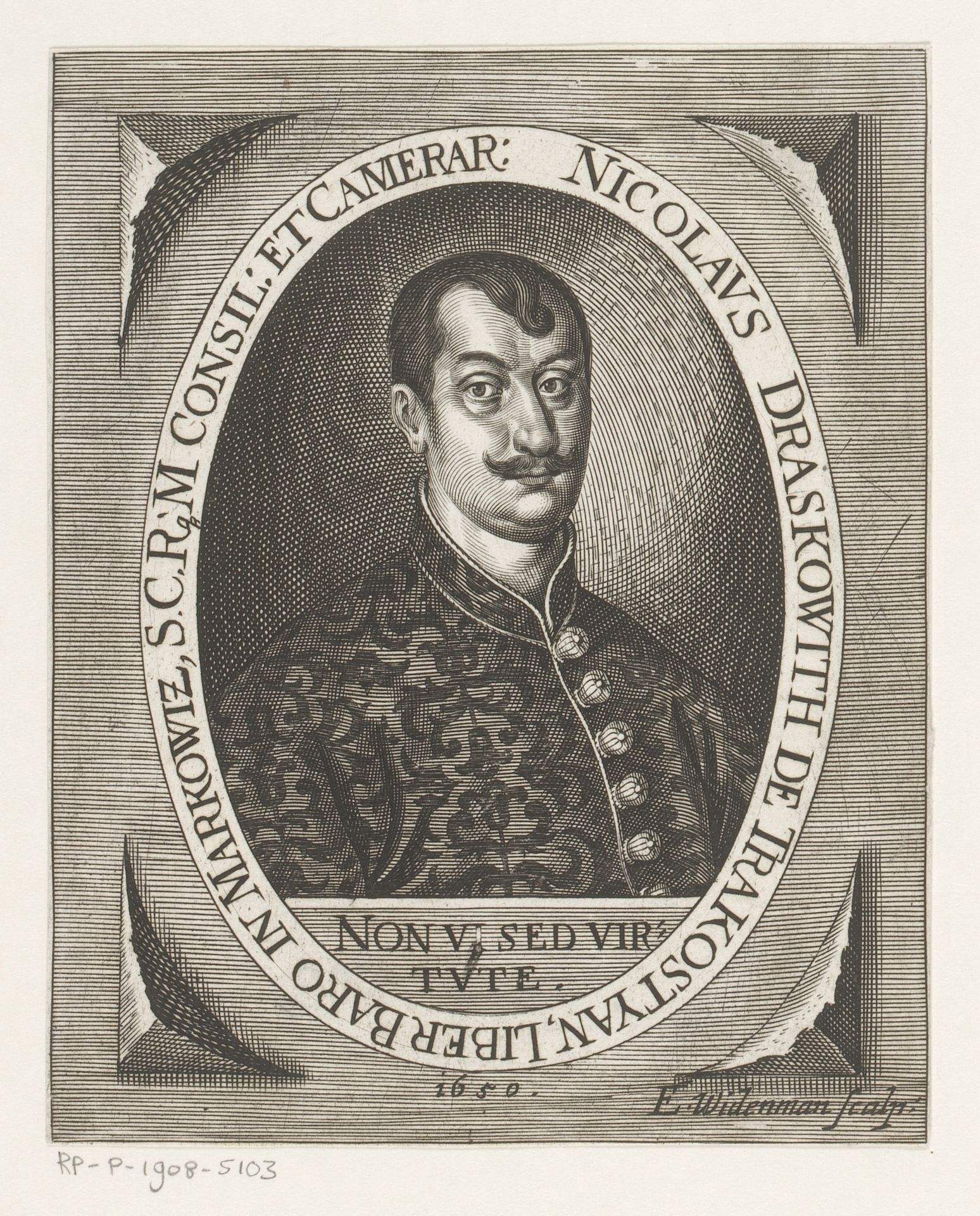
Portret van Nikola Dras̆ković, graaf van Trakostyáni

Elias Widemann
@eliaswidemannLocation
RijksmuseumListen to curator's interpretation
Curatorial notes
Elias Widemann made this print of Nikola Dras̆ković in 1650. Dras̆ković was a count, and this portrait reflects the culture of nobility that dominated much of Europe at the time. Portraits like this weren’t just about capturing a likeness. They were about communicating status, power, and lineage. Dras̆ković's clothing, with its intricate patterns and embellishments, speaks to wealth and social standing. The Latin inscription around the oval frame, "S.C.RM CONSIL: ET CAMERAR," indicates his roles as a counselor and chamberlain, tying him to the institutional structures of power. The phrase "NON VI SED VIRTUTE" emphasizes virtue over force. This subtly reinforces the idea that Dras̆ković’s position is earned through personal qualities rather than mere inherited power. Understanding this image means understanding the social codes of 17th-century nobility. Resources like genealogical records, historical texts, and studies of courtly life can help us decipher its full meaning. This print serves as a reminder that art is always embedded in a specific social and institutional context.