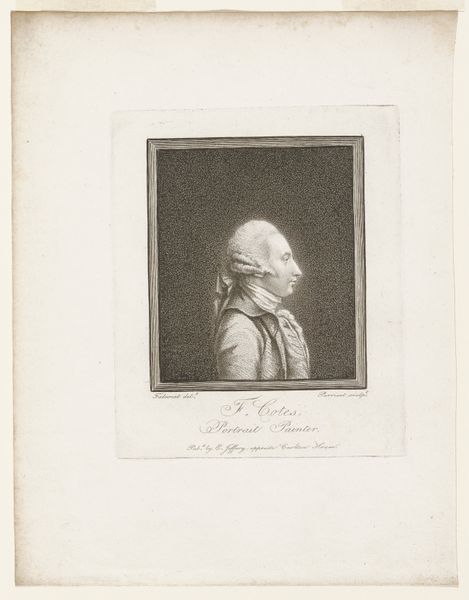
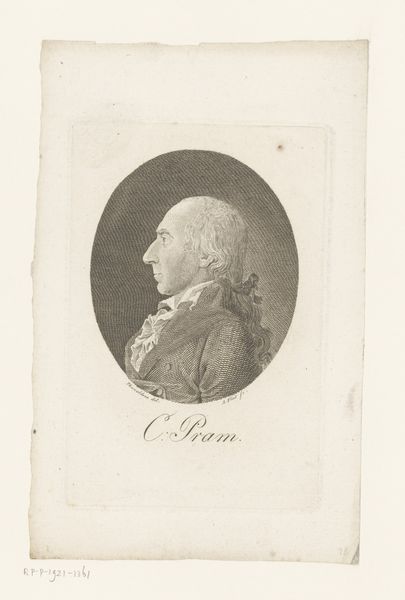
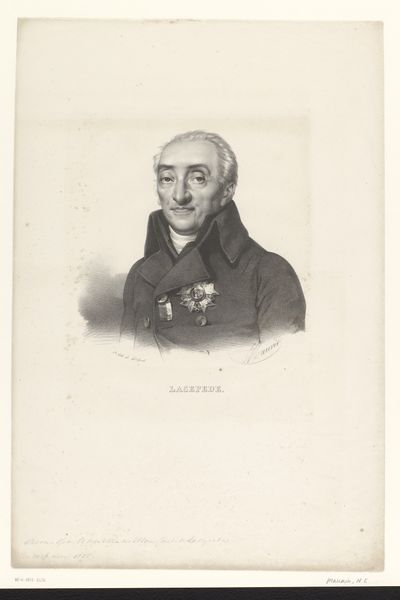
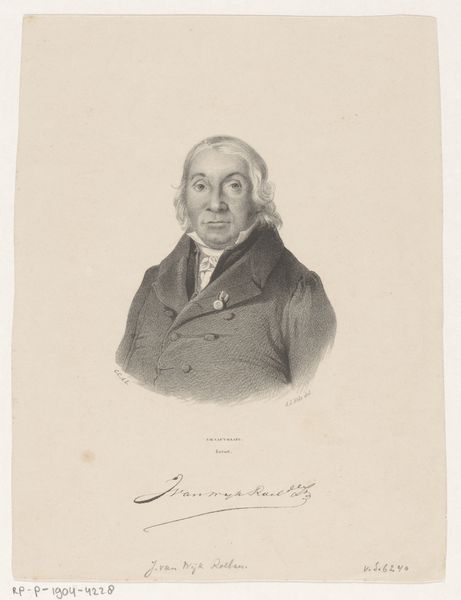
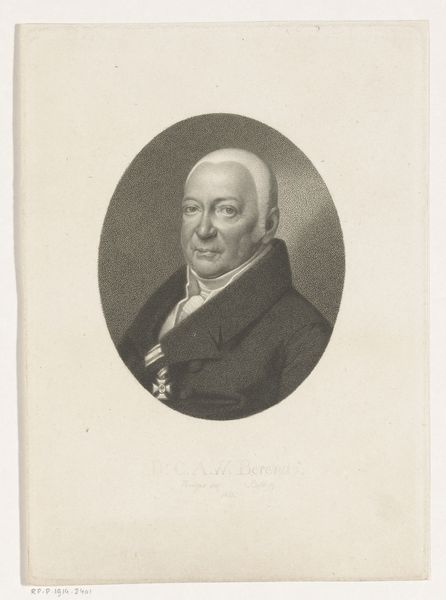
print, engraving
#
portrait
#
print photography
#
neoclacissism
# print
#
light coloured
#
engraving
#
realism
Dimensions: height 266 mm, width 192 mm
Copyright: Rijks Museum: Open Domain
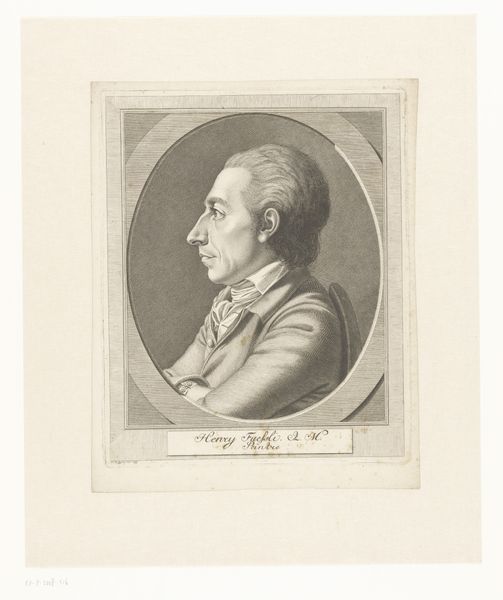
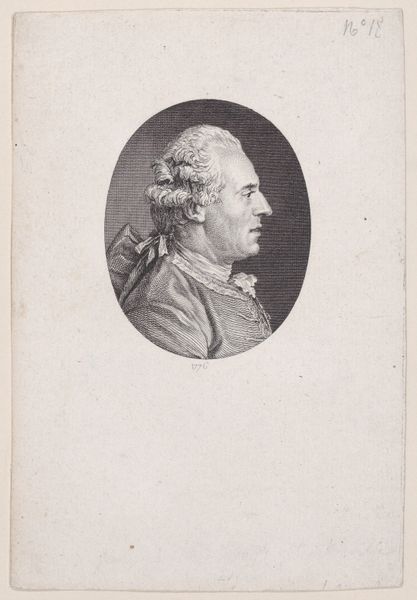
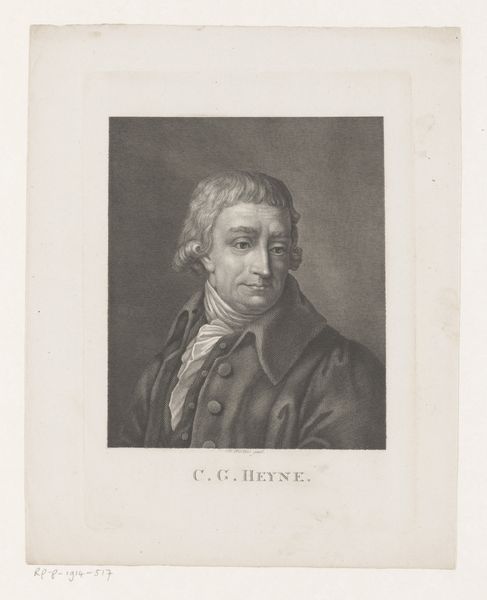
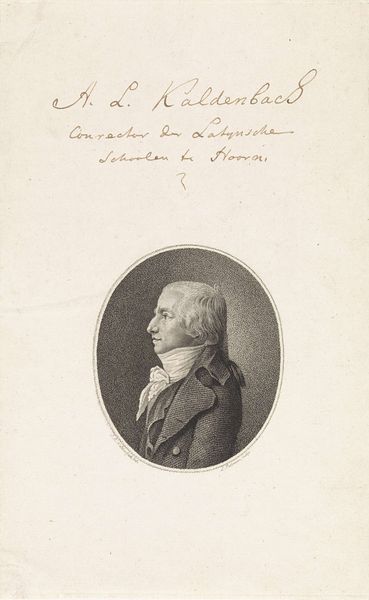
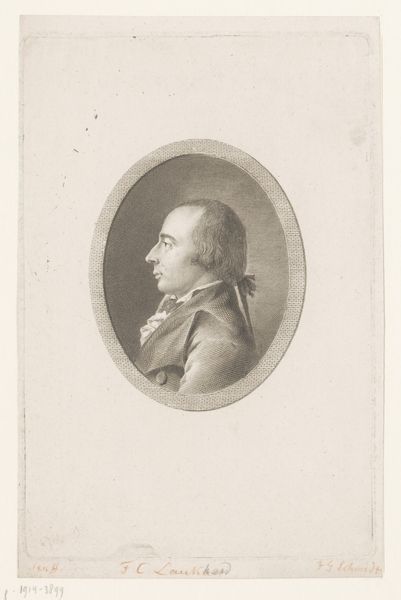
Editor: Here we have "Portret van Christian Garve," an engraving created sometime between 1785 and 1833 by Christian Gottfried Zschoch. I'm immediately struck by the detail achieved with the engraving technique. What aspects of the process or historical context do you find most compelling in this work? Curator: The emphasis, as a materialist, falls on the means of production: the engraving process itself. Look closely. The lines, the hatching – each mark is a testament to labor, to a skilled artisan translating an image into a reproducible form. How does the knowledge that this is a print, made for potential mass distribution, influence your understanding? Editor: It makes me consider its function differently. Was it intended for public consumption? Were prints like this a common way to disseminate images of important figures? Curator: Precisely. We can see that printmaking offered ways of image circulation beyond painting, even. Engraving allowed for multiples. It democratized image consumption, while reinforcing social hierarchies by portraying elites like Garve. But let’s think about the economics too – who commissioned the print, and who had access to purchase it? How does the material itself – paper, ink, the very tools of the engraver – become implicated in this power dynamic? Editor: So, the act of creating the engraving isn't just a technical skill, it's part of a larger economic and social network. Curator: Absolutely. And it shifts our perspective from just viewing "high art" for its aesthetic value to considering it a product of labor, circulation, and even consumption. Do you see now that we have started to unpack the processes of material production to find stories within art history? Editor: Definitely! I never thought about how the printmaking itself would tie into questions of class and access. Curator: These connections make it really come alive. Looking at art through the lens of materiality opens up layers of meaning often overlooked in traditional art history.
Comments
No comments
Be the first to comment and join the conversation on the ultimate creative platform.
 Collect
 React
React Comment
More like this