1675 - 1775
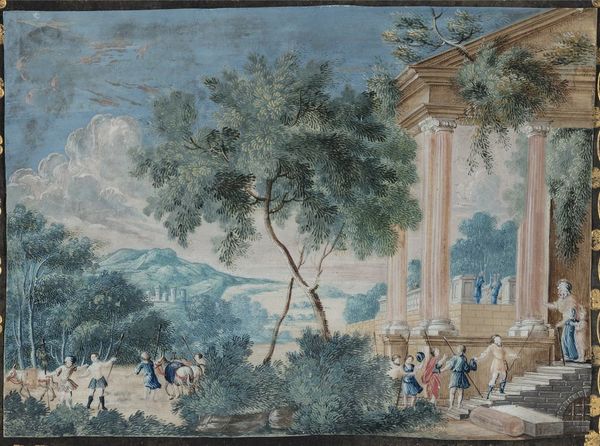
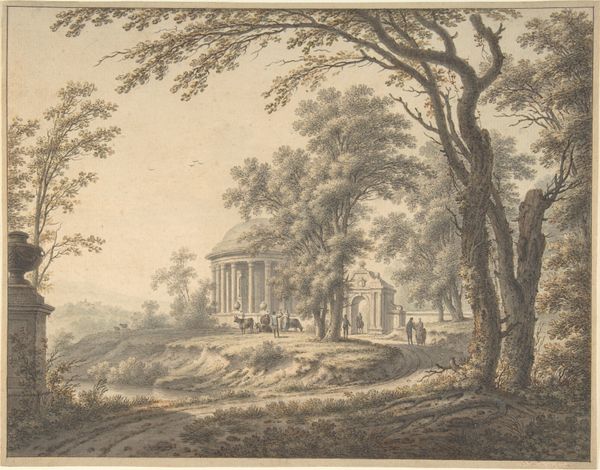
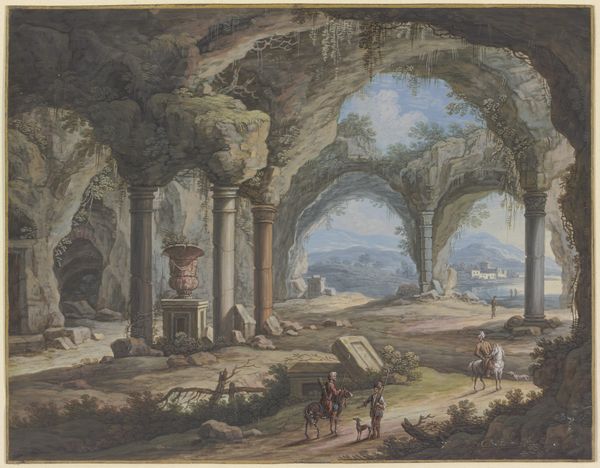
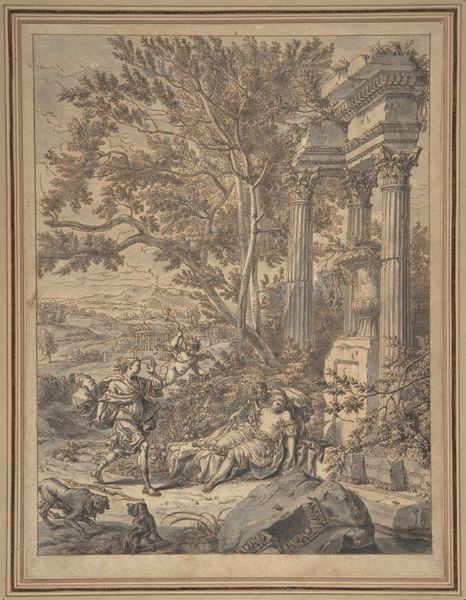
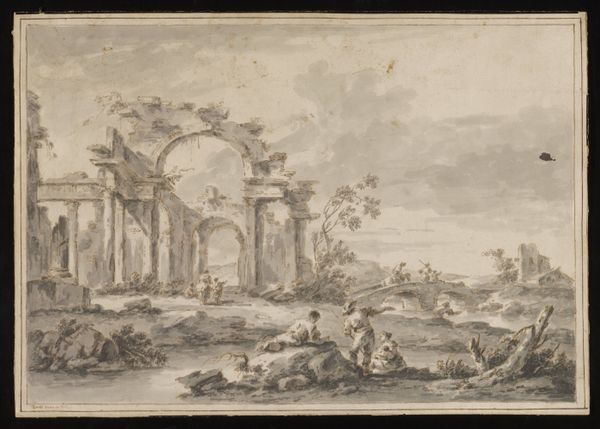
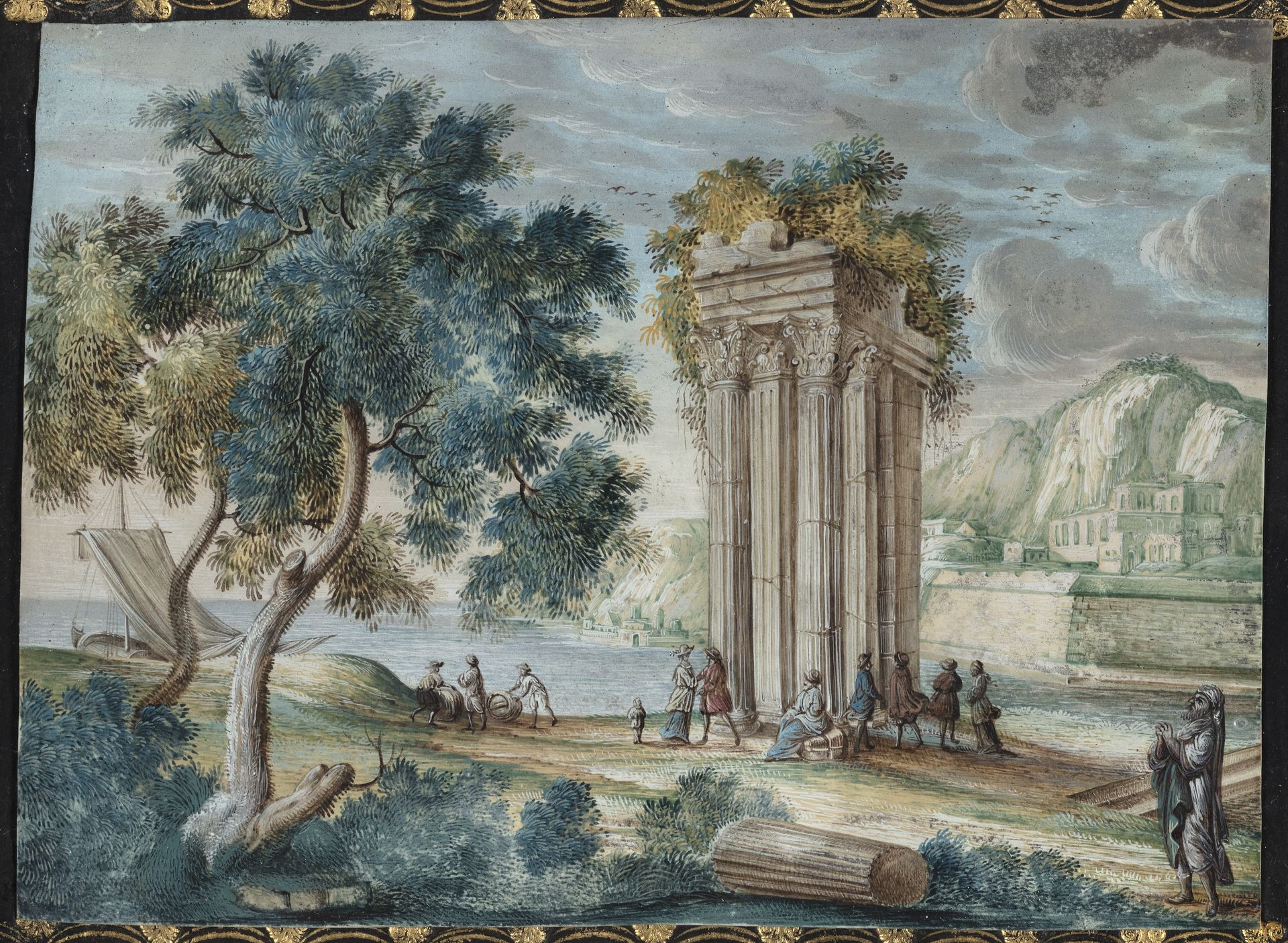
Landskab med udsigt til bjergene, t.h .i forgrunden en søjlehal, hvoraf en olding og en dreng træder ud. T.v. bønder med æsler.


Listen to curator's interpretation
Curatorial notes
Curator: This is an intriguing gouache painting attributed to Schröder, dating somewhere between 1675 and 1775. Its full title is quite a mouthful: "Landscape with a view of the mountains, to the right in the foreground a column hall, from which an old man and a boy step out. To the left, peasants with donkeys." Editor: That’s quite a lot to unpack. The initial feel is a blend of serenity and something subtly unsettling. There's this overgrown classical structure, clearly ancient, juxtaposed against everyday peasant life. Curator: Indeed, that contrast is key. Notice how the ruined column hall acts as a powerful symbol. It immediately calls to mind the glories of the classical world, but also their inevitable decay and absorption into nature. This wasn't merely depicting a pretty scene, but also contemplating themes of time and change. Editor: The presence of the old man and boy exiting the ruins is also important, isn't it? Are we seeing a representation of the cyclical nature of power and legacy, the passing down of knowledge? There's perhaps an implicit comment on the enduring nature of cultural memory. Curator: Precisely. Consider, too, the other figures in the composition. They seem completely unaffected by the ruin’s grandeur. This underscores a sort of democratization of the landscape, the sacred structure now part of their everyday surroundings. Editor: The gouache technique itself seems relevant here. Its delicacy contributes to a sense of wistful contemplation. Unlike the grand scale of an oil painting intended for powerful patrons, this medium speaks of intimacy, quiet observation. It could function as a personal meditation. The colours—a subdued palette of blues and greens— adds to that melancholy air. Is it romanticising poverty and pastoral labour to some degree? Curator: Perhaps, but through its carefully crafted arrangement of symbols, this work evokes a complex tapestry of ideas about antiquity, memory, and the ever-changing present. It allows you to consider history, landscape and their meanings to social structures across time. Editor: Absolutely. It reminds us that history is always a dialogue between past and present, grandeur and mundanity, ruins and resurgence. It makes me wonder who inhabited such place over time. Curator: Ultimately, Schröder gifts us a chance to witness how symbolic landscapes preserve layered experiences. Editor: And reveal that how we look upon even seemingly peaceful scenes carries both historical baggage and continuing possibilities for contemporary discourse.