drawing, print, pencil
#
portrait
#
pencil drawn
#
drawing
# print
#
child
#
romanticism
#
pencil
#
genre-painting
Dimensions: Plate (two images): 7 × 8 9/16 in. (17.8 × 21.7 cm) Sheet: 8 5/8 × 11 7/8 in. (21.9 × 30.2 cm)
Copyright: Public Domain
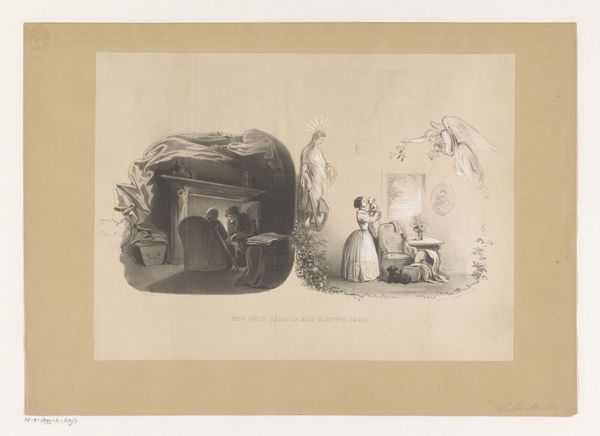
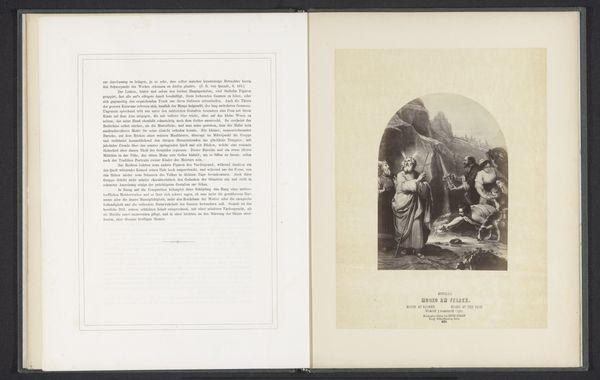
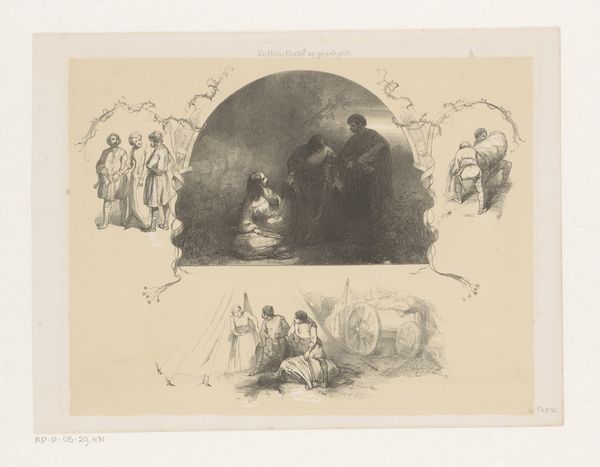
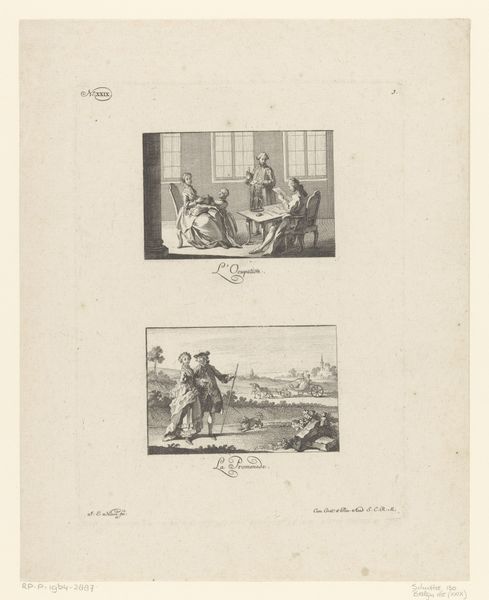
Curator: Today we are looking at "Two illustrations for 'The Economy of Human Life'", created in 1834 by Frank Howard. These prints, rendered in pencil, capture scenes of domestic life. Editor: My initial impression is one of stark contrast. The composition, split into two vignettes, projects a somber mood. There’s an inescapable feeling of constraint, visually mirroring limited possibilities. Curator: Indeed. The image on the left depicts a family huddled together in a confined space, perhaps a single room dwelling. On the right, a solitary figure, seemingly working, under dim light. Note how the artist utilizes chiaroscuro to intensify the feeling of enclosure. Editor: Yes, the cramped settings and the bowed heads speak to societal pressures – specifically how the relentless pursuit of economic stability bears down on families and individuals, doesn't it? Howard places the scenes under the title "The Economy of Human Life," thus immediately questioning the very ethics of such constraints. I see here visual parallels with workhouses and industrial England and find myself questioning how this art comments on those dynamics. Curator: The stark lines and attention to detail in the figures' faces are striking. The medium of pencil drawing allows for precise rendering, capturing subtle emotions. Look closely at the textures—the rough fabric of the clothing, the worn surfaces of the walls, and the difference in shading of light versus dark, which further underscores the economic circumstances of the portrayed. Editor: Precisely. Those visual cues become potent signifiers when we place this work within the era’s broader social context. Romanticism frequently romanticized rural life; however, these two images illustrate a harsher reality—where the simple life necessitates a profound, often backbreaking economy. Curator: Romanticism also often featured sentimentality. Observe how these drawings subvert sentiment by focusing on daily grind; what feelings rise for you looking closely at this tension? Editor: Ultimately, I believe Howard pushes us to see, feel, and engage critically with a narrative where human worth can become precariously entangled with societal demands. What this art communicates transcends aesthetics by igniting discussions concerning identity, class, and social progress. Curator: I am also grateful for the way he utilizes line and contrast to make such poignant formal articulations here. Thanks for exploring it with me!
Comments
No comments
Be the first to comment and join the conversation on the ultimate creative platform.
 Collect
 React
React Comment
More like this