drawing, ink, pencil
#
pencil drawn
#
drawing
#
narrative-art
#
pencil sketch
#
light coloured
#
charcoal drawing
#
figuration
#
ink
#
pencil drawing
#
pencil
#
pencil work
#
genre-painting
#
history-painting
#
academic-art
Dimensions: height 252 mm, width 336 mm
Copyright: Rijks Museum: Open Domain
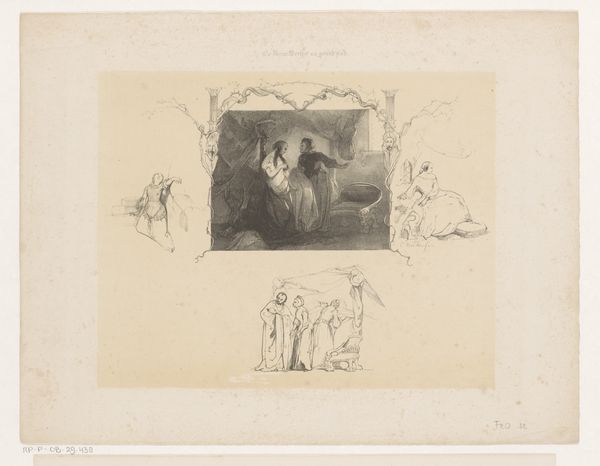
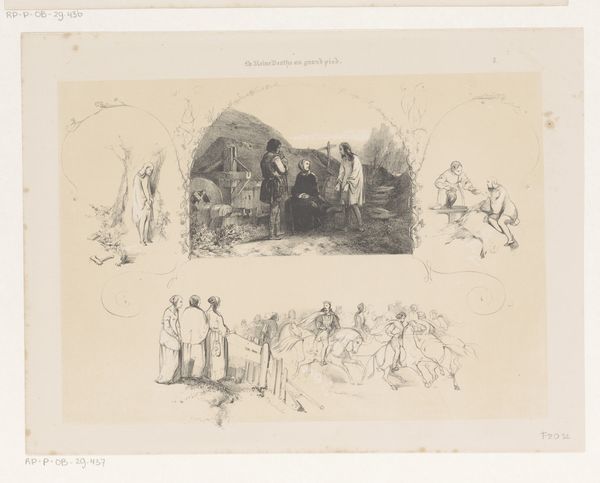
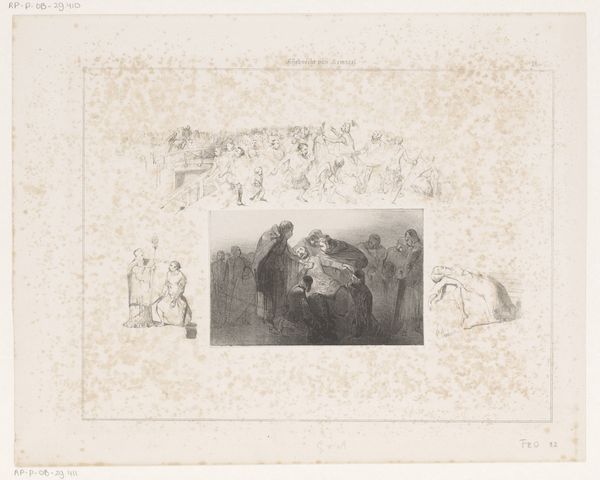
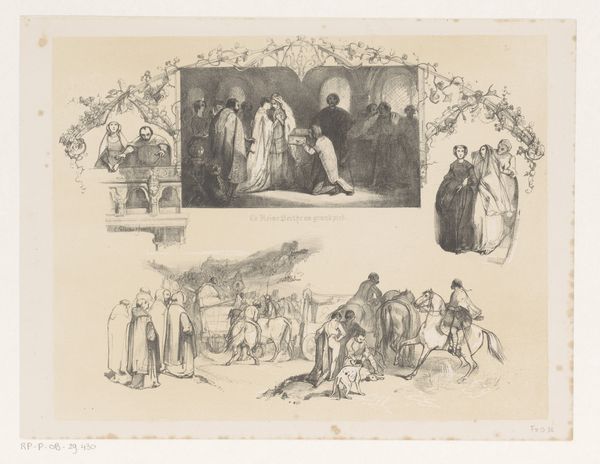
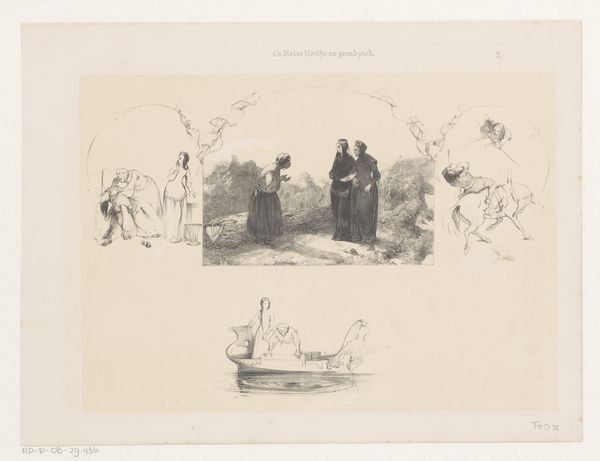
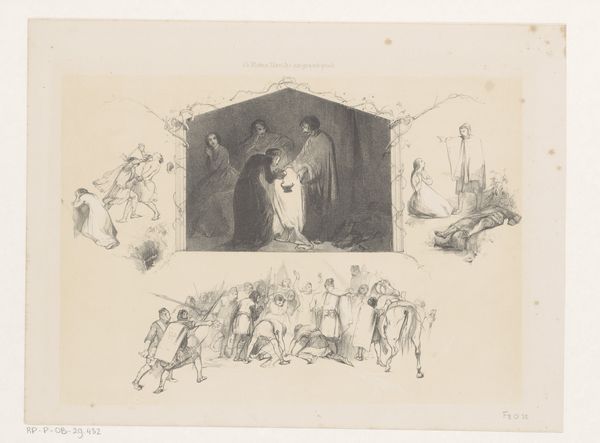
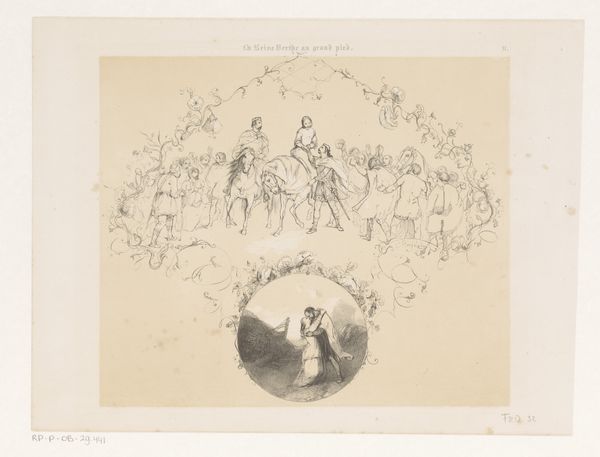
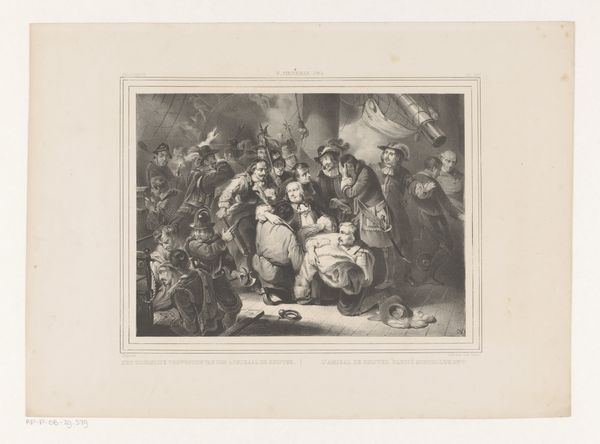
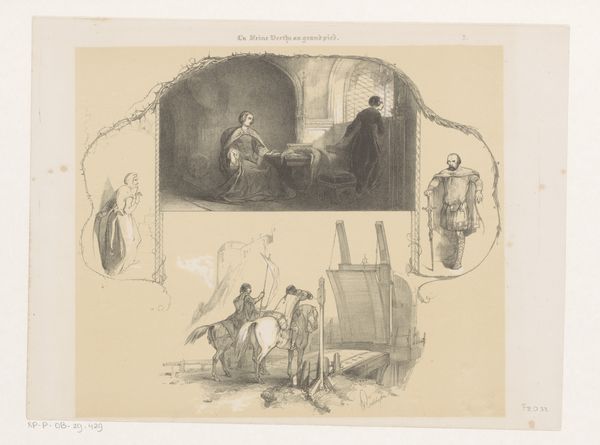
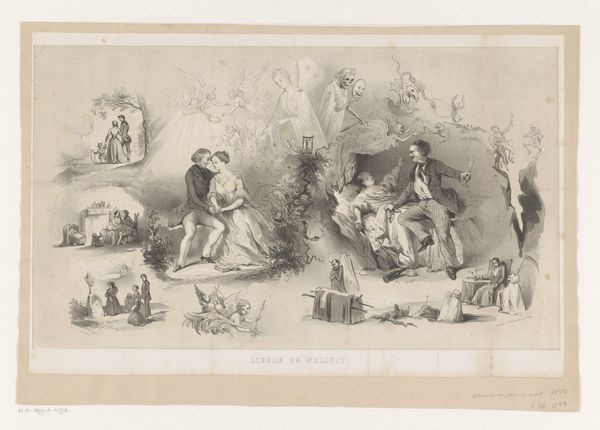
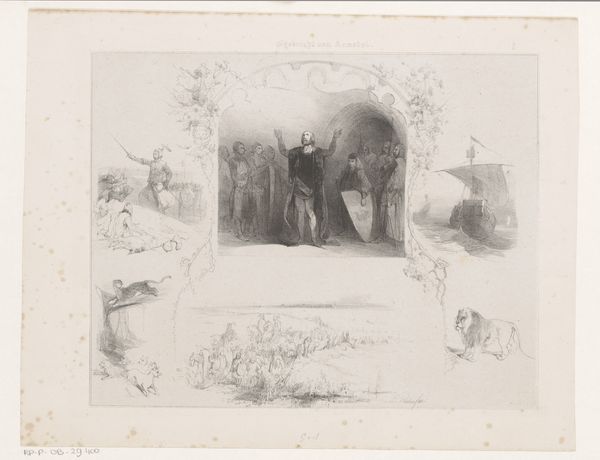
Curator: Let's delve into "Mannen en liggende vrouw," a drawing by Charles Rochussen, created before 1842 and held here at the Rijksmuseum. What are your first impressions? Editor: It's melancholic, almost sepia-toned in mood despite just being pencil and ink, isn't it? Fragmented narrative scenes unfolding across the paper... A dreamlike tableau of human suffering or toil. Curator: Rochussen's mastery is evident in his ability to depict historical narrative scenes using only pencil and ink. The materials themselves, easily accessible and mass-produced even in the 19th century, contribute to a democratic accessibility of history, wouldn't you agree? The use of readily available materials suggests an intention beyond high art for the elite. Editor: Absolutely! It's more sketch than statement, like turning the page in a novel only to catch a shadow of the plot. But there's an inherent tenderness to his lines. Curator: Note the layering and juxtapositions. Figures hauling heavy loads, juxtaposed against groups in solemn discourse and quieter intimate scenes of grief and desperation near what appears to be a wagon or camp. What of it speaks of its time? Editor: Perhaps that shared space is a common condition of hard lives. And yet the artist chose to capture their interactions in a very intimate way. It reads now, through the filter of our contemporary sensibilities, as a sensitive commentary on the vulnerability of existence. There's also something about the way Rochussen breaks with academic art here by rendering emotions that speak of its human making: visible pencil strokes with a deep resonance with the subject's circumstances. Curator: I agree. Rochussen certainly aimed to imbue readily accessible materials and formats with artistic integrity, echoing shifts toward valuing the processes of production. Editor: Seeing it this way does give "Mannen en liggende vrouw" even deeper meaning. It's more than just a drawing; it's a historical document seen with compassion. Curator: Precisely! It demonstrates that by studying the materials and processes of the artist we discover more nuanced historical reflections on people and practices.
Comments
No comments
Be the first to comment and join the conversation on the ultimate creative platform.
 Collect
 React
React Comment
More like this