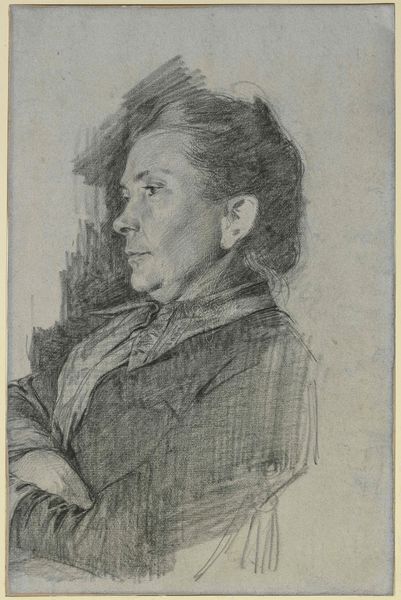
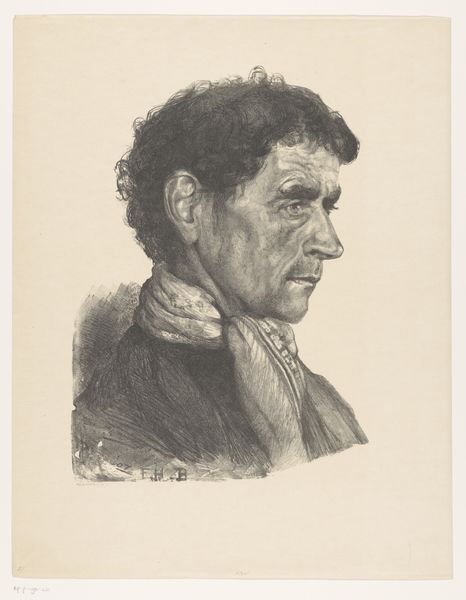
print, etching
#
portrait
# print
#
etching
#
pencil drawing
#
modernism
#
realism
Copyright: Public domain
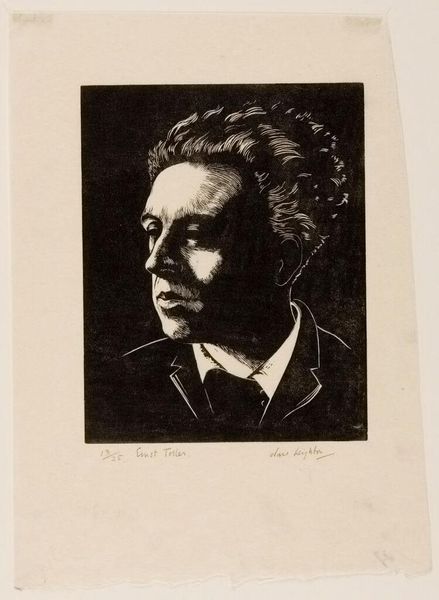
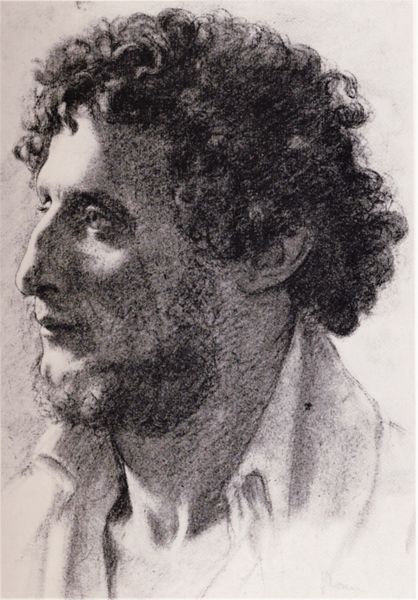
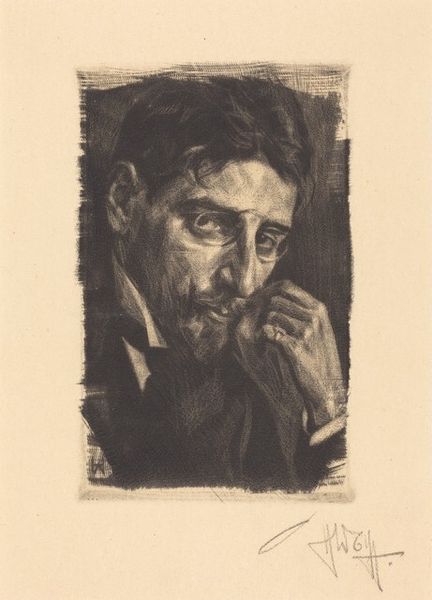
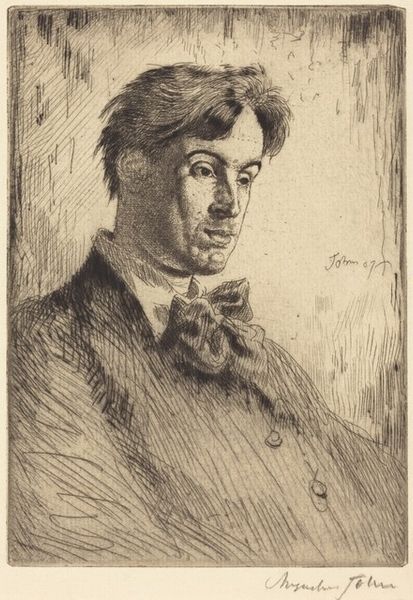
Curator: This is Ilya Repin's "Portrait of P. Schindler," executed as an etching. Editor: Striking! My initial impression is one of almost unsettling intensity. The high contrast and frenetic lines make it quite visually restless. Curator: Exactly. The rapid, almost chaotic network of lines gives the portrait its power. Observe how Repin uses the hatching technique not only to model the form but also to evoke texture—the wildness of the hair, the somber cloth of his attire. Editor: The sitter is certainly presented as intellectual. It almost reads like a challenge to bourgeois convention with that somewhat disheveled appearance and piercing gaze. I wonder, what can we discern about Schindler and his relationship with Repin through this portrait? What role did Schindler play in Repin's world? Curator: Unfortunately, details of Schindler’s life remain scant. What endures is the psychological depth Repin manages to convey through purely formal means. The artist seems preoccupied by line as form, not just contour, and employs its density to suggest shadows—both literal and metaphorical— around the sitter’s being. Editor: Fascinating. And those shadows also appear to enclose and maybe, in a way, constrain him. It’s a subtle technique, imbuing the image with complex social undertones about intellectual life at the time. Was there much anxiety around intellectual expression in that period, considering potential scrutiny? Curator: Undoubtedly, societal restrictions and censorship impacted artists and intellectuals. Here, the etching captures a sense of that suppressed energy, translated to the stark interplay of light and shadow, which heightens the introspective, pensive air surrounding the subject. Editor: It prompts us to contemplate the human condition, then, with the sitter’s essence meticulously captured in the dynamic network of lines that create depth. This intense emotional and intellectual presence echoes throughout, defying the bounds of mere representation and invites ongoing interrogation into the spirit of those times. Curator: It encourages the viewer to reflect not only on the subject but also the period's sociopolitical context, ingeniously distilled via the work’s compositional strategy and overall materiality. Editor: An enduring testament to art's capacity to articulate both the internal landscape and the external forces molding lives in times of unrest.
Comments
No comments
Be the first to comment and join the conversation on the ultimate creative platform.
 Collect
 React
React Comment
More like this