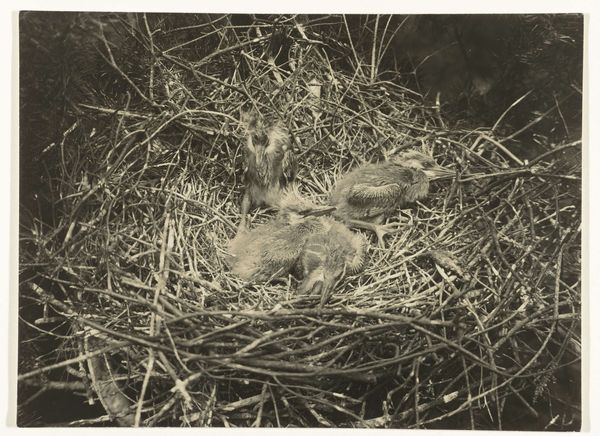
Dimensions: height 166 mm, width 224 mm
Copyright: Rijks Museum: Open Domain
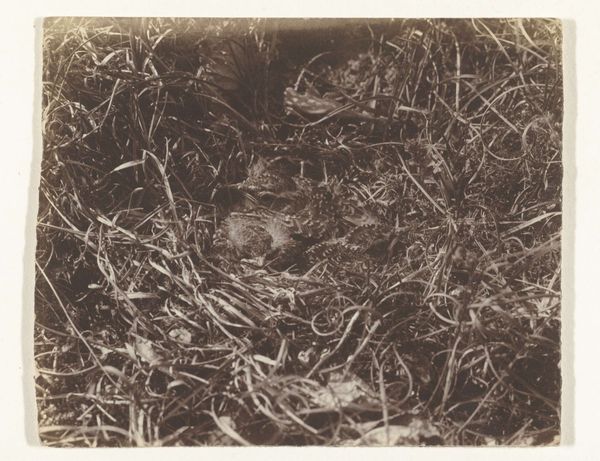
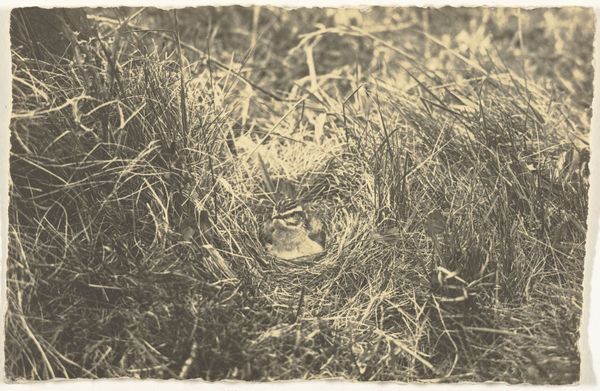
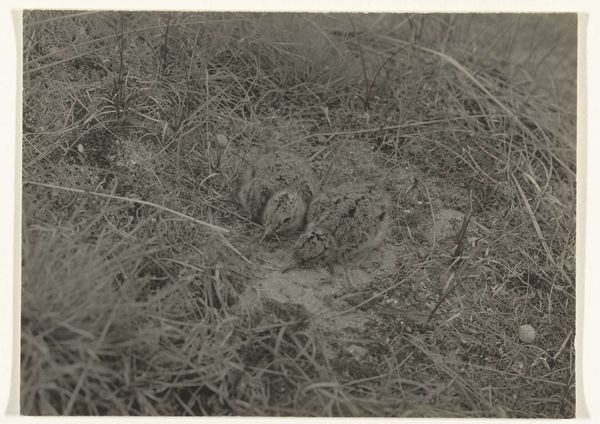
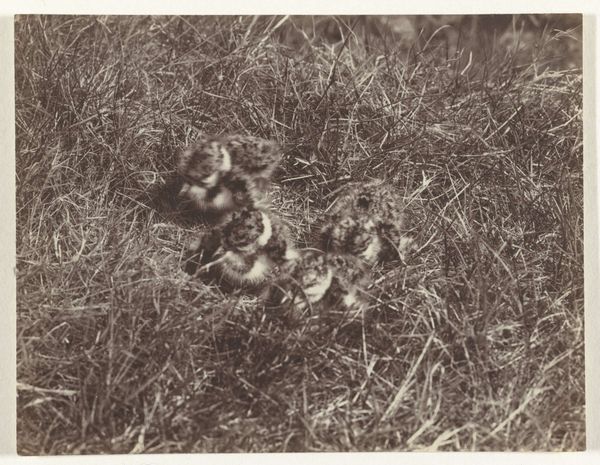
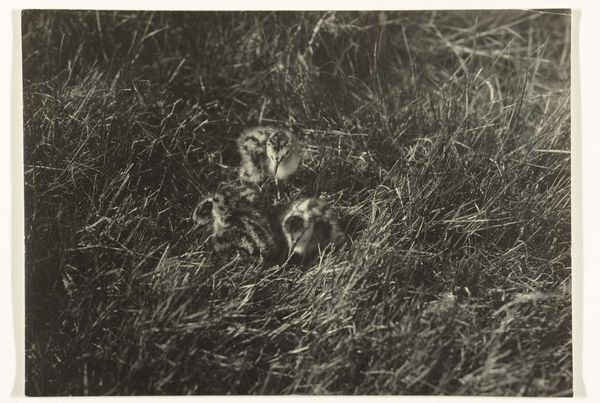
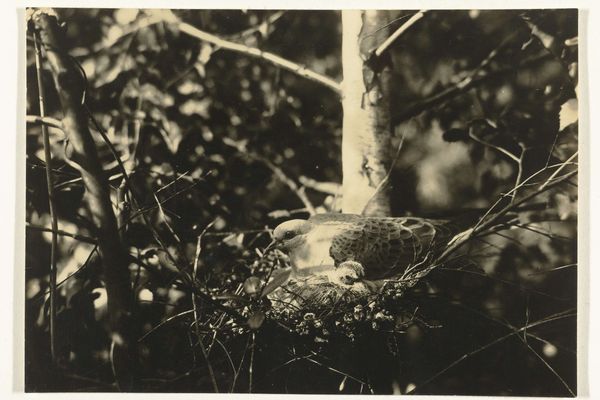
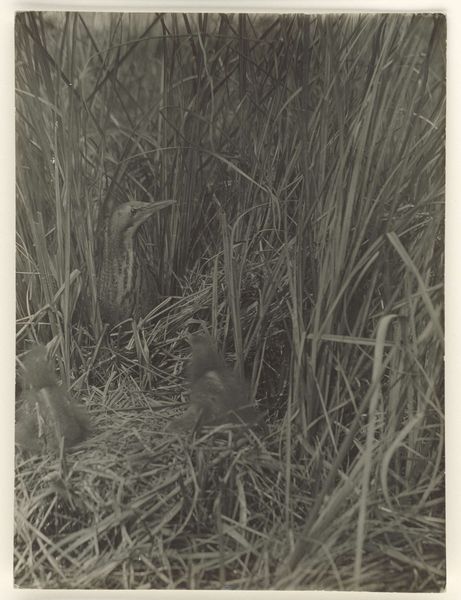
Editor: This is Richard Tepe’s "Nest met eendjes," or "Nest with Ducklings," a gelatin-silver print from sometime between 1900 and 1930. It’s incredibly intimate, like we’ve stumbled upon this secret little world. What can you tell me about this piece? Curator: Well, what I find striking is how this photograph participates in a larger discussion about the rise of naturalism at the turn of the century. In the late 19th and early 20th centuries, there's a real push within artistic and intellectual circles towards scientific observation and documentation of the natural world. Think of it as a visual manifestation of Darwin's influence. Editor: So, it's not just a pretty picture of ducklings, but also part of a broader cultural movement? Curator: Exactly! And to take that a little further, consider where and how this image would have been consumed. Photography at this time was increasingly featured in illustrated magazines and journals. Were photographs like this contributing to a romanticized, or even commodified, vision of nature? Think about the cultural values assigned to "nature" as separate from the rapidly industrializing urban environments. Do you see some tension there? Editor: I do, that's a really interesting point. It feels like the photograph, through its seemingly innocent depiction of wildlife, becomes implicated in a much bigger conversation. Thanks for sharing your perspective! Curator: Of course! I think by asking those sorts of questions, it prevents us from passively observing the artwork and encourages critical reflection on its social and cultural role.
Comments
No comments
Be the first to comment and join the conversation on the ultimate creative platform.
 Collect
 React
React Comment
More like this