1767
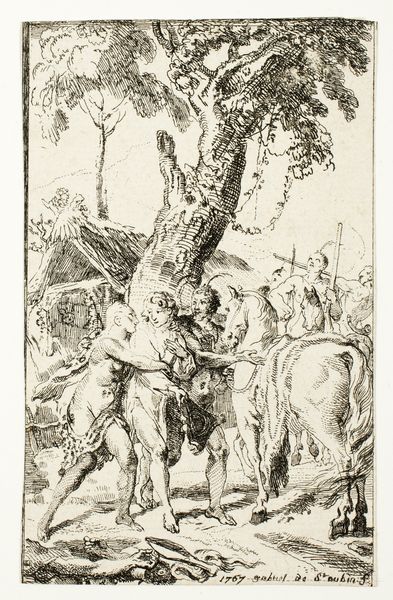
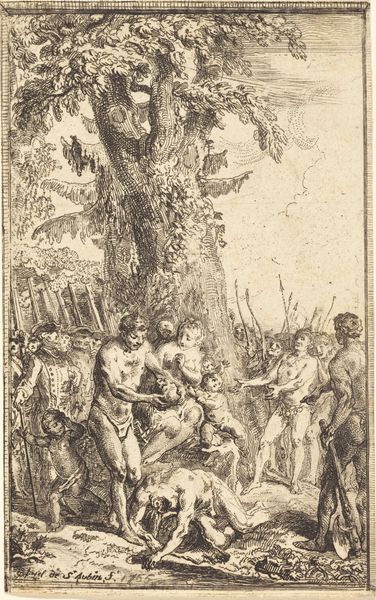
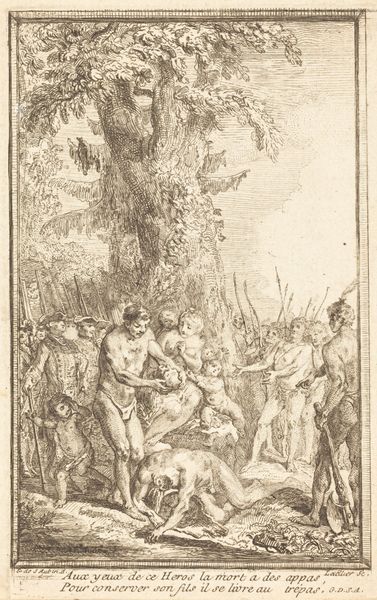
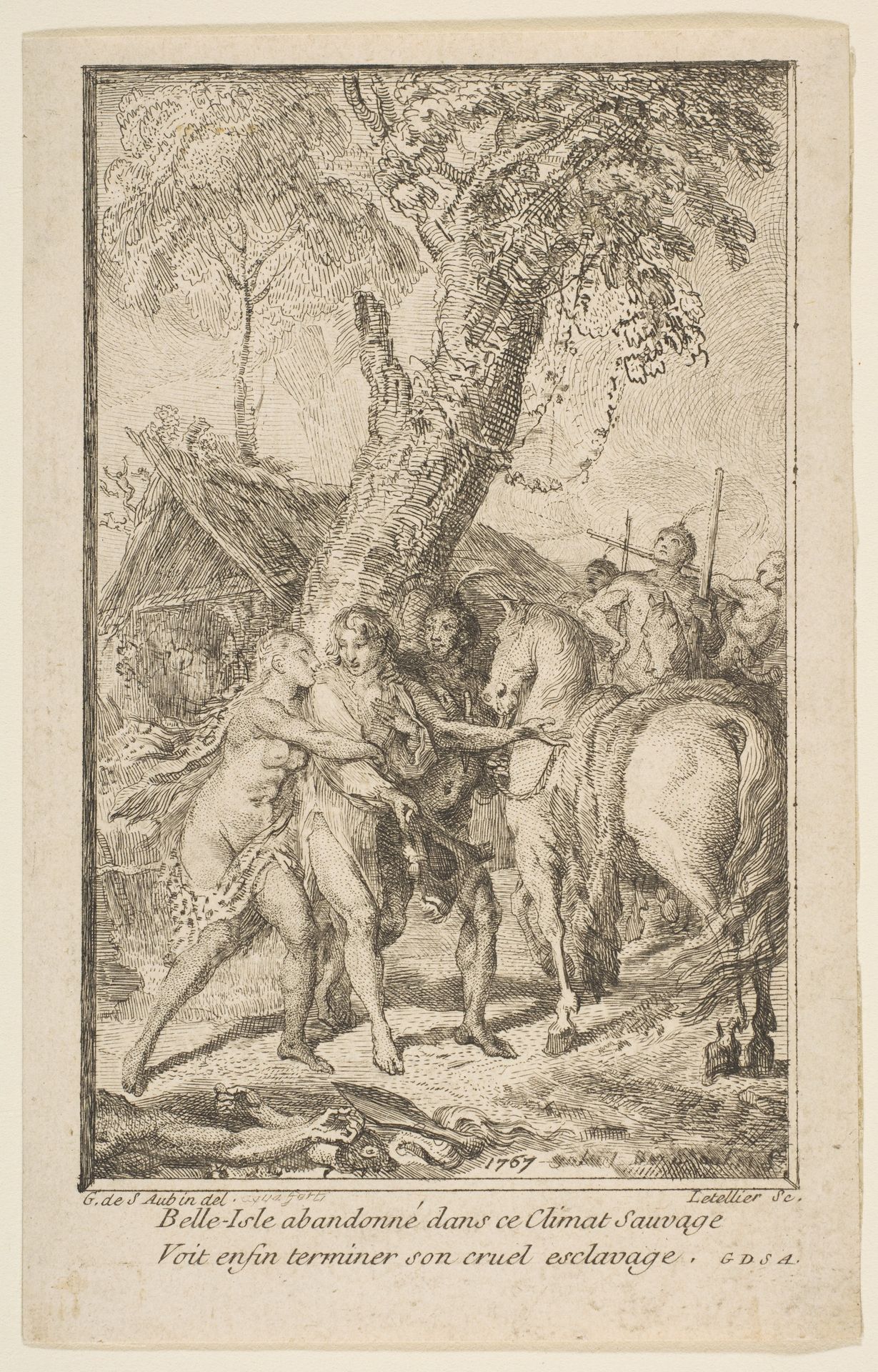
Fuite de M. de Belle-Isle, prisonnier chez les Attakapas

Gabriel de Saint-Aubin
1724 - 1780
The Metropolitan Museum of Art
Metropolitan Museum of Art, New York, NYListen to curator's interpretation
Curatorial notes
This is "Fuite de M. de Belle-Isle, prisonnier chez les Attakapas," an etching made in 1767 by Gabriel de Saint-Aubin. In this period, prints like this were a crucial way of circulating information and stories across society, and also acted as a tool of political commentary. The image is made up of finely etched lines on a copper plate, which would then be inked and printed onto paper, a process that requires a high degree of skill. Saint-Aubin shows us the escape of Monsieur de Belle-Isle from the Attakapas people. The scene seems to depict a heroic rescue, but the story behind this print involves the messy history of colonialism in North America. The Attakapas were an indigenous group living in present-day Louisiana. From the French perspective, they were regarded as ‘savage’. The print not only tells a story, it also promotes a particular viewpoint and reveals the social biases of its time. It reminds us that prints, like any other medium, can be powerful tools of propaganda, shaping public opinion and justifying the actions of those in power.