1664
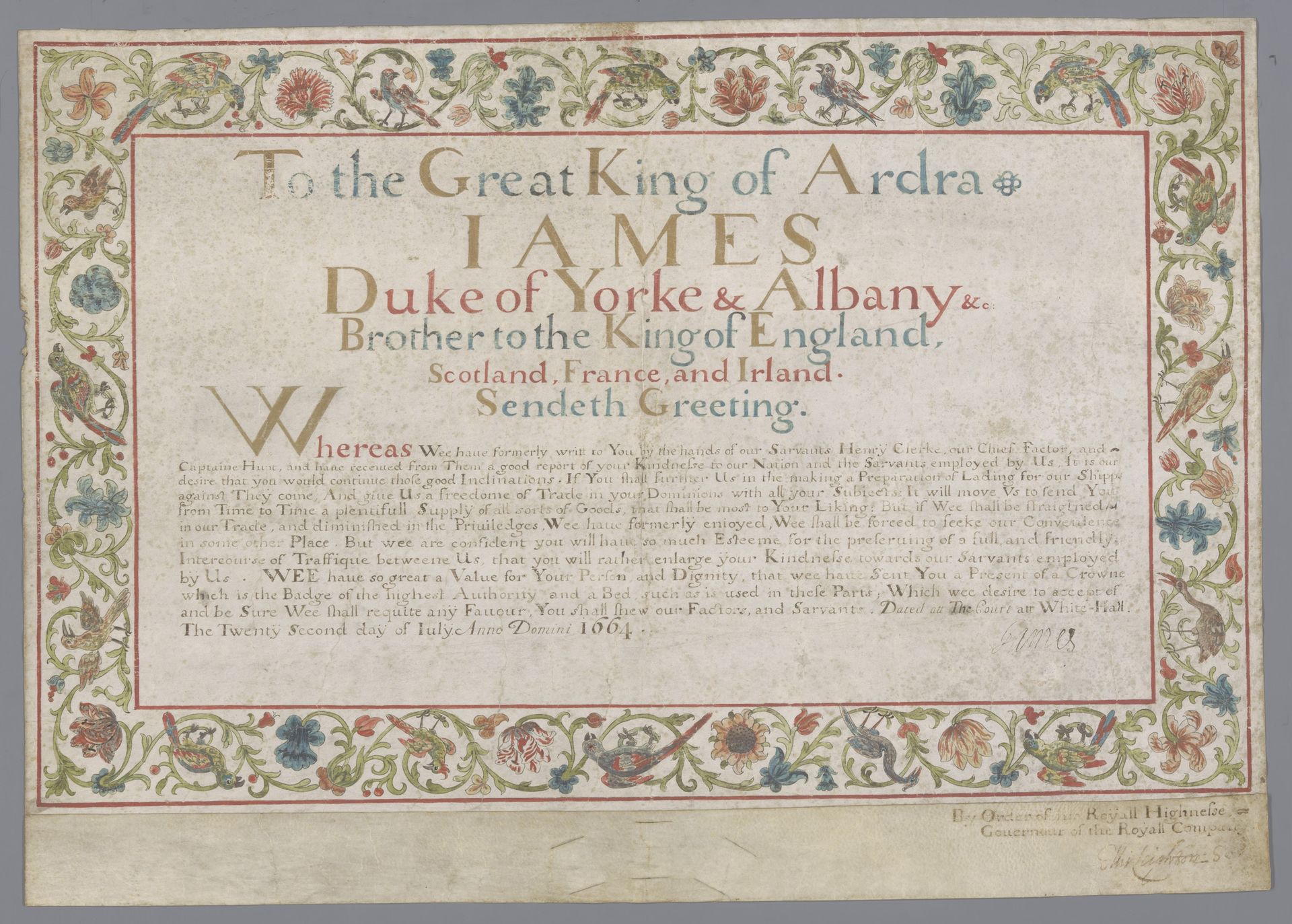
Document van James, hertog van York, aan de koning van Ardra

Listen to curator's interpretation
Curatorial notes
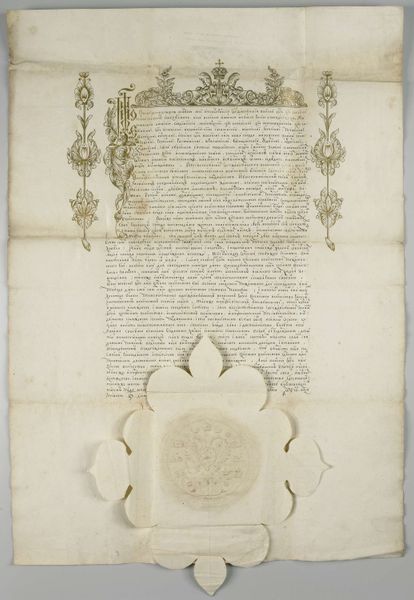
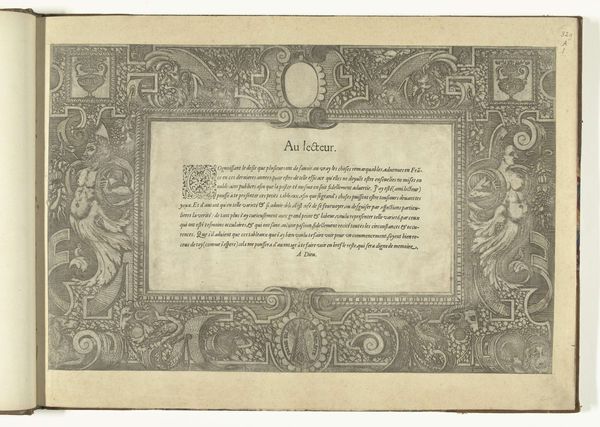
Curator: We’re looking at a document dated 1664. It is a missive penned by James, Duke of York, addressed “To the Great King of Ardra.” We attribute this ink-on-paper print to Sir Ellis Leighton. Editor: The immediate impression is, frankly, one of ornate formality attempting to mask an unsettling colonial subtext. The delicate floral border, framing that imposing block of text… it’s a striking contrast. Curator: Precisely. That border isn't just decorative; it evokes illuminated manuscripts, lending authority to James’s claim. The careful calligraphy speaks to established diplomatic rituals, even as the document’s purpose would reshape those relations entirely. Editor: Let's be frank; the “greeting” belies the inherent power imbalance. Ardra, a coastal kingdom in present-day Benin, was already deeply entrenched in the transatlantic slave trade. This document represents an attempt to control trade relations. Curator: We see James offering freedom of trade and continual supply of goods. Essentially, a thinly veiled request, and possibly coercion, to make demands from Ardra while seeming generous. Editor: The use of “We” throughout, representing both James's individual authority and the collective power of the English crown, further emphasizes this dynamic. Look how “Your kindness” is framed as something to be enlarged and ordered. It feels… manipulative. Curator: But is it truly surprising? Seventeenth-century diplomacy was a complex dance of alliances, economic strategies, and power assertions. We see that complexity reflected here. The historical painting on offer here presents an agenda by the artist through James’ perspective. Editor: And it’s crucial to view that perspective critically. The King of Ardra undoubtedly had a radically different understanding of the “traffique” being discussed. This document isn't just a historical artifact; it’s a manifestation of early colonial ambition. Curator: True, and recognizing that duality enriches our understanding of this historical moment and the enduring impact it has had on international power dynamics. Editor: Exactly. By placing these seemingly innocuous objects in the context of colonial practices, the larger implications of the slave trade and imperial expansion gain wider clarity.