c. early 20th century
Shōki


Listen to curator's interpretation
Curatorial notes
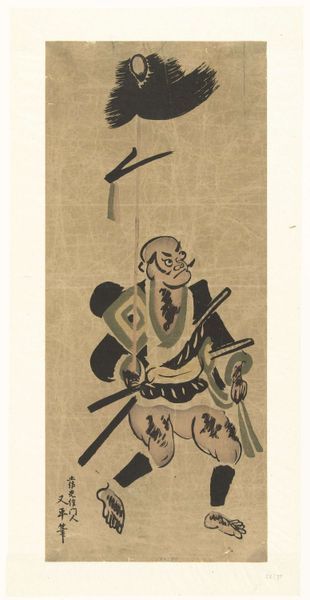
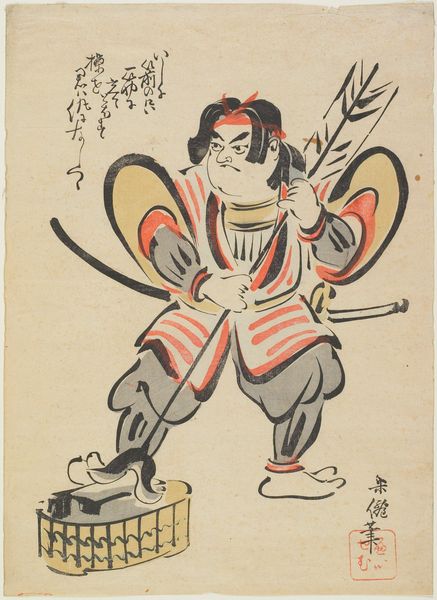
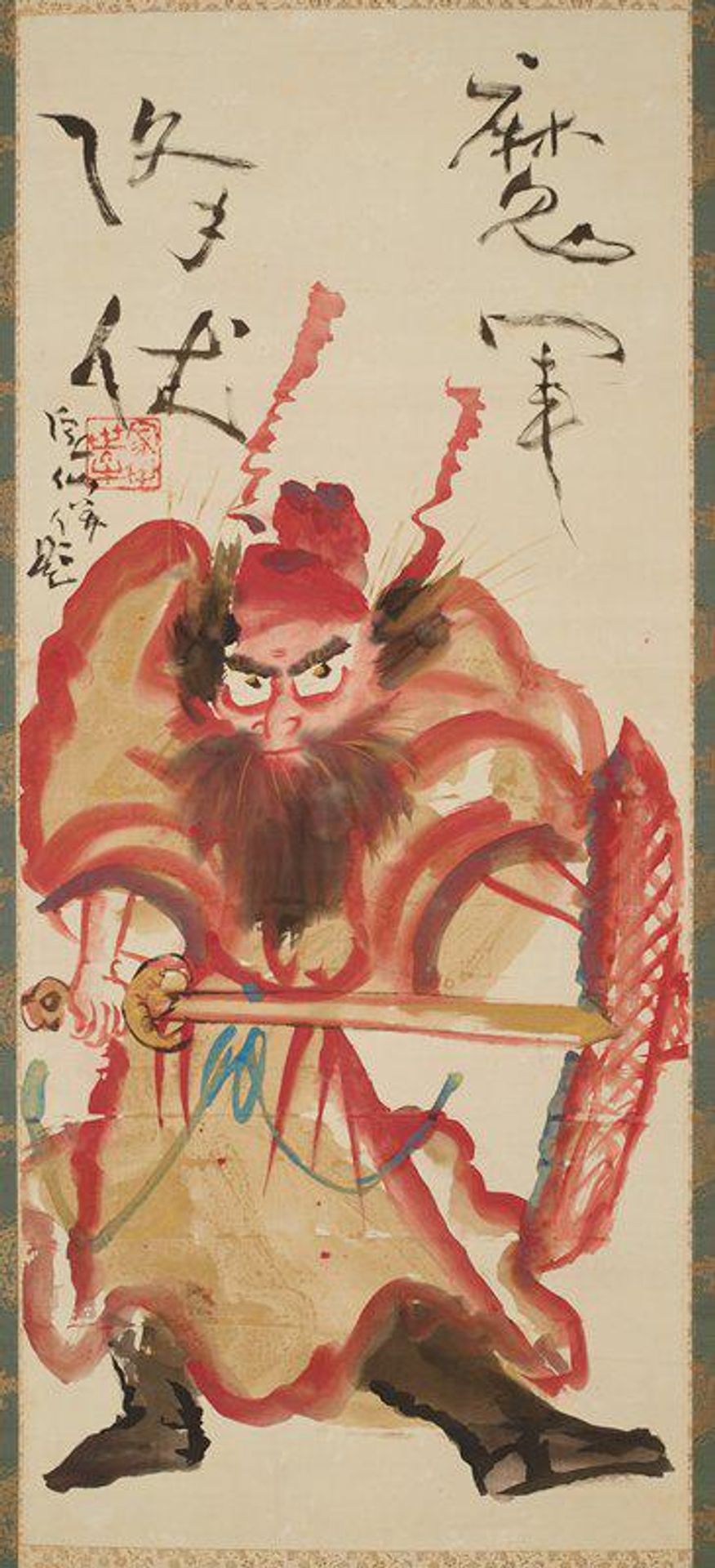
Curator: Welcome! We're standing before "Shōki," a portrait by Tomita Keisen from the early 20th century. It's rendered with ink and watercolor, and can be found here at the Minneapolis Institute of Art. Editor: Immediately, I'm struck by the immediacy of the washes – the swift strokes almost vibrate with energy. It feels less like a carefully constructed portrait and more like a capturing of raw, fleeting emotion. Curator: Precisely. Shōki, the demon-queller, is a figure steeped in folklore, originally Chinese but adopted in Japan. He is the protector against evil spirits and disease, and in Keisen’s rendering, he carries centuries of cultural anxieties about unseen forces of illness. Editor: You see that in the broad, gestural strokes, even the somewhat translucent layers suggesting ephemerality—that what Shōki protects us from is everywhere, weightless but dangerous. The quickness with which ink and watercolor allow one to work also facilitates this, giving that urgency to the scene. Curator: And note how the artist uses vibrant red pigments— a shade historically loaded with symbolic power. Here, it perhaps embodies both protection and warning: the passion with which Shōki fulfills his role. Red is often associated with the active warding off of evil. Editor: The way Keisen handles the pigment really shows its material properties. Observe how the watercolor bleeds a bit, uncontrolled around the edges. It suggests a sort of chaos, or perhaps, resistance to imposed order. The demon-queller must engage in the very sort of disorder that he seeks to contain. Curator: Interesting interpretation! I tend to read the controlled brushstrokes within his beard and the sharpness of the sword's line as elements that emphasize order – asserting that humans have, or at least strive for, the agency to protect themselves through this legendary figure. And observe also the inscription – calligraphic statements that imbue it with cultural weightiness. Editor: I wouldn't disagree, but note that even the careful calligraphic inscription is almost casually placed atop, a sort of post-production detail. Still, it reveals a negotiation with craft itself – a demonstration that art exists as something more than high-minded ideology or ancient tradition. Curator: Considering both his historical role and this visual language, the artwork certainly showcases how images continue to function as emotional touchstones and visual repositories of tradition. Editor: And reveals how even tradition comes to be forged through layers of production, manipulation, and the creative choices that we encounter within materiality. Thank you!