mixed-media, painting, watercolor
#
mixed-media
#
contemporary
#
water colours
#
painting
#
landscape
#
watercolor
#
abstraction
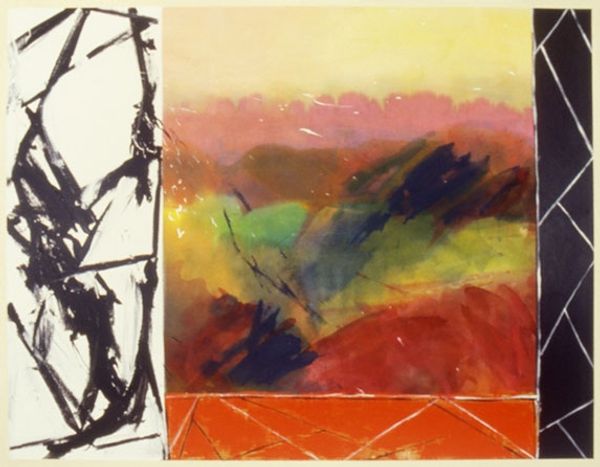
Copyright: Marin Gherasim,Fair Use
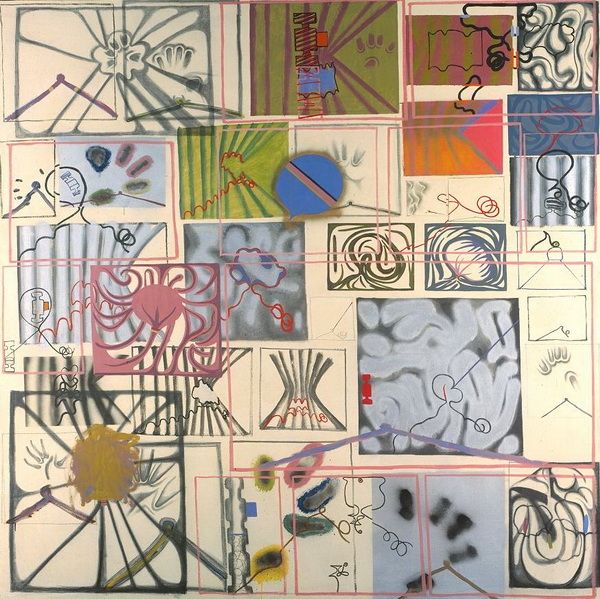
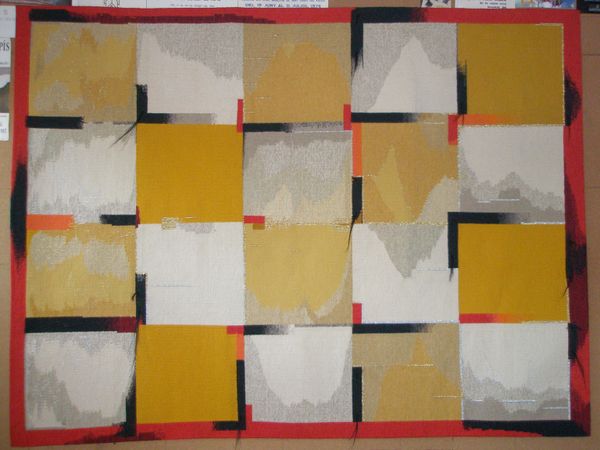
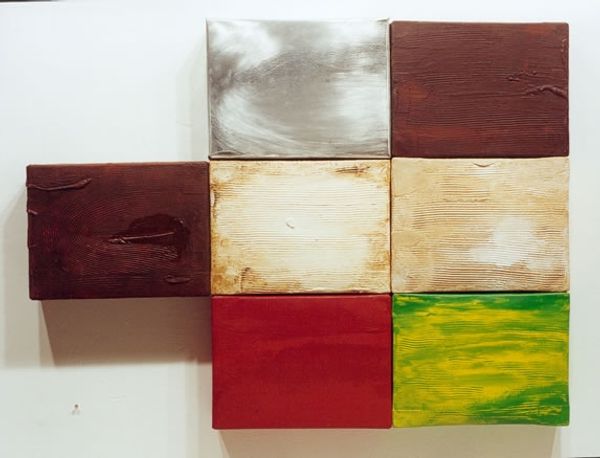
Editor: This is Marin Gherasim’s "Polyptic" from 2000, created with mixed media, including watercolor. There's something intriguing about its almost map-like divisions, yet it’s far from geographically representational. The varying textures across the panels really catch my eye. What do you see in this piece, especially regarding its use of materials? Curator: It’s fascinating how Gherasim challenges the traditional boundaries between painting and construction here. We see 'painting' in its conventional sense in some of the panels with their application of watercolours. However, when we zoom into the top centre panel, it's as though he has superimposed various textural techniques. Do you notice how this layering alters our understanding of image creation? How it implicates a labor of building up materials, rather than simple painting? Editor: Yes, I see what you mean! It feels like a conversation between the act of painting and the physical application of materials. Almost a rejection of purely representational art. Do you think this relates to the social context of art production? Curator: Absolutely. The apparent simplicity is misleading. By foregrounding the making of art, he's drawing attention to art as a form of labor and also as consumption of materials, it reflects post-industrial reflections on labor that question mass manufacturing processes of the time, and brings attention back to what materiality in the artwork could mean. Where do you see those themes arising? Editor: Perhaps in the almost diagrammatic arrangement of elements, reminiscent of production line charts, but disrupted by organic shapes and textures, such as the trees in the lower row. It reminds me how art production, in a way, mirrors the way our modern industries function. Curator: Exactly! It is disrupting our understanding by reflecting back at us our reliance on material culture, prompting us to reflect how meaning changes across production methods and styles. I wonder what we can say about its materiality shaping consumption through visual appeal? Editor: I had never thought about it in these terms before, considering not just what's depicted, but how the materiality influences our interpretation and engagement with the artwork. Thanks for offering such a fresh outlook. Curator: My pleasure. It’s often in understanding the physical production that we uncover new perspectives on art's role within larger cultural dialogues.
Comments
No comments
Be the first to comment and join the conversation on the ultimate creative platform.
 Collect
 React
React Comment
More like this