1880
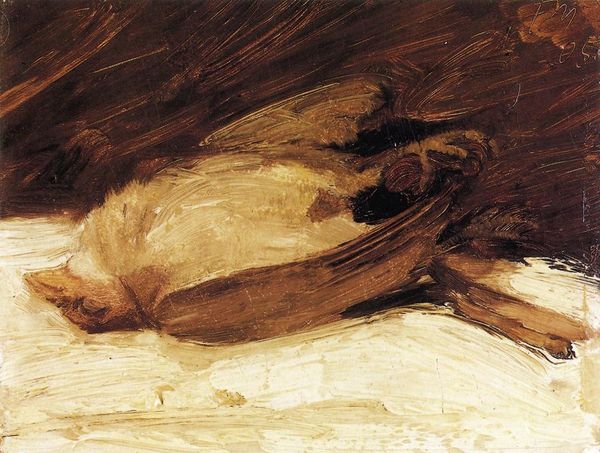
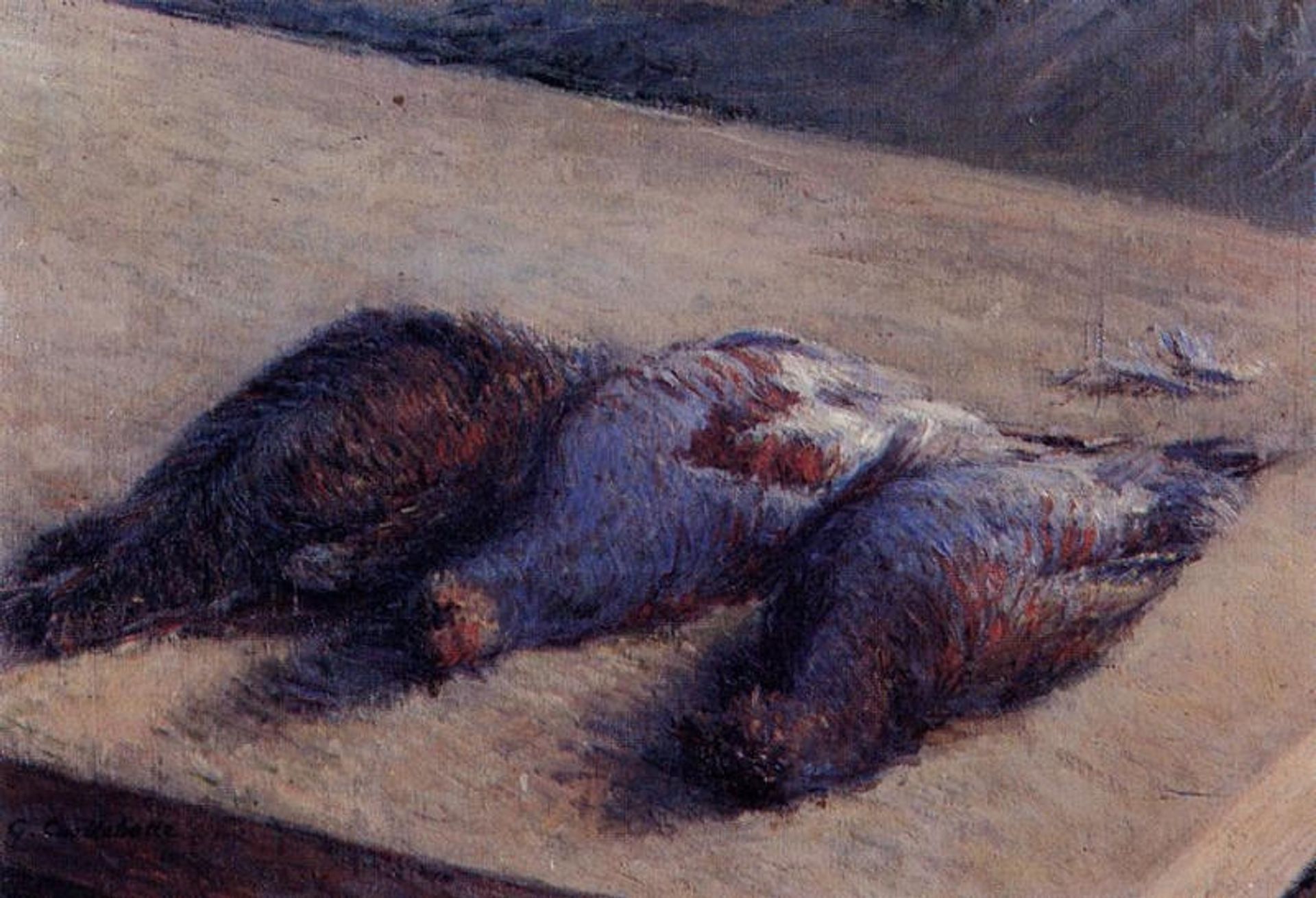
Three Partridges on a Table

Gustave Caillebotte
1848 - 1894Location
Private CollectionListen to curator's interpretation
Curatorial notes
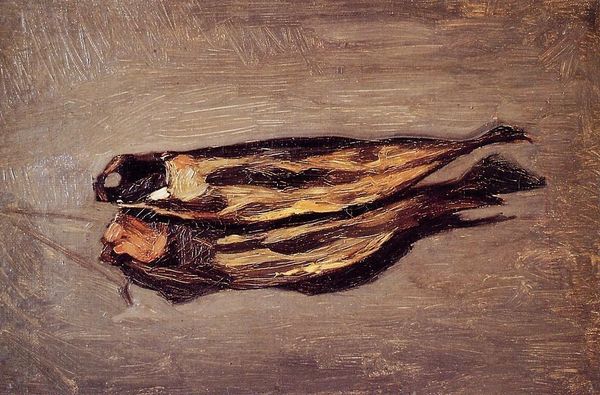
Gustave Caillebotte, a wealthy member of the Impressionist circle, painted “Three Partridges on a Table." In 19th-century France, hunting was not merely a sport but a symbol of aristocratic privilege, deeply intertwined with notions of masculinity and social status. Caillebotte, who came from a wealthy background, would have been familiar with this culture, and perhaps this is why he created this striking still life. It captures not just dead game but a moment laden with social significance. The partridges lying lifeless on the table speak to the power dynamics inherent in the act of hunting. They reflect a sense of control over nature. The emotional impact of this painting is undeniable. The somber tones and the stark presentation of the birds evoke a feeling of melancholy. The painting invites us to consider our relationship with the natural world and the values we place on conquest and possession.