About this artwork
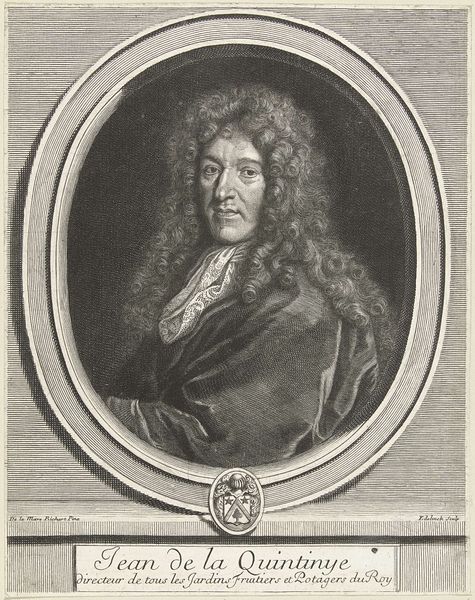
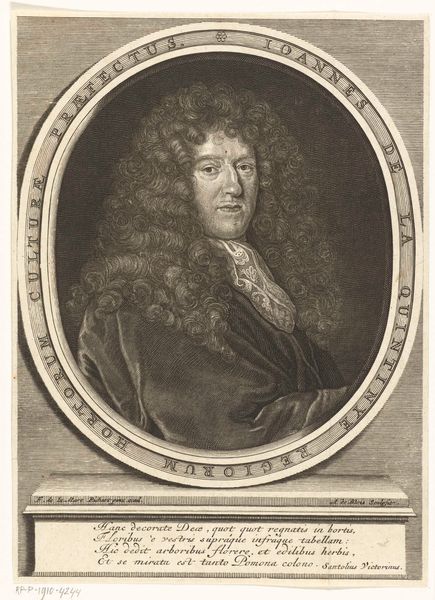
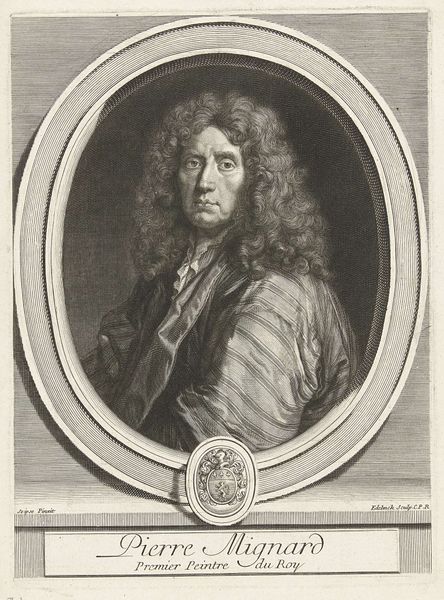
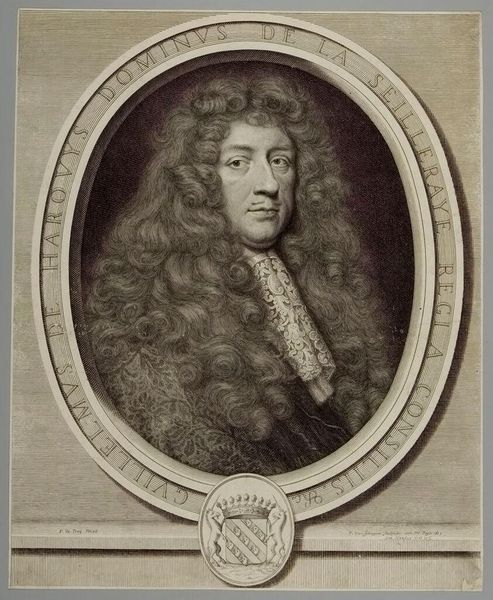
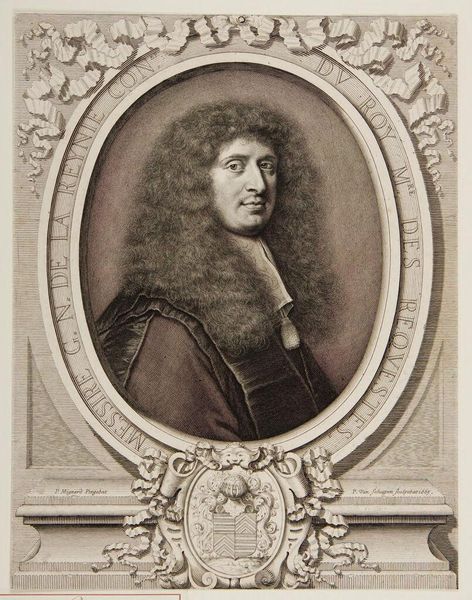
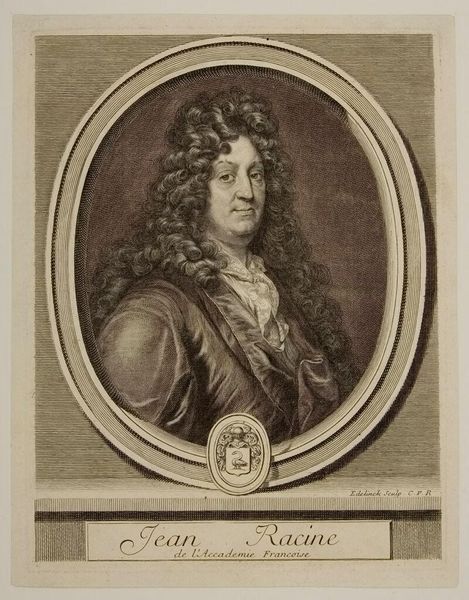
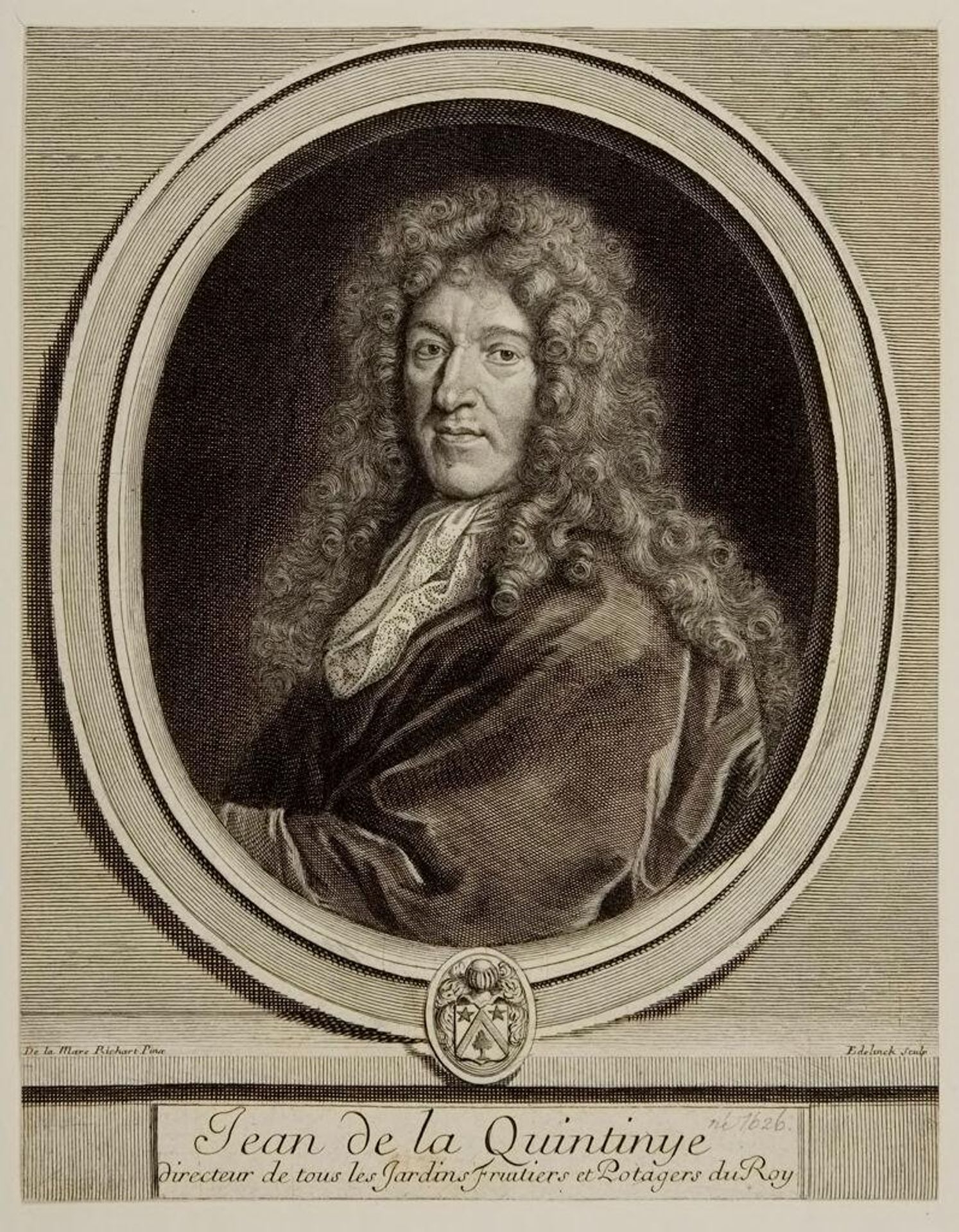
Editor: This engraving by Gérard Edelinck depicts Jean de la Quintinye. I notice how the portrait is framed within an oval, almost like a looking glass. What does this kind of formal portrait tell us about the subject and its cultural context? Curator: It reflects the rise of professional identity within absolutist states. Note how the trappings of status - the wig, the lace - are meticulously rendered. This isn't just about personal vanity; it's about projecting an image of competence and authority in service to the crown. Does that resonate with you? Editor: Yes, the rigid formality does suggest that. It makes me wonder, what was the role of art in building these kinds of public images? Curator: Exactly! It was crucial in shaping perceptions of power and expertise, normalizing the social hierarchies. These images weren't simply representations; they were active participants in the construction of royal power. Editor: I see, it's a form of statecraft then. Thank you, this gives me a lot to consider about the politics of imagery!
Jean de La Quintinye
c. 17th century


Artwork details
- Dimensions
- Sheet: 24 Ã 18.5 cm (9 7/16 Ã 7 5/16 in.)
- Location
- Harvard Art Museums
- Copyright
- CC0 1.0
Comments
Share your thoughts
About this artwork
Editor: This engraving by Gérard Edelinck depicts Jean de la Quintinye. I notice how the portrait is framed within an oval, almost like a looking glass. What does this kind of formal portrait tell us about the subject and its cultural context? Curator: It reflects the rise of professional identity within absolutist states. Note how the trappings of status - the wig, the lace - are meticulously rendered. This isn't just about personal vanity; it's about projecting an image of competence and authority in service to the crown. Does that resonate with you? Editor: Yes, the rigid formality does suggest that. It makes me wonder, what was the role of art in building these kinds of public images? Curator: Exactly! It was crucial in shaping perceptions of power and expertise, normalizing the social hierarchies. These images weren't simply representations; they were active participants in the construction of royal power. Editor: I see, it's a form of statecraft then. Thank you, this gives me a lot to consider about the politics of imagery!
Comments
Share your thoughts