1830 - 1899
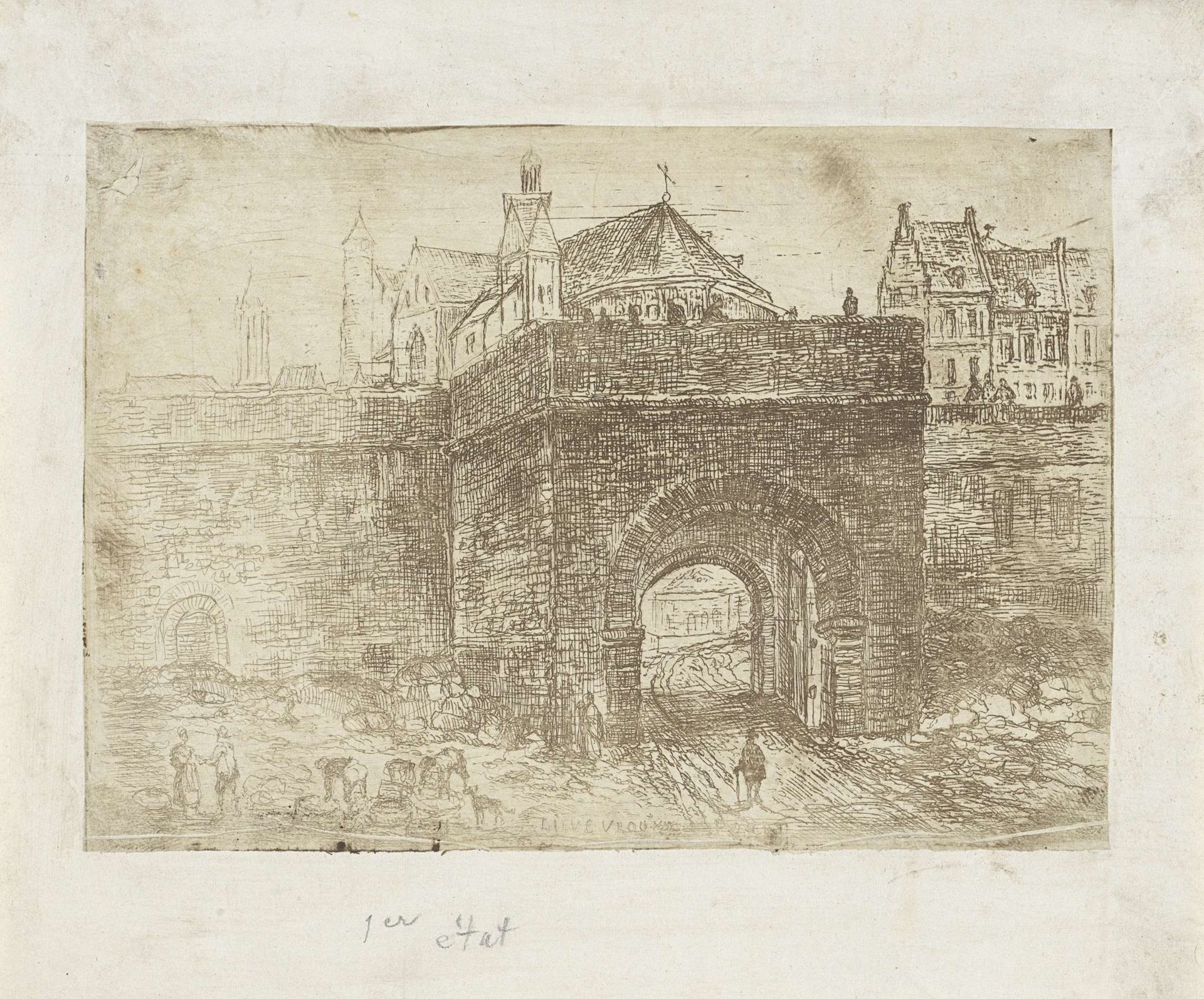
Onze-Lieve-Vrouwepoort te Maastricht

Alexander Schaepkens
1815 - 1899Location
RijksmuseumListen to curator's interpretation
Curatorial notes
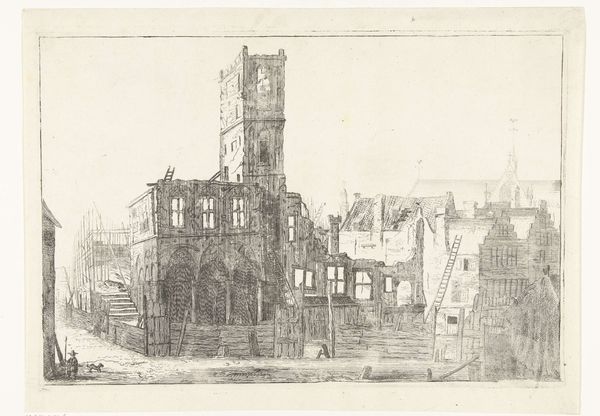
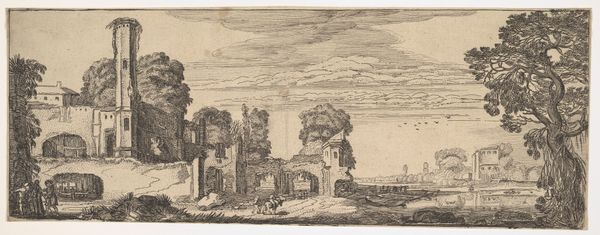
Alexander Schaepkens made this etching, "Onze-Lieve-Vrouwepoort te Maastricht," in the 19th century, capturing a now-vanished city gate. What was the public role of such images at that time? Well, consider the rise of nationalism in 19th-century Europe, where art became a tool for constructing national identity and preserving cultural heritage. Schaepkens, working in the Netherlands, was part of a broader movement of artists documenting historical sites and traditions. This image isn't just a record; it's an assertion of cultural pride. The detailed rendering of the gate, the inclusion of everyday figures, and the attention to architectural detail all suggest a desire to celebrate local history and traditions. To understand this artwork fully, we might consult historical archives, local histories, and studies of 19th-century Dutch art. Only then can we understand the complex interplay between art, identity, and social change.