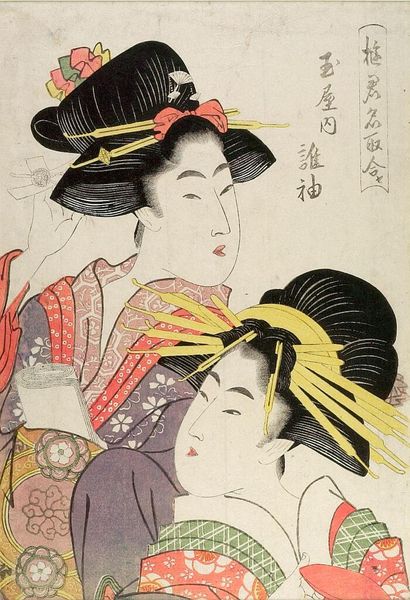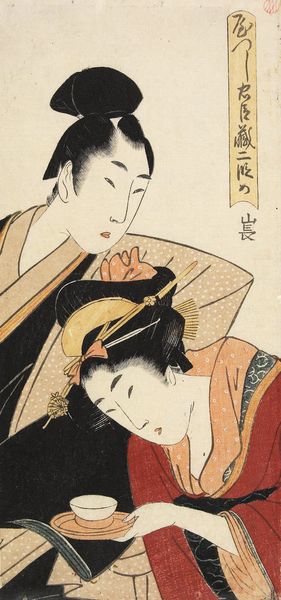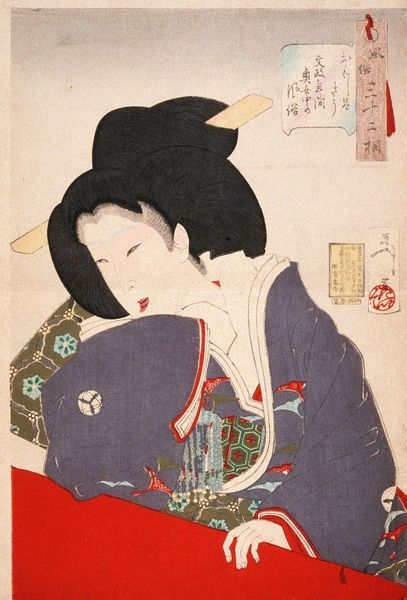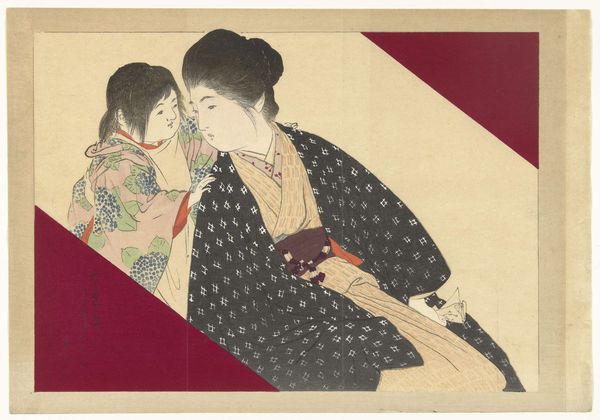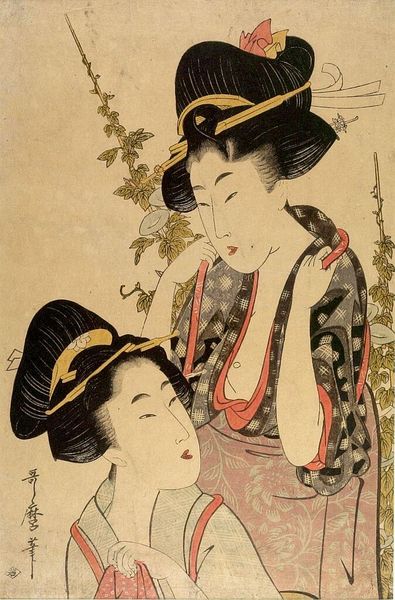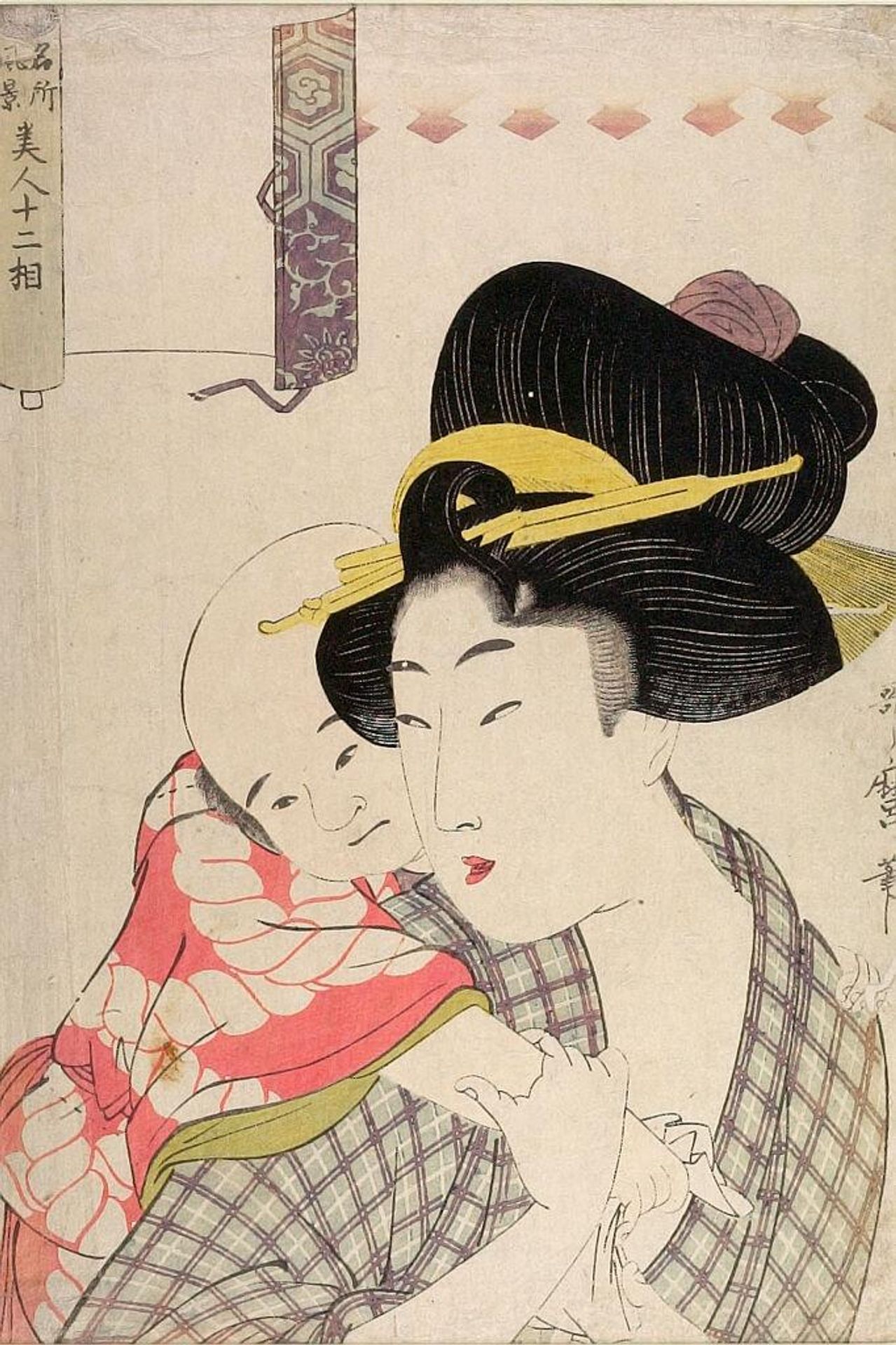
,Ukiyo-e woodblock print in ""Åban"" format; ink and color on paper
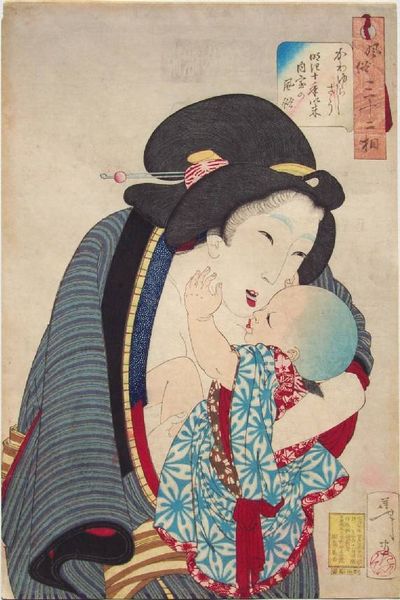
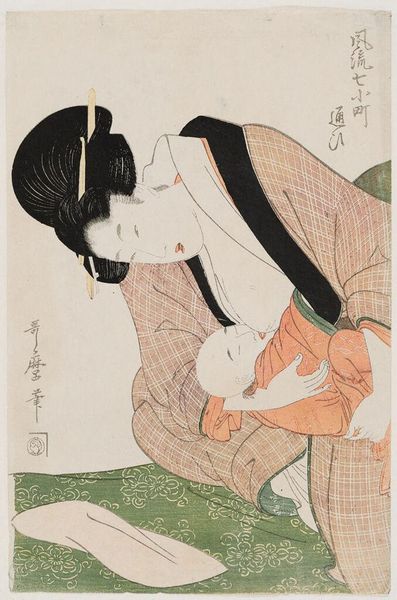
Mother and Child, from the series Meisho fÅ«kei bijin jÅ«ni sÅ
Kitagawa Utamaro åå¤å·æéº?"Late Edo period
@kitagawautamaroaaaaeeolateedoperiod
Harvard Art Museums
Harvard Art MuseumsListen to curator's interpretation
Curatorial notes
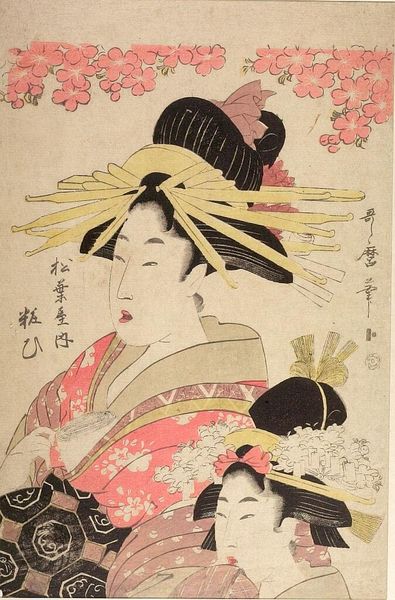
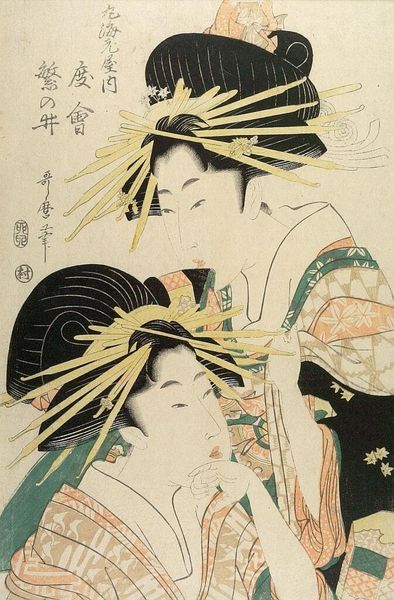
Curator: Here we have "Mother and Child, from the series Meisho fūkei bijin jūni sō," a woodblock print by Kitagawa Utamaro from the late Edo period. Editor: I'm immediately struck by the gentle curves and the subtle colors. It feels very intimate and tender. Curator: Utamaro was known for his bijinga, images of beautiful women, and this piece reflects the societal value placed on motherhood. The composition emphasizes the mother's role, cradling her child. Editor: And the child's expression, almost mirroring the mother's placid gaze, reinforces that bond. The kimono patterns likely carry significant meaning too, don't they? Curator: Absolutely. The patterns, the hairstyles, even the placement of the figures within the frame are all deliberate choices, speaking to status, role, and cultural ideals. Editor: It’s a compelling glimpse into the artistic conventions and social values of the time. Curator: Indeed, and a testament to Utamaro's skill in capturing human emotion within those conventions.