photography, gelatin-silver-print
#
portrait
#
black and white photography
#
black and white format
#
b w
#
photography
#
black and white theme
#
black and white
#
gelatin-silver-print
#
monochrome photography
#
realism
#
monochrome
Dimensions: image: 22.9 × 34.9 cm (9 × 13 3/4 in.)
Copyright: National Gallery of Art: CC0 1.0
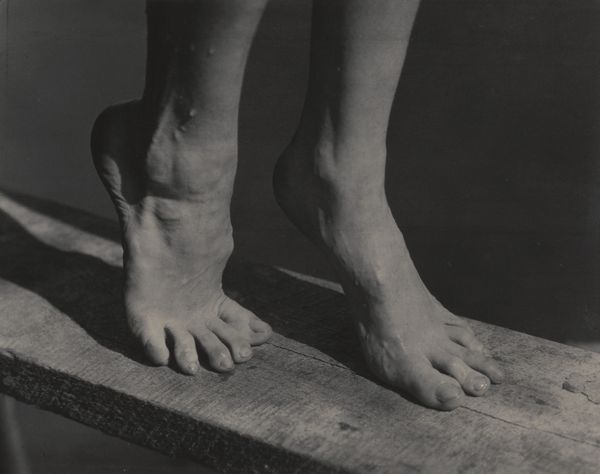
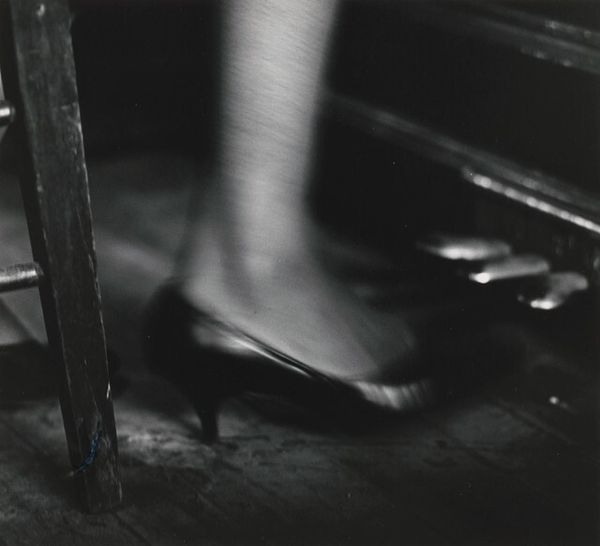
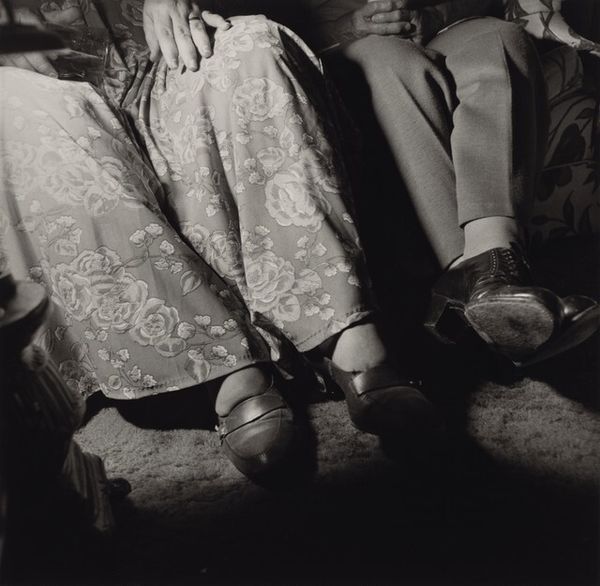
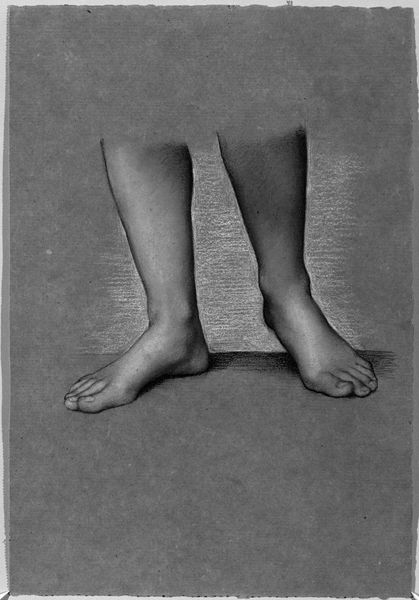
Curator: This is Gordon Parks’s "Ellen’s Feet," a gelatin-silver print from 1967. What are your immediate thoughts? Editor: There’s a striking vulnerability to it. The close-up on the feet, the stark monochrome… it speaks to the fragility of the human condition, and perhaps to labor. Curator: Parks made this photograph during a pivotal time in American history, within a visual essay about poverty in the United States for *Life* magazine. Focusing on Ellen, a Black woman living in Harlem. Considering that context shifts the image, doesn’t it? It becomes more than mere "vulnerability." Editor: Absolutely. Understanding that this isn't just *any* pair of feet but the feet of a Black woman in 1960s Harlem grounds the image in a very specific social and economic reality. The intimacy emphasizes the physical toll poverty takes on the body. Were these images well received at the time, given the sociopolitical environment? Curator: The visual essay sparked both outrage and empathy, contributing to conversations around social inequality and sparking a public dialogue. This image in particular, placed in that narrative, disrupts stereotypical portrayals of Black Americans and speaks directly to issues of healthcare access and labor exploitation. Editor: I imagine the impact was amplified by *Life* magazine’s massive reach at the time. The publication played a critical role in shaping public perception of social issues through photojournalism. What role did Gordon Parks have in selecting which images were ultimately published? Curator: Parks worked in close collaboration with the magazine editors but ultimately had the vision as well as a long career pushing these images into broader visibility within mainstream American culture. It's about confronting viewers with the unseen realities of those often pushed to the margins. Editor: I appreciate that aspect of his art, its intention and agency, as well as that your careful interpretation has shifted my original, more romantic notions of this image toward a far grittier and urgent narrative of social change. Curator: That interplay between the personal and political is exactly what makes Parks' work so enduring and relevant.
Comments
No comments
Be the first to comment and join the conversation on the ultimate creative platform.
 Collect
 React
React Comment
More like this