About this artwork
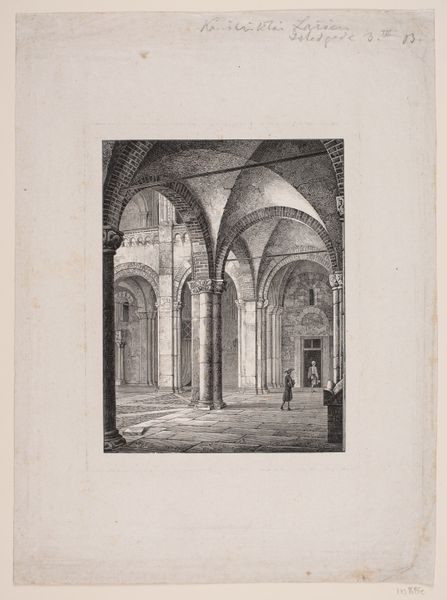
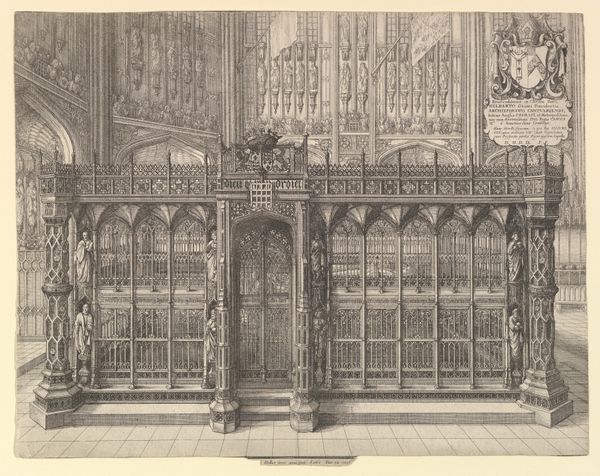
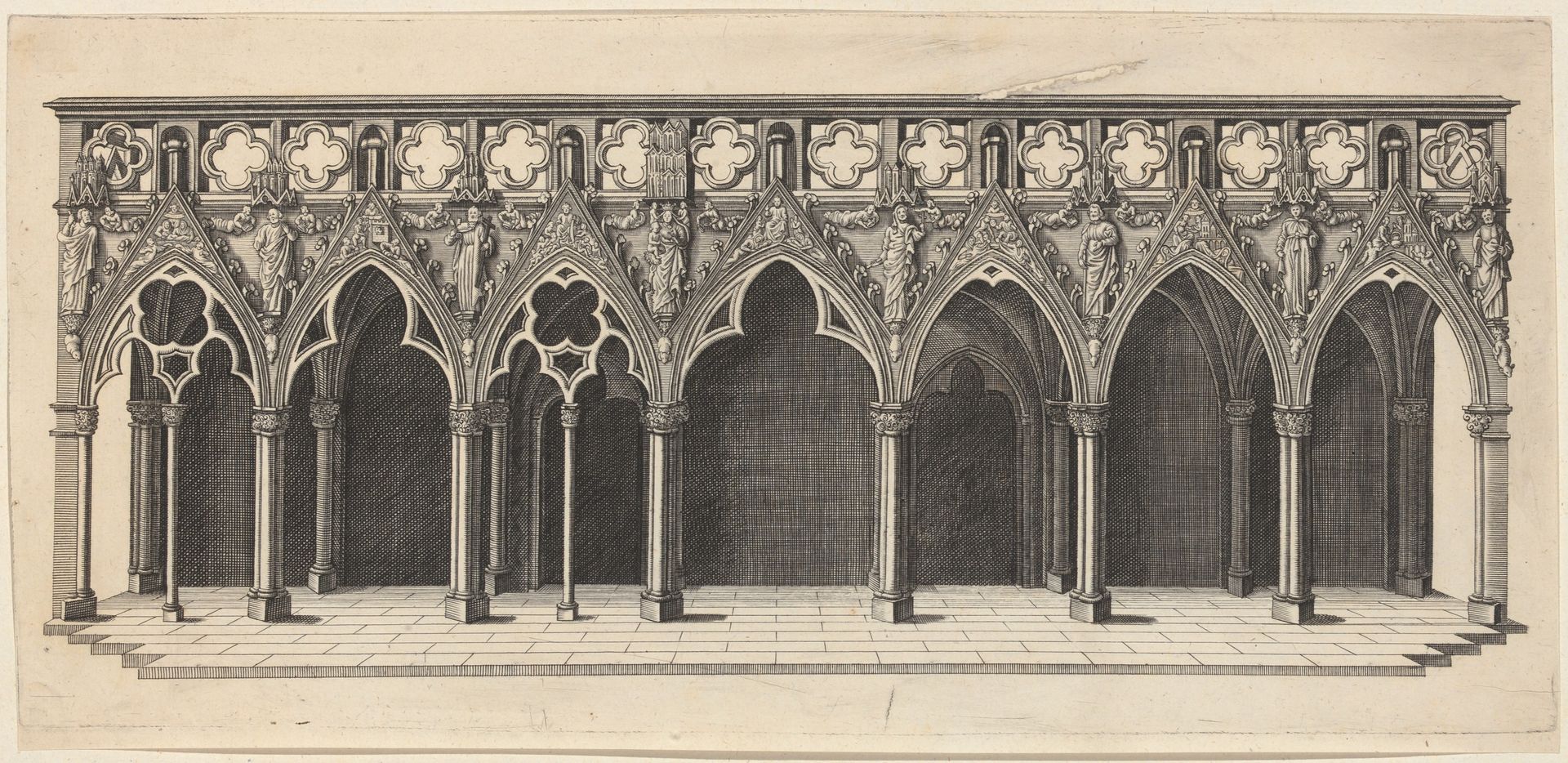
Johann Jakob Arhardt created this print of the choir screen inside Strasbourg Cathedral sometime in the 17th century, using etching techniques. The image gives us a clear, precise rendering of the screen, dividing the space of the cathedral. Consider the craft involved: the artist carefully manipulates line and shadow to replicate the screen's architectural details and sculptural adornments. Each line etched into the metal plate demanded skill and precision. We see the repetition of geometric forms, the arches and quatrefoils, alongside the individualized figures of saints. The print mirrors the labor-intensive process of the stonemasons who originally built the screen. This work, like many prints, served a documentary function, making the cathedral's design accessible beyond its physical location. It speaks to the social context of the time, where the Church held significant power, commissioning elaborate structures to inspire awe and reverence. By focusing on Arhardt’s meticulous etching process, and the subject’s original construction, we gain insight into the intersection of artistic skill, religious expression, and the social hierarchies of the 17th century.
Interior of Strasbourg Cathedral Showing the Choir Screen
1617

Johann Jakob Arhardt
1613 - 1674
The Metropolitan Museum of Art
Metropolitan Museum of Art, New York, NYArtwork details
- Dimensions
- sheet: 6 15/16 x 14 7/16 in. (17.6 x 36.7 cm)
- Location
- Metropolitan Museum of Art, New York, NY
- Copyright
- Public Domain
Comments
Share your thoughts
About this artwork
Johann Jakob Arhardt created this print of the choir screen inside Strasbourg Cathedral sometime in the 17th century, using etching techniques. The image gives us a clear, precise rendering of the screen, dividing the space of the cathedral. Consider the craft involved: the artist carefully manipulates line and shadow to replicate the screen's architectural details and sculptural adornments. Each line etched into the metal plate demanded skill and precision. We see the repetition of geometric forms, the arches and quatrefoils, alongside the individualized figures of saints. The print mirrors the labor-intensive process of the stonemasons who originally built the screen. This work, like many prints, served a documentary function, making the cathedral's design accessible beyond its physical location. It speaks to the social context of the time, where the Church held significant power, commissioning elaborate structures to inspire awe and reverence. By focusing on Arhardt’s meticulous etching process, and the subject’s original construction, we gain insight into the intersection of artistic skill, religious expression, and the social hierarchies of the 17th century.
Comments
Share your thoughts