About this artwork
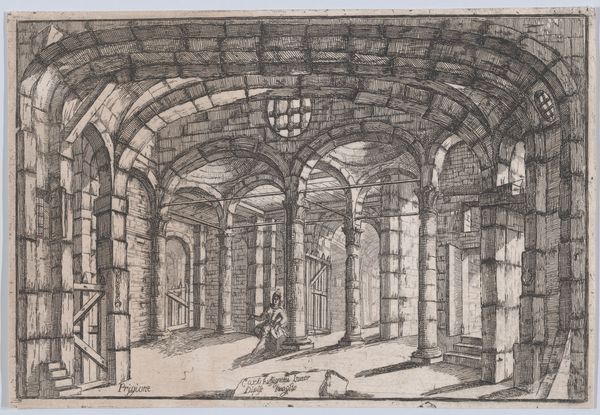
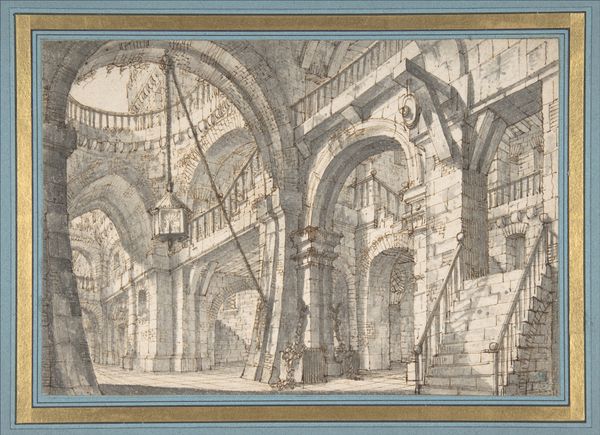
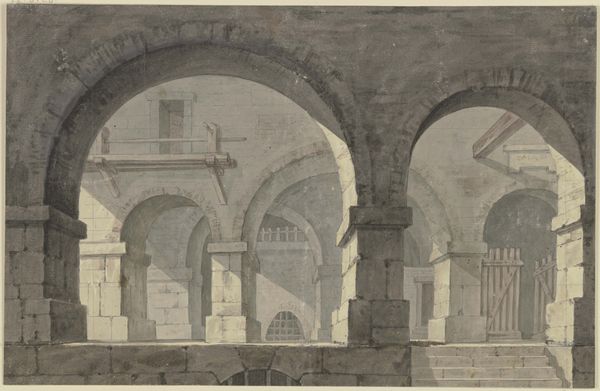
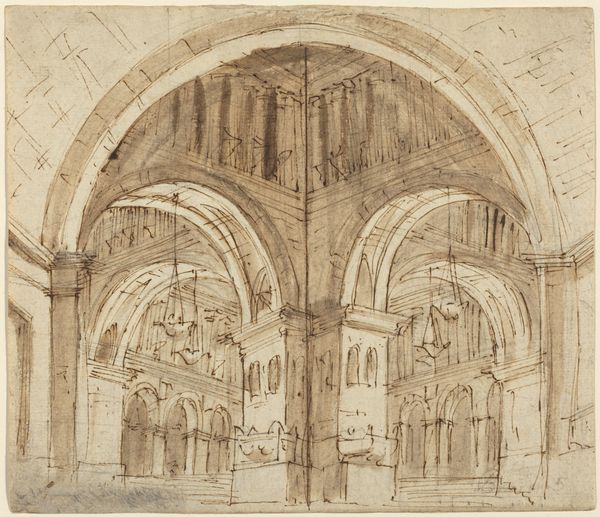
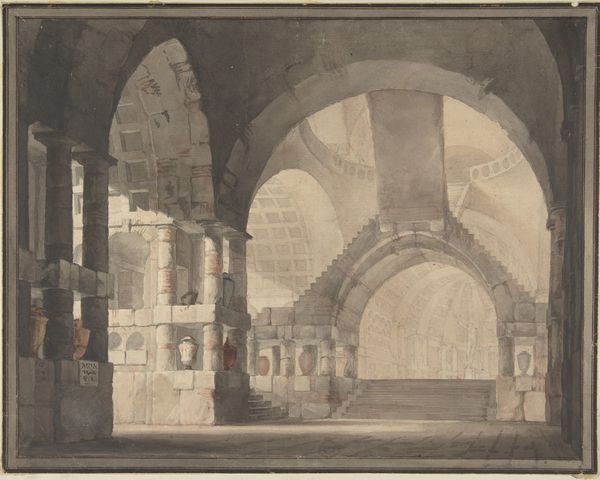
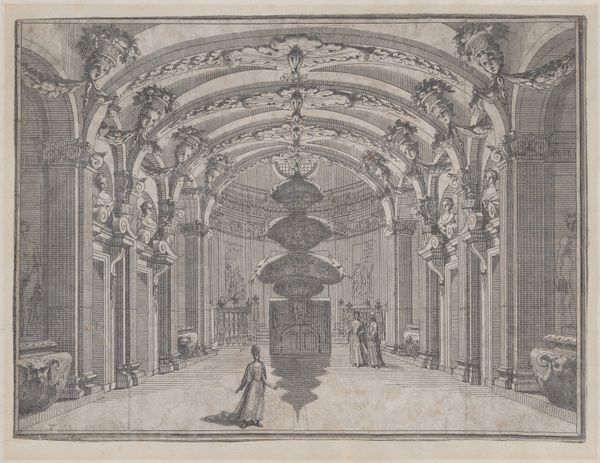
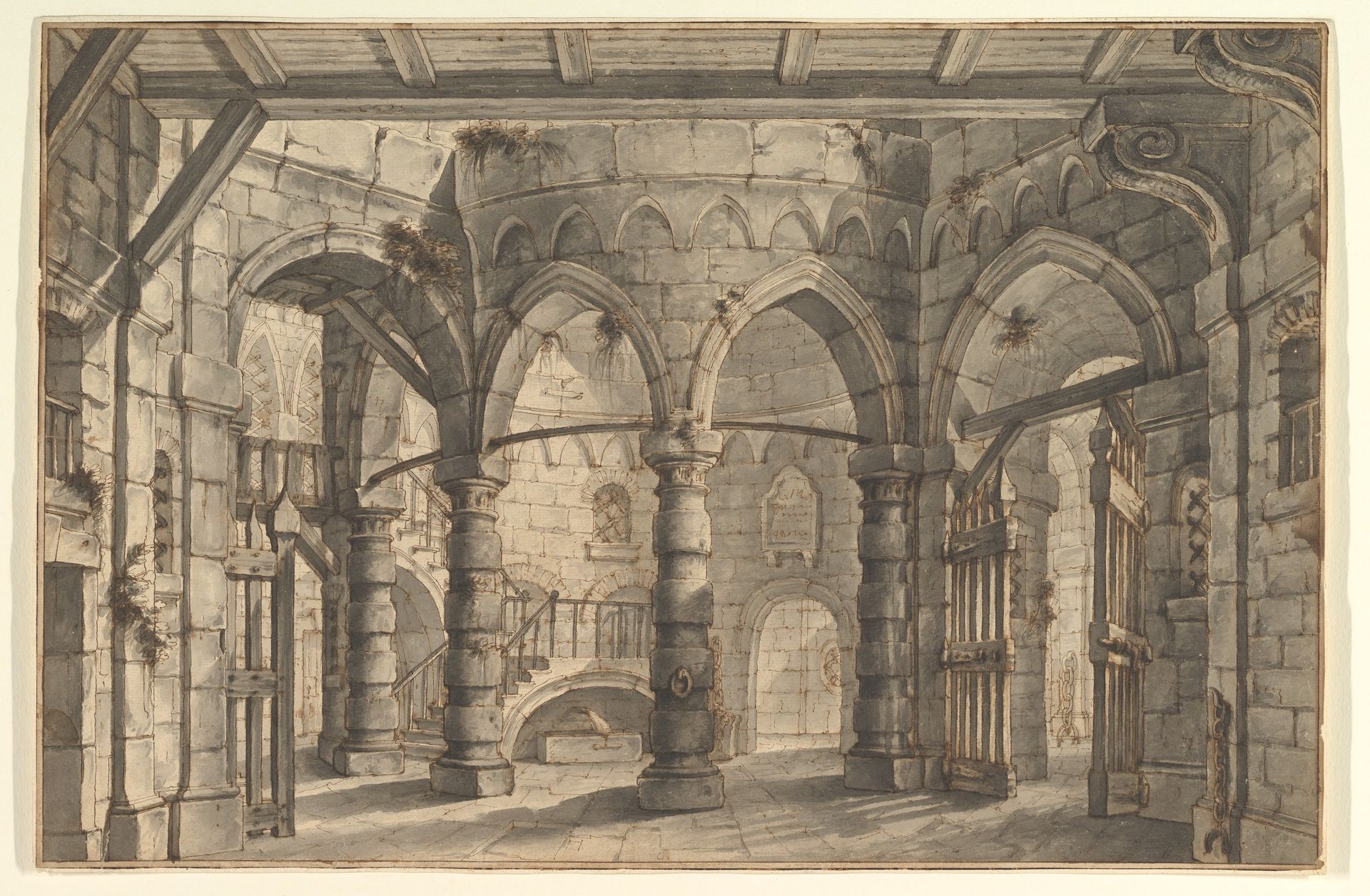
Giovanni Maria Quaglio created this stage set design with pen and brown ink, and gray wash on paper. The architecture, though rendered on a flat surface, aims to evoke the weight and texture of massive stone construction. Quaglio has created an image of architecture that is not really architecture, a drawing intended as a guide for stagecraft. Think about all of the labor involved in the architecture being represented: quarrying the stone, shaping it, transporting it, assembling it into arches and vaults. He then translates that enormous amount of physical work into marks on paper. The drawing is a design, pointing towards another kind of labor – that of the stagehands and builders who would realize this vision as a temporary, theatrical space. By considering the making and materials, and the wider context of labor, we can understand the drawing not just as a design, but as a document of production.
Design for a Stage Set 1700 - 1765

Giovanni Maria Quaglio I (also known as Giulio Quaglio III)
1700 - 1765
The Metropolitan Museum of Art
Metropolitan Museum of Art, New York, NYArtwork details
- Medium
- drawing, print, ink, pen
- Dimensions
- Sheet: 12 5/8 × 19 1/8 in. (32.1 × 48.6 cm)
- Location
- Metropolitan Museum of Art, New York, NY
- Copyright
- Public Domain
Tags
drawing
baroque
perspective
ink
coloured pencil
pen
cityscape
history-painting
Comments
No comments
About this artwork
Giovanni Maria Quaglio created this stage set design with pen and brown ink, and gray wash on paper. The architecture, though rendered on a flat surface, aims to evoke the weight and texture of massive stone construction. Quaglio has created an image of architecture that is not really architecture, a drawing intended as a guide for stagecraft. Think about all of the labor involved in the architecture being represented: quarrying the stone, shaping it, transporting it, assembling it into arches and vaults. He then translates that enormous amount of physical work into marks on paper. The drawing is a design, pointing towards another kind of labor – that of the stagehands and builders who would realize this vision as a temporary, theatrical space. By considering the making and materials, and the wider context of labor, we can understand the drawing not just as a design, but as a document of production.
Comments
No comments