About this artwork
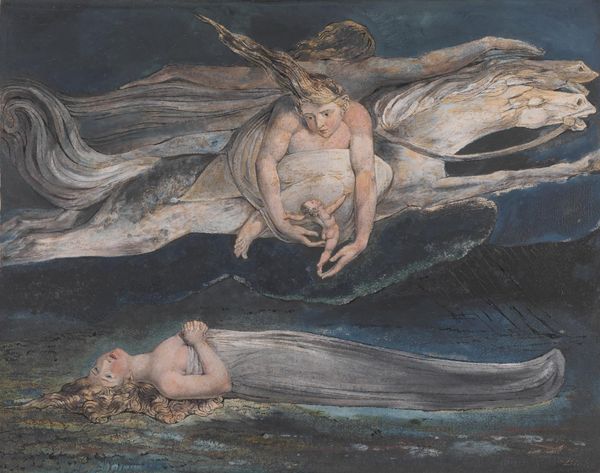
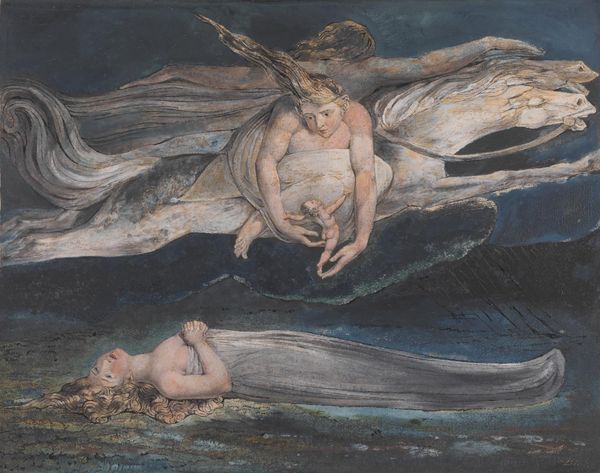
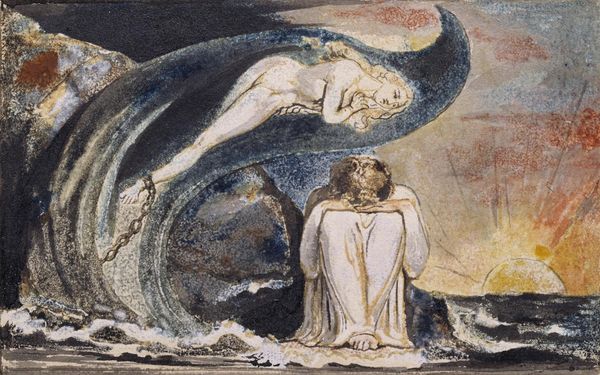
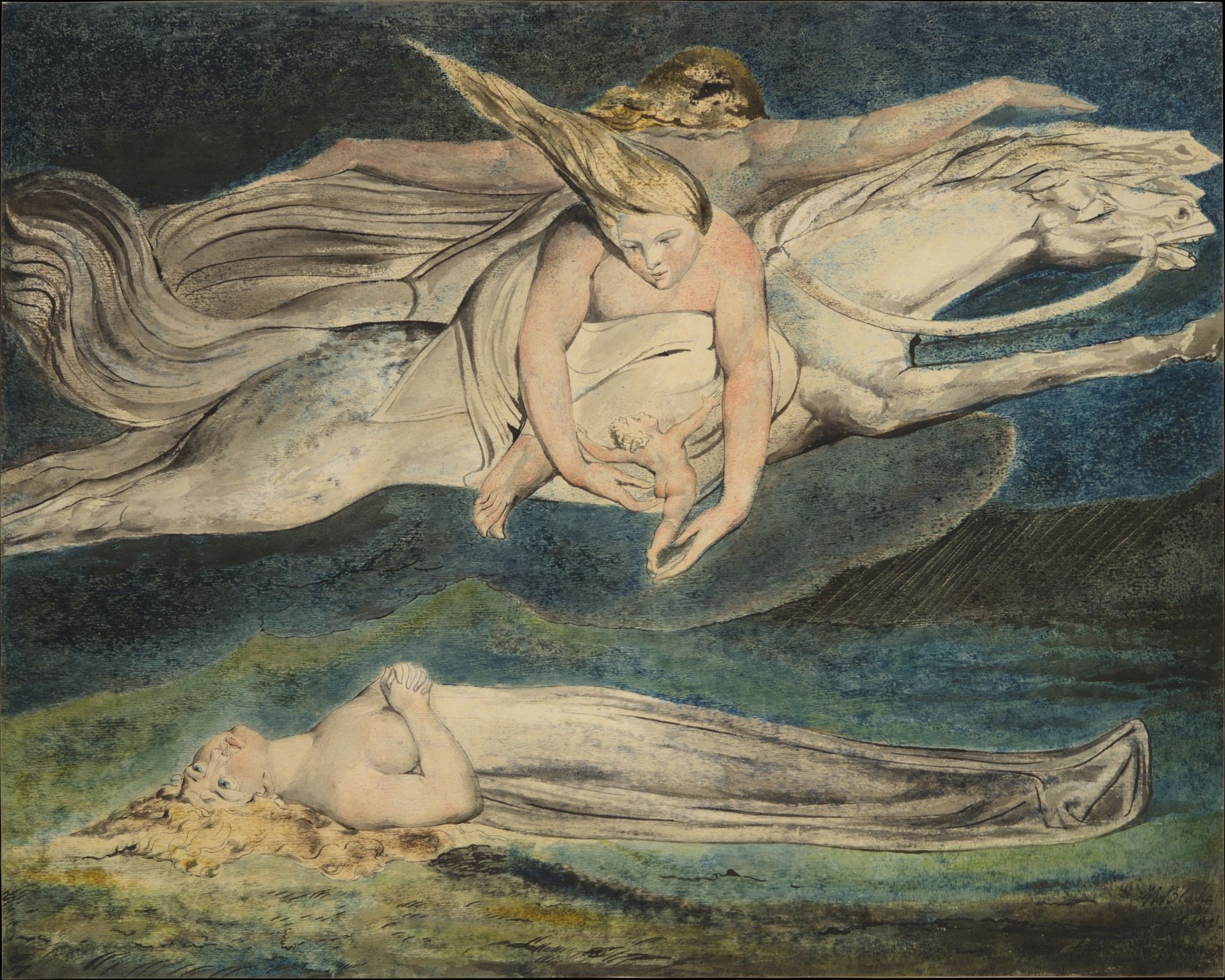
This is William Blake’s watercolour and graphite ‘Pity’, housed at the Metropolitan Museum of Art. The composition is arranged in two distinct registers, evoking a sense of both dynamism and profound sorrow. The upper scene depicts a figure on horseback, bent low as though in remorse, carrying two figures with them. Note the stark contrast between the ethereal, flowing lines of the horse and rider, set against a dark and turbulent background. Blake masterfully uses line and form to convey both the speed of their flight and the emotional weight of the scene. Below, a woman lies prostrate, accentuating the scene's sorrowful tone. Blake, influenced by the Romantic movement, often used such stark imagery to explore the darker aspects of the human condition. The arrangement of figures and the visual weight given to the fleeing figures above could be interpreted as a symbolic expression of Pity's inability to alleviate suffering. The formal elements here--the arrangement of figures, their orientation, and the use of contrasting light and shadow--invite ongoing interpretations. The artwork serves as a powerful reflection on human suffering and the complexities of compassion.
Pity
1790 - 1800


Artwork details
- Medium
- drawing, print, watercolor
- Dimensions
- sheet: 16 5/8 x 20 3/4in. (42.2 x 52.7cm)
- Location
- Metropolitan Museum of Art, New York, NY
- Copyright
- Public Domain
Tags
Comments
Share your thoughts
About this artwork
This is William Blake’s watercolour and graphite ‘Pity’, housed at the Metropolitan Museum of Art. The composition is arranged in two distinct registers, evoking a sense of both dynamism and profound sorrow. The upper scene depicts a figure on horseback, bent low as though in remorse, carrying two figures with them. Note the stark contrast between the ethereal, flowing lines of the horse and rider, set against a dark and turbulent background. Blake masterfully uses line and form to convey both the speed of their flight and the emotional weight of the scene. Below, a woman lies prostrate, accentuating the scene's sorrowful tone. Blake, influenced by the Romantic movement, often used such stark imagery to explore the darker aspects of the human condition. The arrangement of figures and the visual weight given to the fleeing figures above could be interpreted as a symbolic expression of Pity's inability to alleviate suffering. The formal elements here--the arrangement of figures, their orientation, and the use of contrasting light and shadow--invite ongoing interpretations. The artwork serves as a powerful reflection on human suffering and the complexities of compassion.
Comments
Share your thoughts