drawing, paper, ink
#
portrait
#
drawing
#
allegory
#
charcoal drawing
#
figuration
#
paper
#
form
#
oil painting
#
ink
#
underpainting
#
romanticism
#
christianity
#
mythology
#
line
#
portrait drawing
#
history-painting
#
nude
#
portrait art
Dimensions: 40.64 x 53.34 cm
Copyright: Public domain
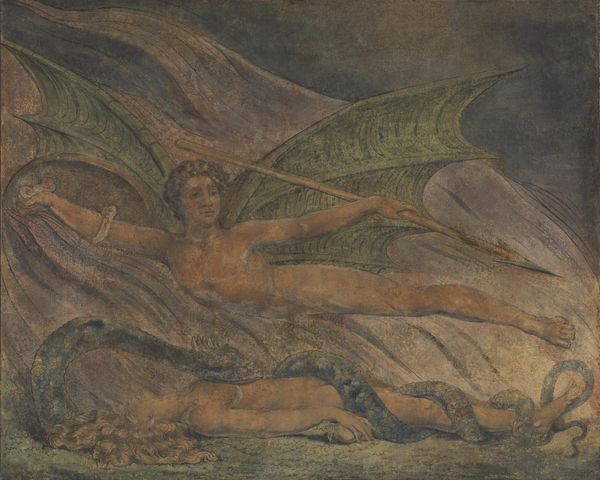
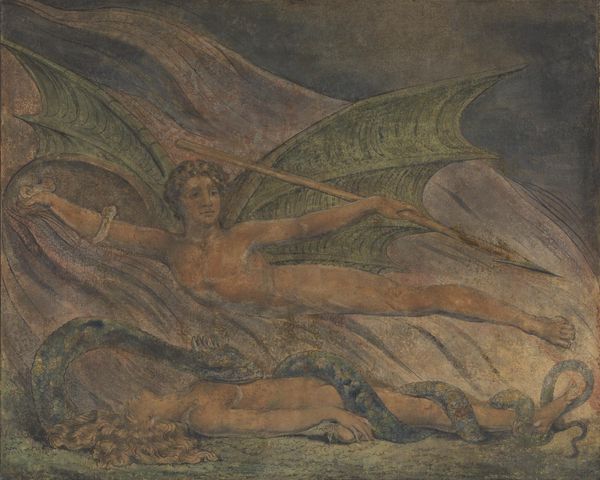
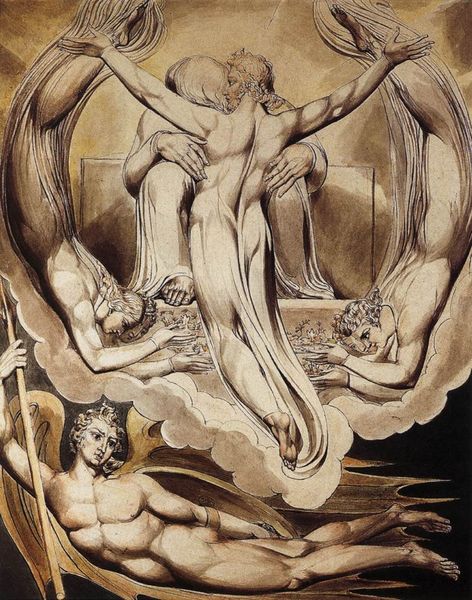
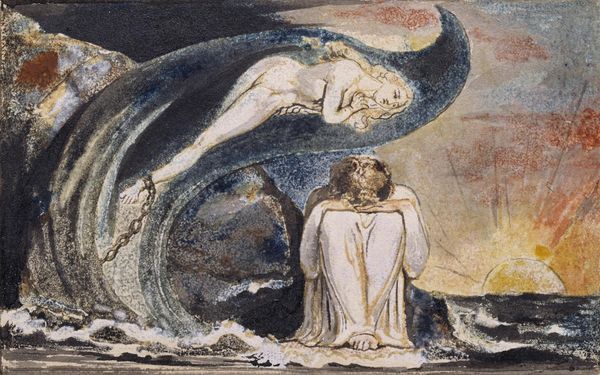
William Blake’s watercolor, ‘Satan Exulting over Eve’ shows the Western cultural fixation with the origin of sin. Made around 1800, Blake brings Milton's *Paradise Lost* to life, but he does so in a way that challenges conventional morality. In late eighteenth-century England, artistic institutions like the Royal Academy promoted classical ideals, yet Blake rejected such norms. Instead, he turned to literary sources, like Milton, to inform his unique brand of visionary art. Here, Satan doesn’t appear as a purely evil figure but as a heroic rebel. The drama and dynamism evident in the composition challenge the authority of God, a common theme in Blake’s work. This can be seen as part of a broader cultural shift during the Romantic era, where artists and intellectuals questioned traditional power structures. To truly understand Blake, look into the social and intellectual currents of his time through archival sources and critical analyses. We can then appreciate his art as a product of, and a commentary on, the turbulent world around him.
Comments
No comments
Be the first to comment and join the conversation on the ultimate creative platform.
 Collect
 React
React Comment
More like this