c. 1766 - 1832
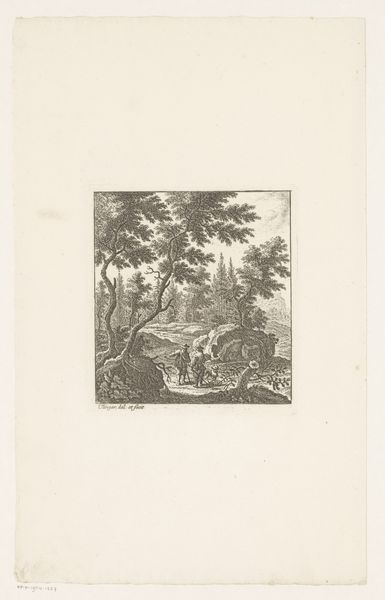
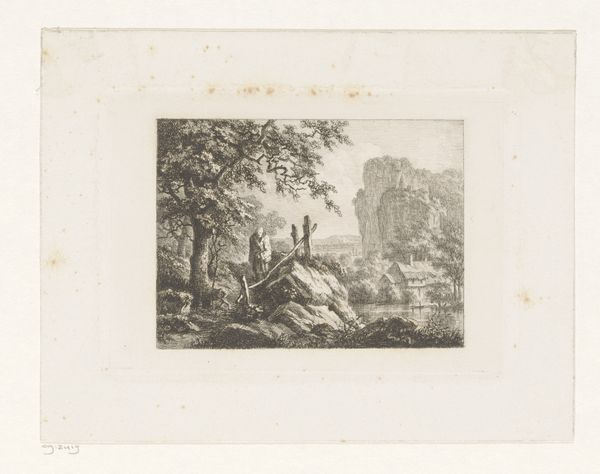
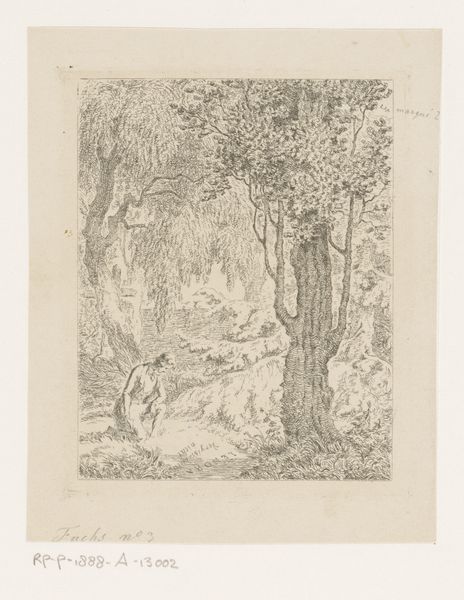
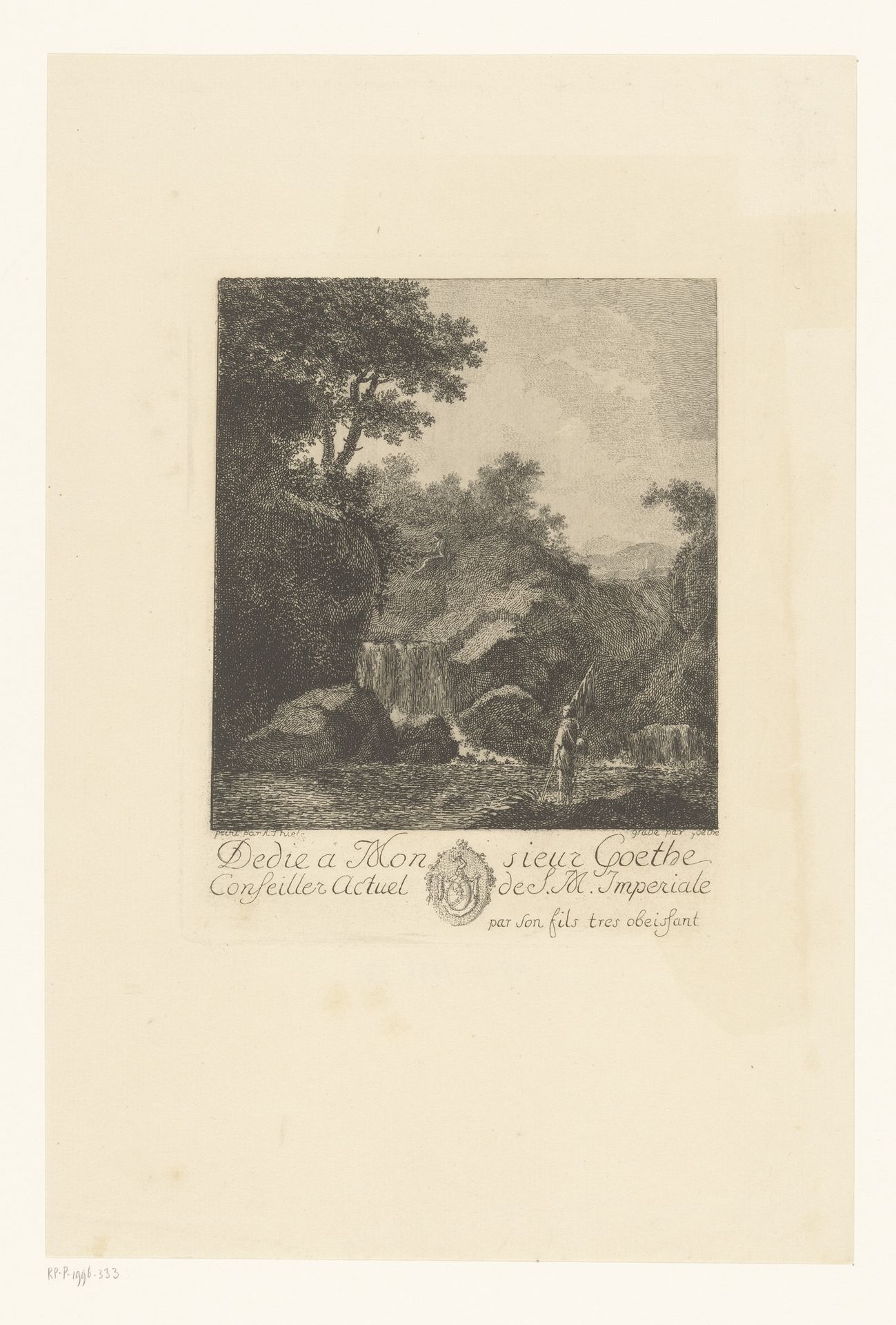
Rivierlandschap met twee figuren

Johann Wolfgang von Goethe
1749 - 1832Location
RijksmuseumListen to curator's interpretation
Curatorial notes
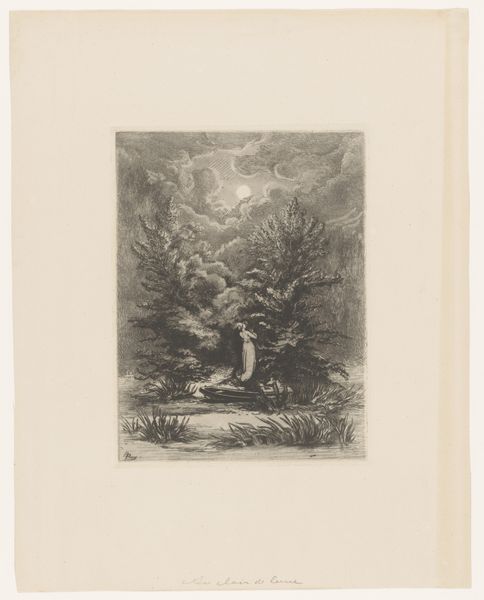
This is Johann Wolfgang von Goethe's "River Landscape with Two Figures," a drawing of undefined date currently housed in the Rijksmuseum. The composition emphasizes a contrast between the dark, dense foliage on the left and the open, light-filled space on the right. Goethe employs hatching and stippling to create tonal variations, building a sense of depth and texture. The eye is guided by the diagonal flow of the water and the placement of figures, leading to a vanishing point in the distance. Structurally, the drawing reflects an engagement with Romantic ideals, particularly the sublime in nature. It presents a nature that overwhelms the human figures, suggesting themes of insignificance and transience. The river acts as a signifier of the passage of time, while the landscape is rendered with an emphasis on its raw, untamed qualities. Note how Goethe's handling of light and shadow creates a play between the visible and the obscured, inviting us to contemplate the limits of perception and knowledge. This exemplifies how formal elements in art can embody deeper philosophical inquiries.