1859
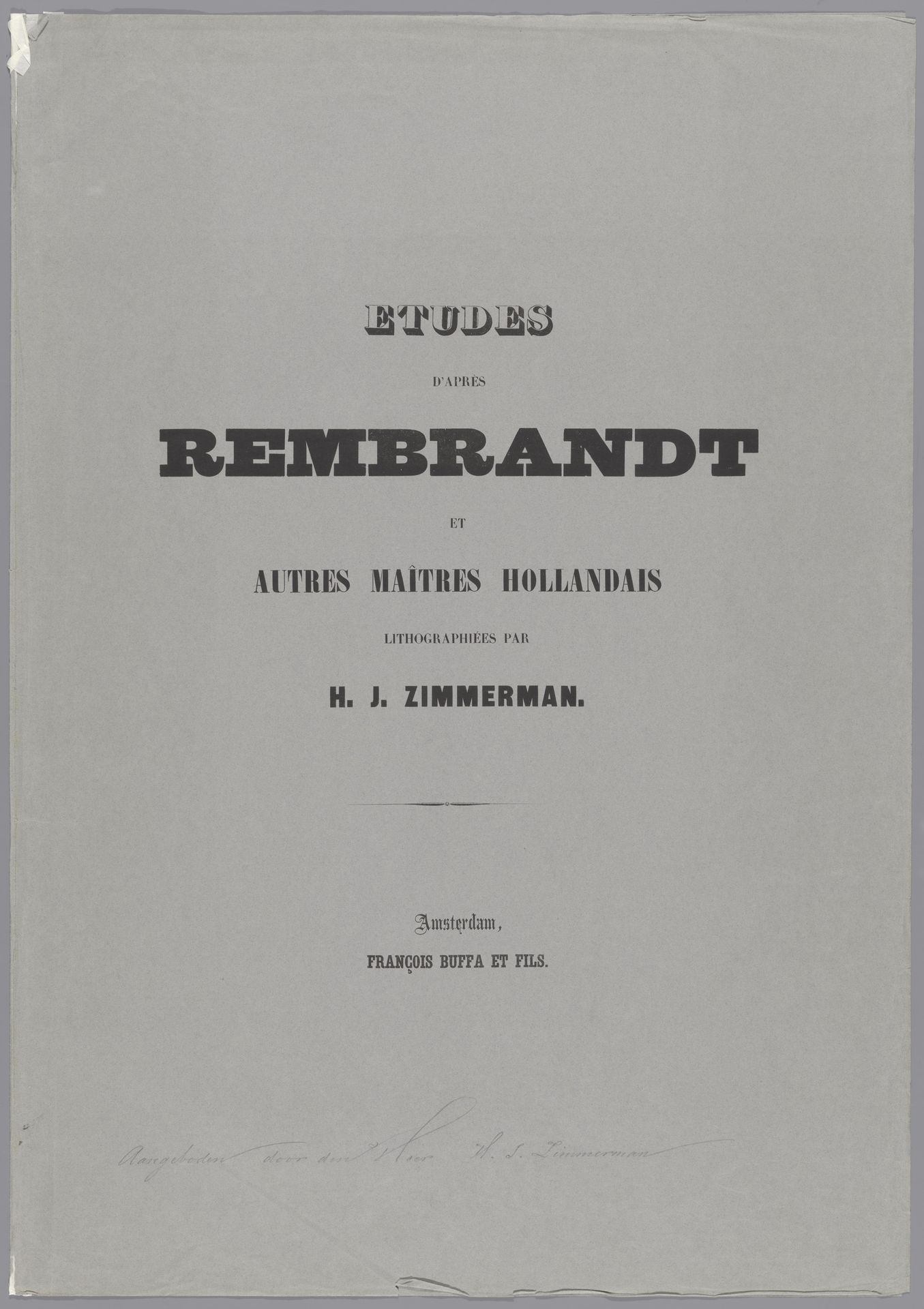
Omslag voor: Etudes d`après Rembrandt et autres maîtres hollandais

Listen to curator's interpretation
Curatorial notes
Curator: This piece, created in 1859, is a lithograph and etching poster titled "Omslag voor: Etudes d'après Rembrandt et autres maîtres hollandais" by H. J. Zimmerman. Editor: It strikes me as quite austere. There’s a muted tone, and the layout emphasizes hierarchy through size, doesn’t it? It feels almost like a proclamation. Curator: It certainly does employ classical principles. Considering its creation amidst a period of fervent artistic reproduction, this poster embodies an interesting intersection of reverence and commodification regarding Dutch Golden Age masters. The very act of creating "studies" positions Rembrandt and others within a certain pedagogical framework. How do you see its relationship to its subject? Editor: I'm immediately drawn to the choice of typography. The bold "Rembrandt" anchors the piece. Its visual weight dominates, almost overshadowing "Etudes" and "Autres Maîtres Hollandais". This echoes Rembrandt’s pervasive cultural shadow, doesn’t it? The name is a brand in itself! Curator: Precisely! This also mirrors a trend to reclaim and categorize national identities at the time. Zimmerman, by identifying these figures together as "Dutch Masters," contributes to that construction. The poster isn't just about artistry; it’s about defining a national artistic canon. Did Dutch society then consider the listed “masters” progressive, establishment, both or neither, or…? Editor: It raises a provocative point about cultural memory. The use of lithography suggests an attempt to democratize art, to bring "Rembrandt" into homes. How fascinating, the symbols used as gatekeepers. Are we really dealing with mass accessibility, or are the elites determining taste? Are these accessible art, symbols of belonging or class, maybe? Curator: I appreciate that tension you’ve identified. On one hand, reproductions ostensibly make art accessible; but the selection itself can further entrench existing power structures. Furthermore, "H.J. Zimmerman’s" placement in the poster design reflects, for me, a modern identity of the artist rising within more recognized or historic symbolism. The past legitimizes and authenticates the now. Editor: Food for thought! In retrospect, that visual dominance does betray a complicated power dynamic at play, much more than simply popularizing an artist or artistic period. Curator: Exactly! By looking closely at this etching and lithograph, what at first appears to be merely a simple title poster actually reveals some complicated social and historical narratives about cultural heritage and accessibility.