About this artwork
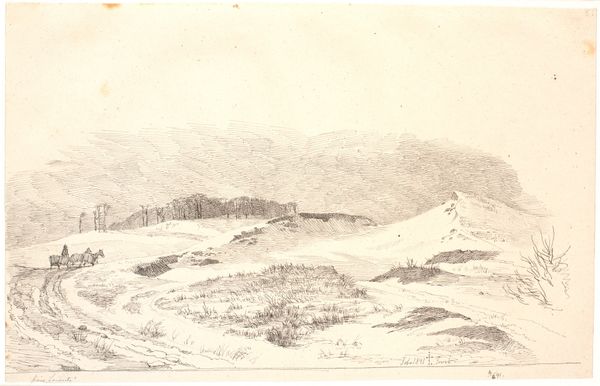
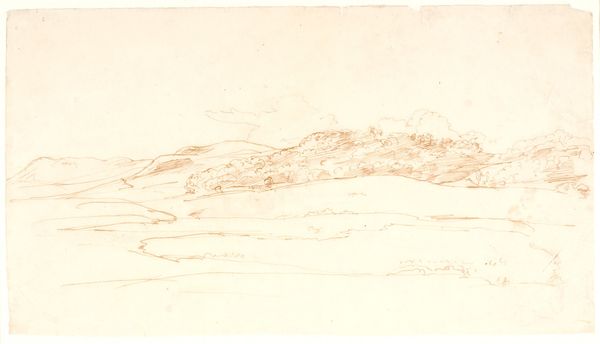
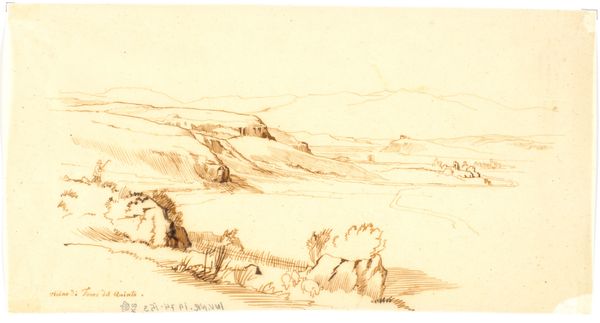
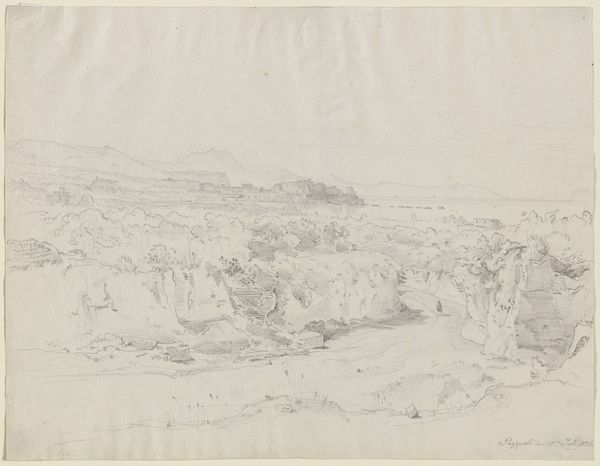
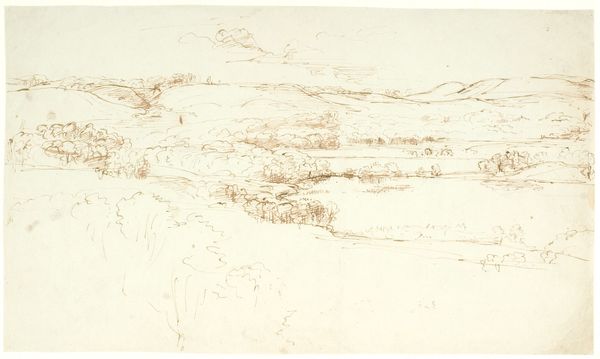
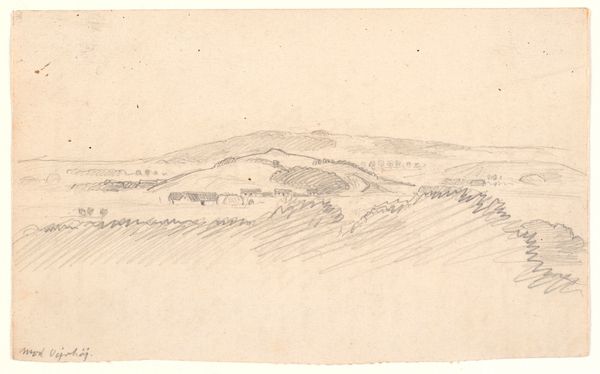
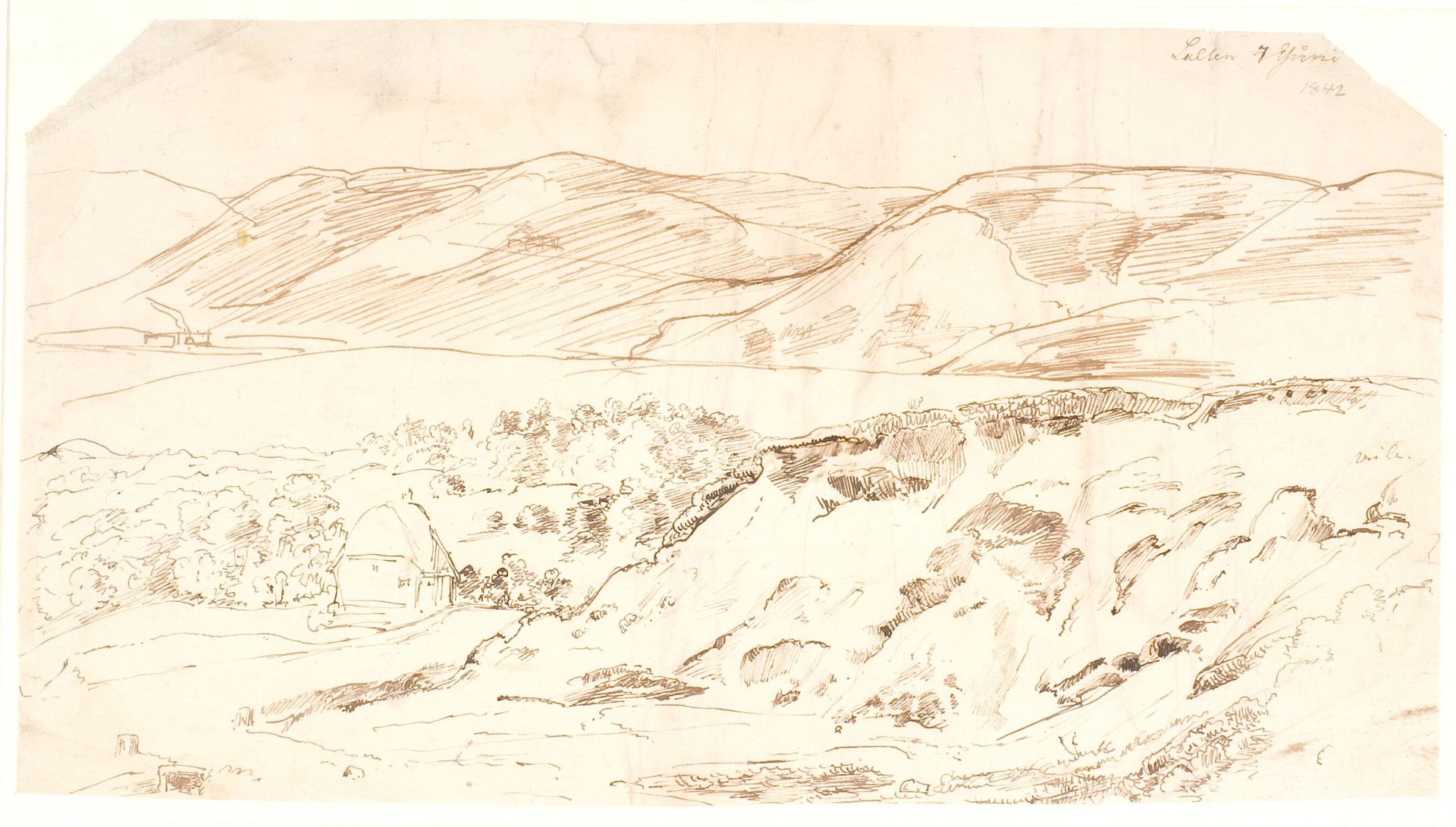
Dankvart Dreyer sketched this landscape from the Himmelbjerg area with sepia ink, likely in 1842. Note the hills dominating the horizon, a motif found across cultures representing stability and permanence. Think of the ziggurats of ancient Mesopotamia, artificial mountains built to reach the heavens. Dreyer’s hills, while natural, similarly evoke a connection to the sublime. These natural forms are not merely geological; they are cultural symbols. The Romantic movement’s emphasis on nature saw mountains as emblems of spiritual transcendence and the untamed power of the earth. Yet, this symbolism shifts, doesn't it? What was once sacred becomes scenic, a view to be admired. It demonstrates how motifs and symbols progress in a non-linear fashion, constantly evolving through history and acquiring new layers of meaning.
Landskab fra Himmelbjergegnen, med store bakker 1841


Artwork details
- Medium
- drawing, ink, pencil
- Dimensions
- 179 mm (height) x 326 mm (width) (bladmaal)
- Location
- SMK - Statens Museum for Kunst
Tags
drawing
landscape
etching
ink
romanticism
pencil
northern-renaissance
Comments
No comments
About this artwork
Dankvart Dreyer sketched this landscape from the Himmelbjerg area with sepia ink, likely in 1842. Note the hills dominating the horizon, a motif found across cultures representing stability and permanence. Think of the ziggurats of ancient Mesopotamia, artificial mountains built to reach the heavens. Dreyer’s hills, while natural, similarly evoke a connection to the sublime. These natural forms are not merely geological; they are cultural symbols. The Romantic movement’s emphasis on nature saw mountains as emblems of spiritual transcendence and the untamed power of the earth. Yet, this symbolism shifts, doesn't it? What was once sacred becomes scenic, a view to be admired. It demonstrates how motifs and symbols progress in a non-linear fashion, constantly evolving through history and acquiring new layers of meaning.
Comments
No comments