About this artwork
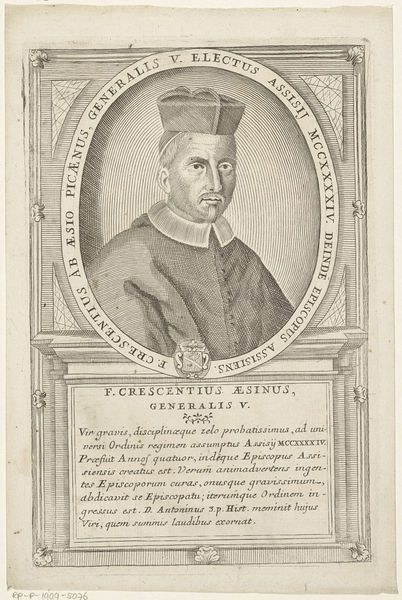
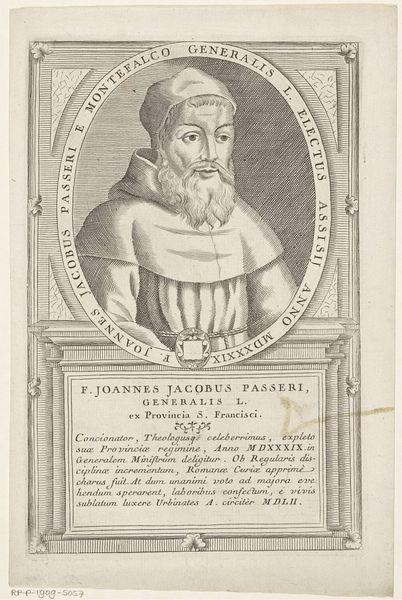
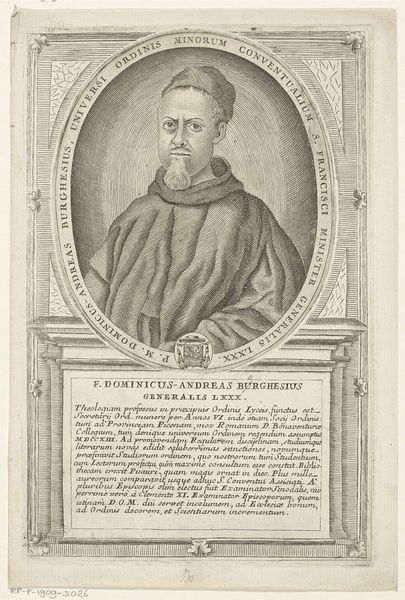
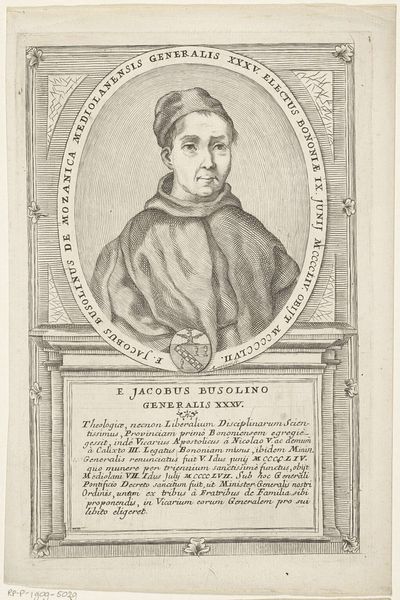
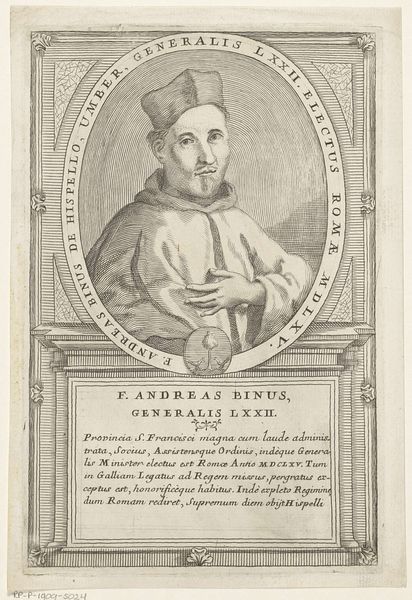
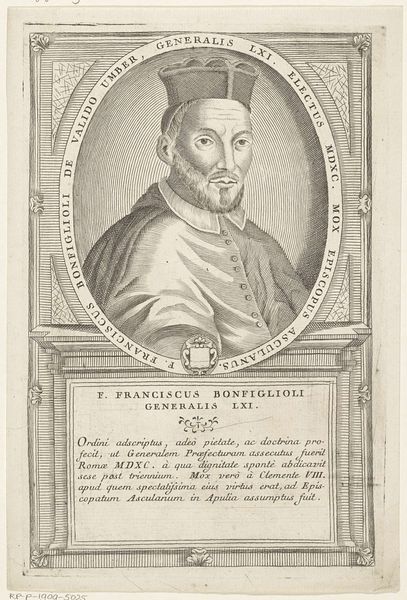
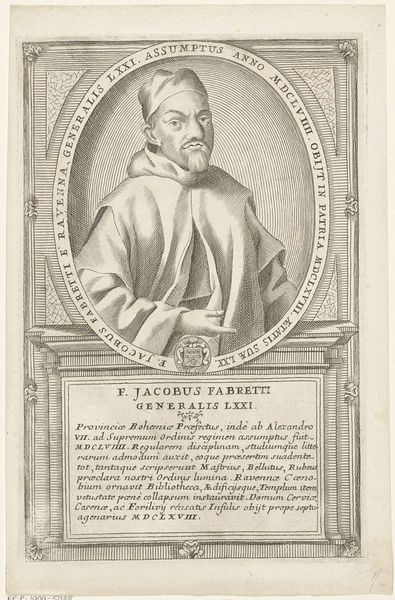
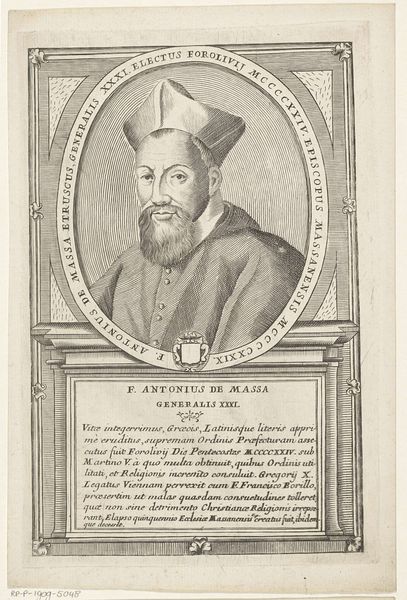
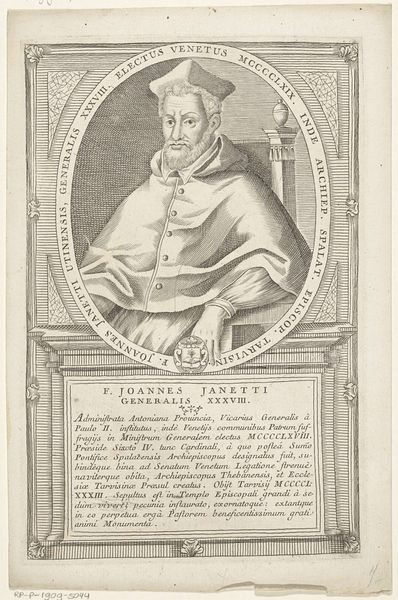
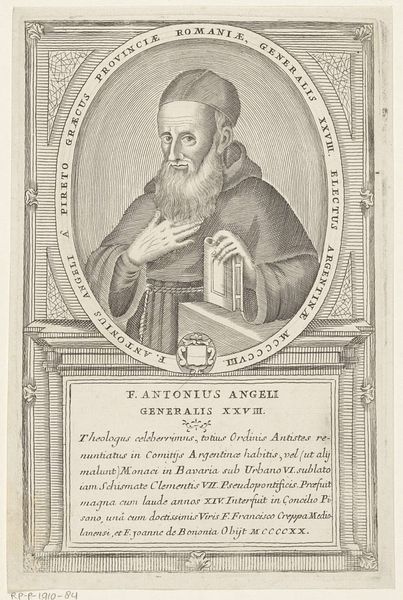
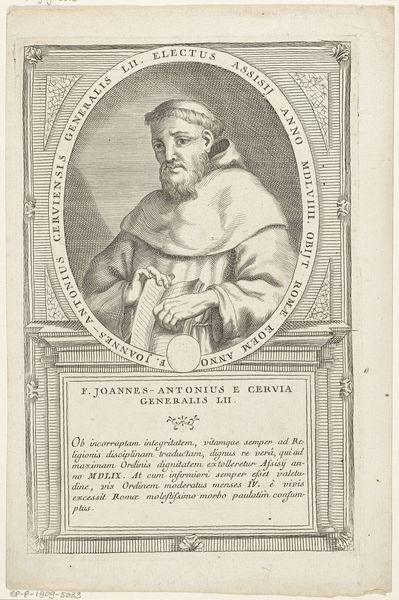
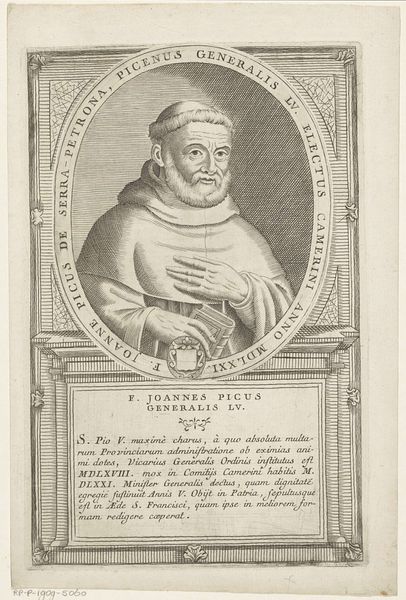
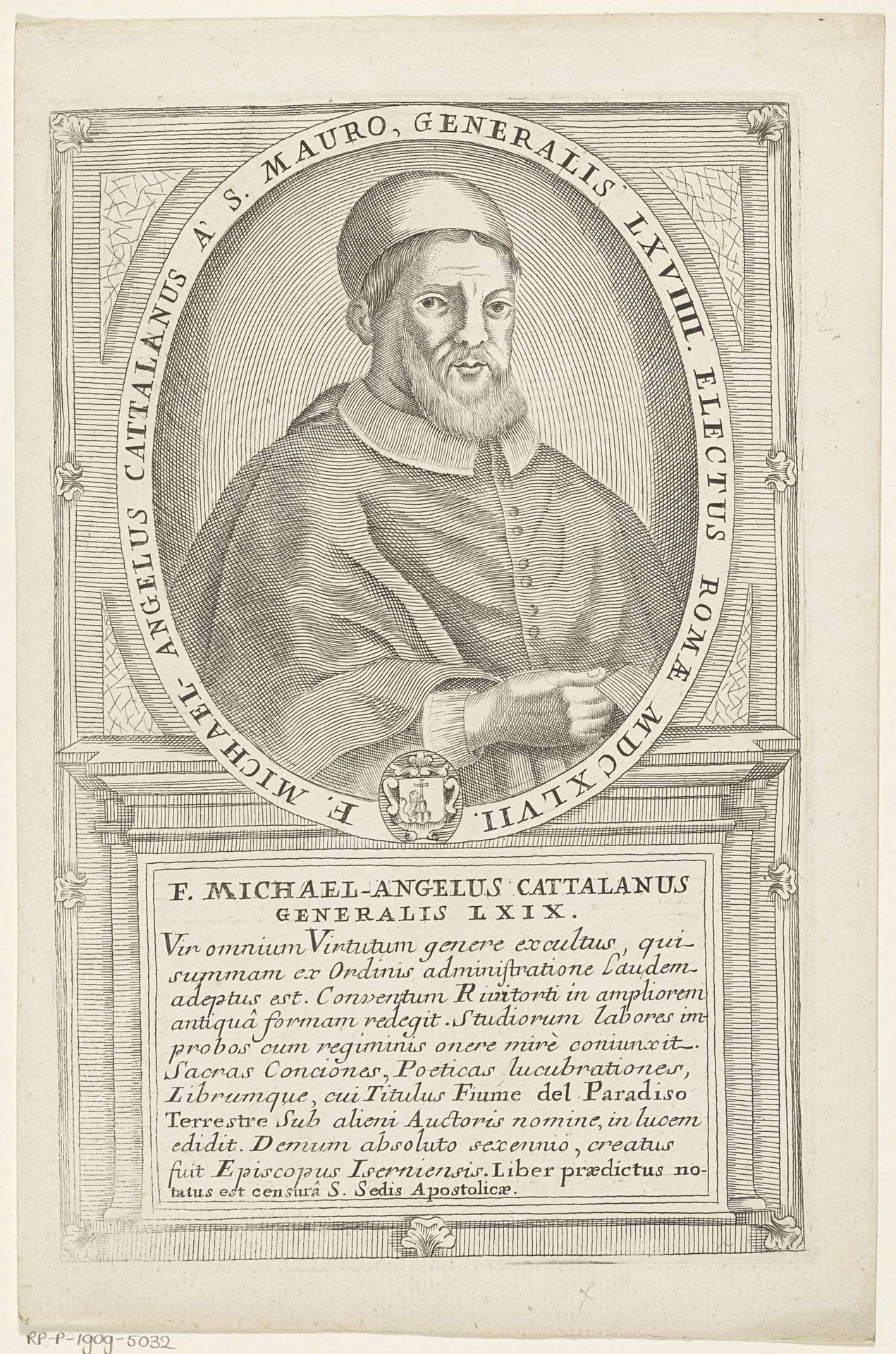
This print by Antonio Luciani, made sometime between 1700 and 1738, depicts Miguel Angel Catalani, the 69th Minister General of the Franciscan Order. The tight composition draws our attention to the figure, framed within an oval, which is in turn placed above a rectangular inscription. Consider how the artist uses the linear quality of engraving to create a sense of depth. The hatching and cross-hatching techniques define the form of Catalani’s face and robes. Lines are not merely descriptive; they delineate structure, creating both shadow and volume. See how the contrast between light and shadow throws the focus onto the face, inviting a psychological reading of the man. Notice the way the text is meticulously arranged, mirroring the portrait above. This parallel structure isn’t arbitrary; it's a formal device underscoring the importance of both the man and his accomplishments. Luciani uses the formal elements of the artwork to engage with the conceptual, prompting us to reflect on the relationship between image and text, representation and identity.
Portret van Miguel Angel Catalani, 69ste Minister Generaal van de franciscaner orde
1710 - 1738

Artwork details
- Medium
- print, engraving
- Dimensions
- height 246 mm, width 158 mm
- Copyright
- Rijks Museum: Open Domain
Tags
Comments
Share your thoughts
About this artwork
This print by Antonio Luciani, made sometime between 1700 and 1738, depicts Miguel Angel Catalani, the 69th Minister General of the Franciscan Order. The tight composition draws our attention to the figure, framed within an oval, which is in turn placed above a rectangular inscription. Consider how the artist uses the linear quality of engraving to create a sense of depth. The hatching and cross-hatching techniques define the form of Catalani’s face and robes. Lines are not merely descriptive; they delineate structure, creating both shadow and volume. See how the contrast between light and shadow throws the focus onto the face, inviting a psychological reading of the man. Notice the way the text is meticulously arranged, mirroring the portrait above. This parallel structure isn’t arbitrary; it's a formal device underscoring the importance of both the man and his accomplishments. Luciani uses the formal elements of the artwork to engage with the conceptual, prompting us to reflect on the relationship between image and text, representation and identity.
Comments
Share your thoughts