Possibly 1840 - 1846
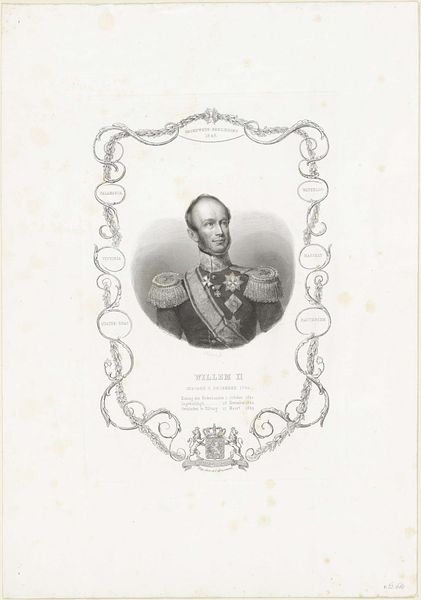
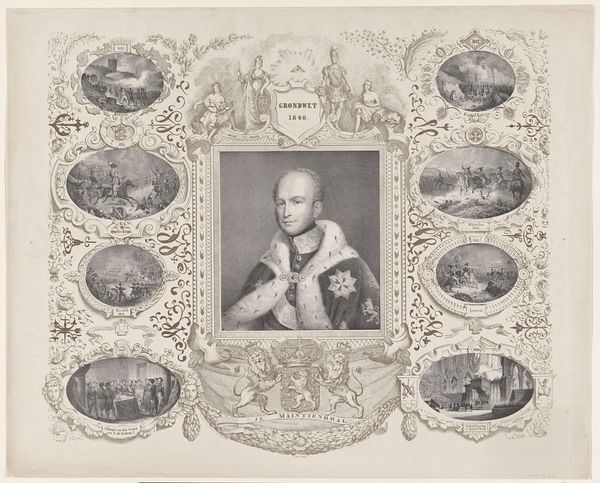
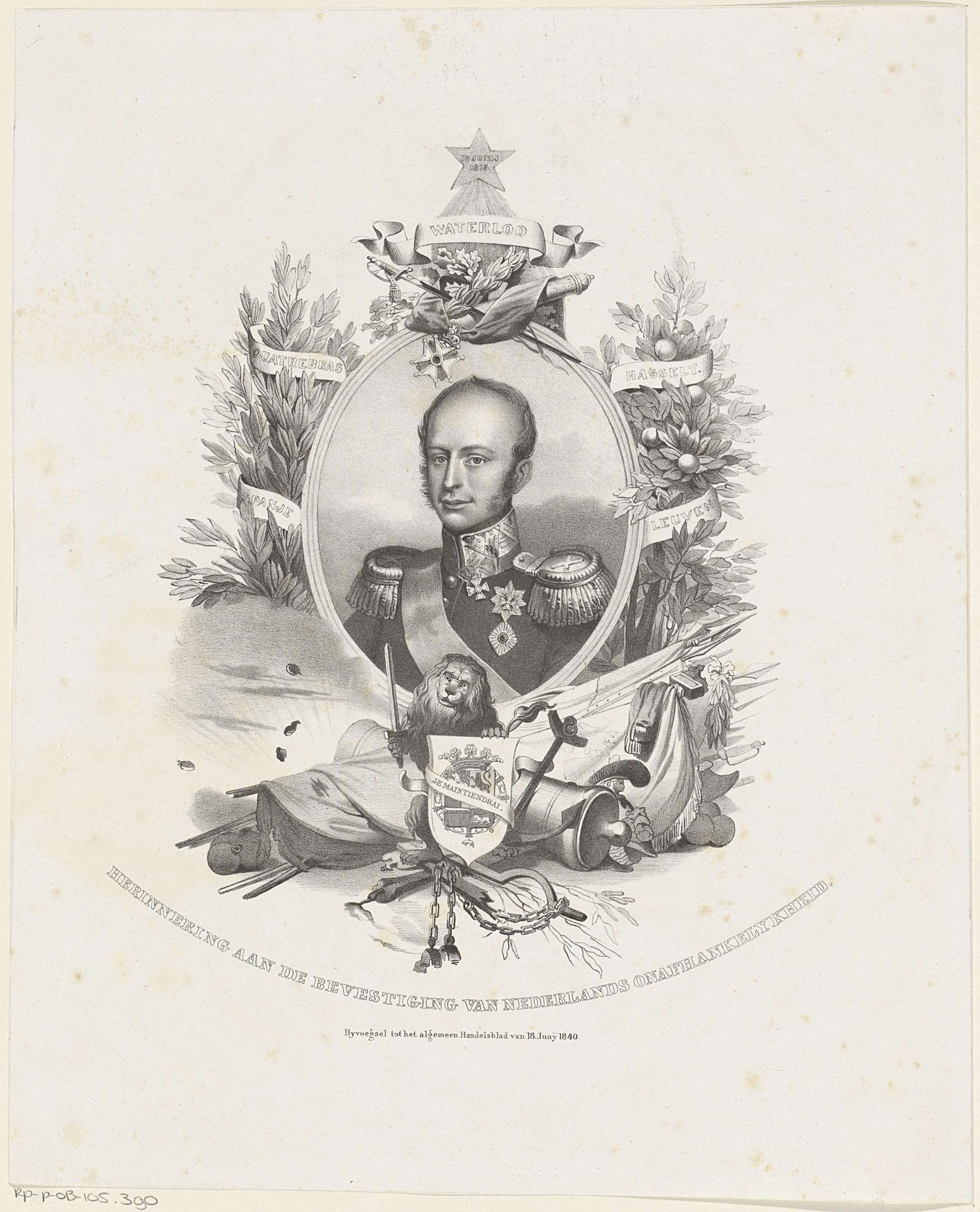
Portret van Willem II, koning der Nederlanden

Anonymous
@anonymousLocation
RijksmuseumListen to curator's interpretation
Curatorial notes
Editor: Here we have an engraving from sometime between 1840 and 1846. It's titled "Portret van Willem II, koning der Nederlanden," so, a portrait of King William II of the Netherlands. It's quite formal and symbolic. How do you interpret all these visual elements surrounding him? Curator: The layering of symbols is fascinating. The oak and laurel branches signal strength and victory – universal signs but amplified when framing a monarch. It’s interesting to consider the context. Post-Waterloo, what do these symbols communicate to the Dutch populace? Is it simply strength, or something more nuanced given the nation's complex political history? Editor: That’s a great point. I didn’t immediately connect it to Waterloo. Curator: And what about the regalia itself: the lion rampant, the armaments... these all carry cultural weight, signaling lineage, military power, and national identity. Do they project a message of stability or perhaps hint at a need to project power during a time of change? Editor: They definitely emphasize authority and a connection to tradition, especially the lion, but is there any intention of propaganda involved? Curator: It's possible, or at least, a conscious effort to reinforce a certain image. Images have always been powerful tools for constructing and maintaining cultural narratives. Look at the star atop the image referencing Waterloo: symbols build collective memory. Does it create or just sustain an understanding of their shared past? Editor: So much to consider beyond just the likeness of the King. This engraving functions almost as a cultural touchstone. Curator: Precisely! It reminds us how carefully crafted images can shape not just our perception, but our very understanding of history and identity.