1961
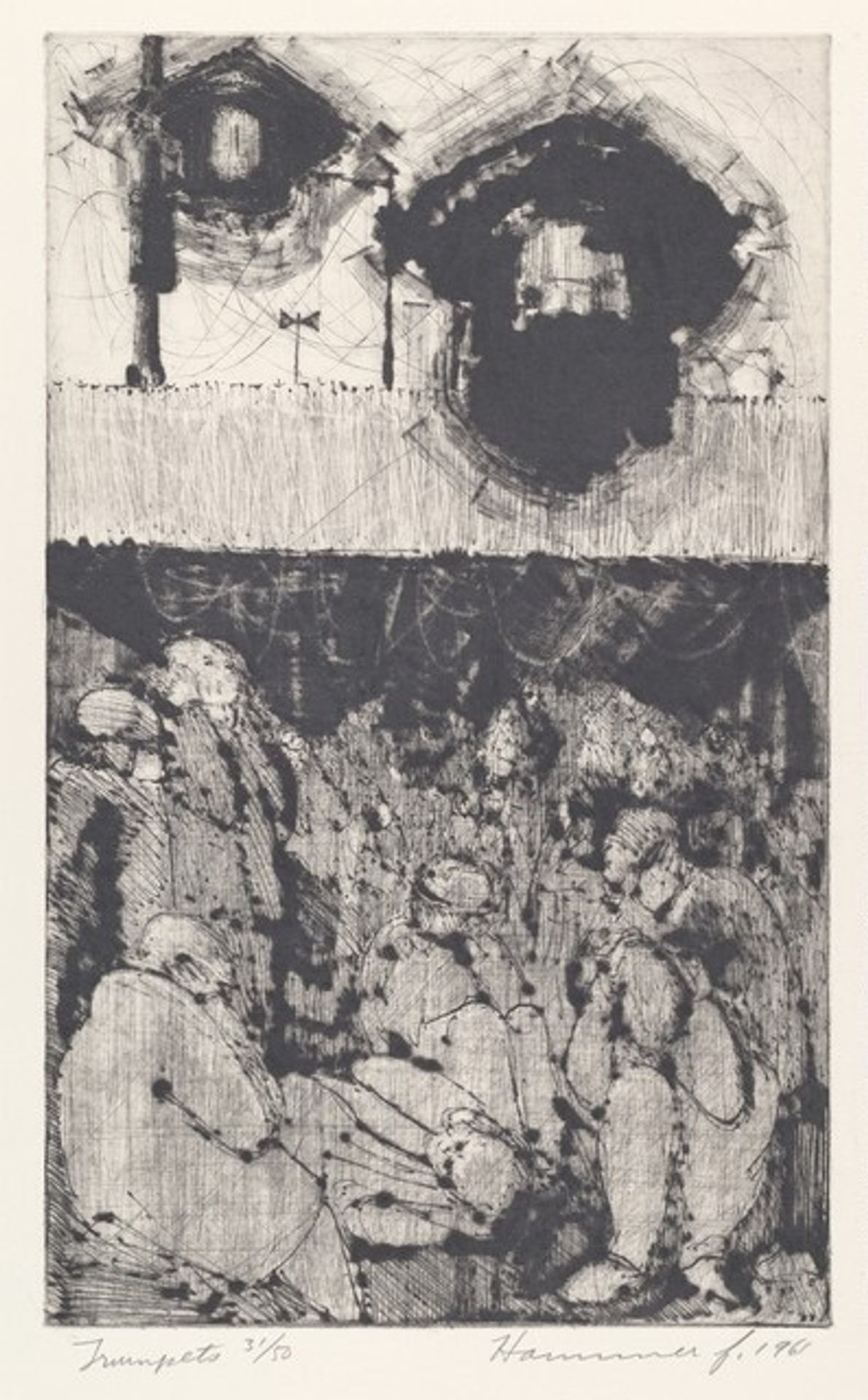
Trumpets


Listen to curator's interpretation
Curatorial notes
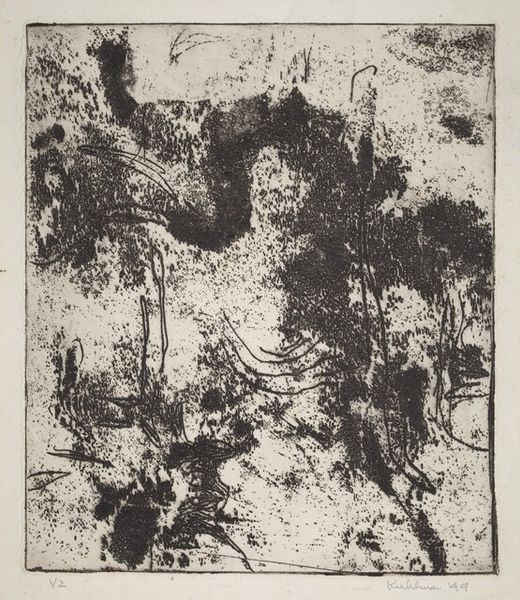
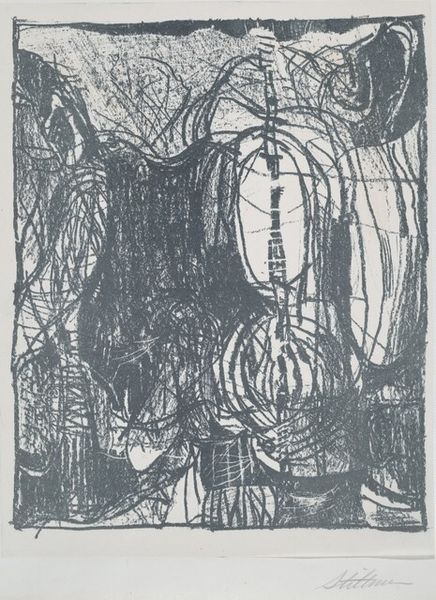
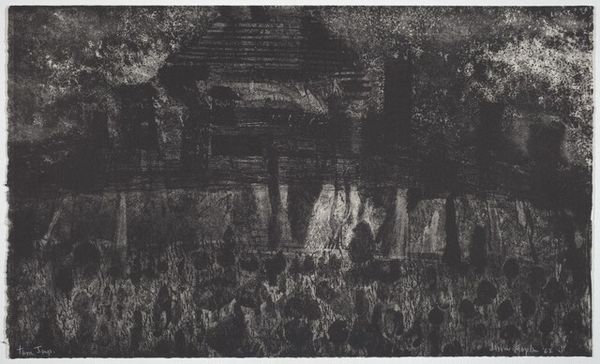
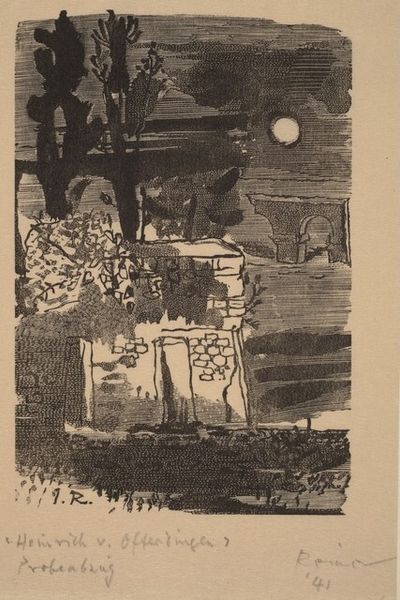
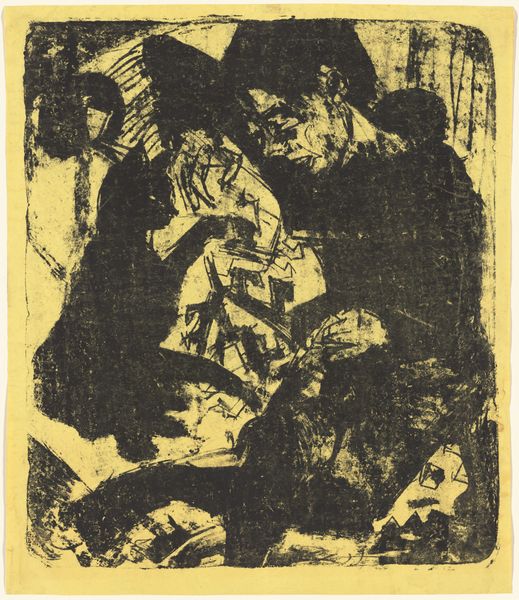
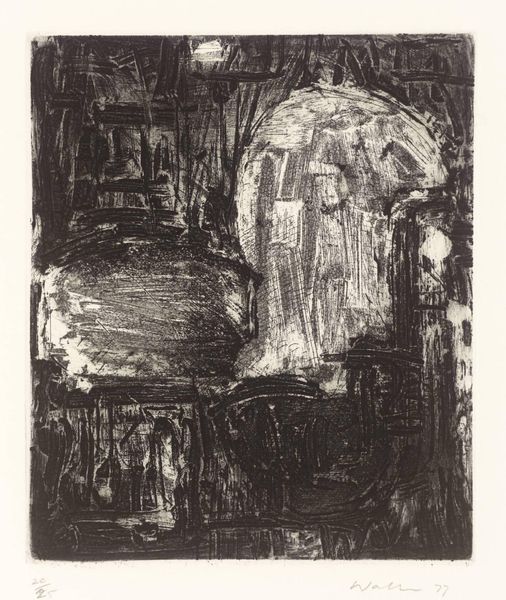
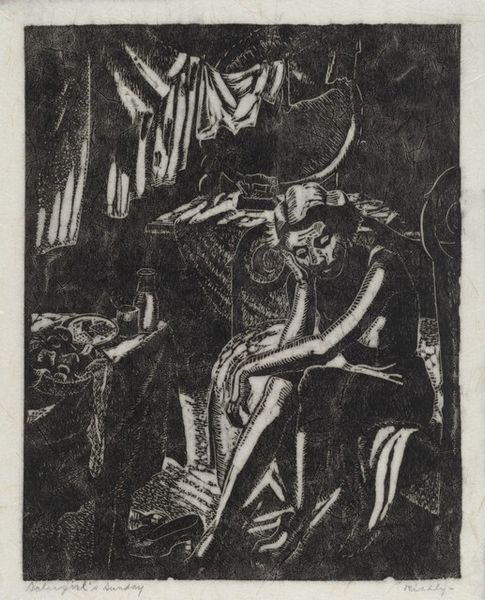
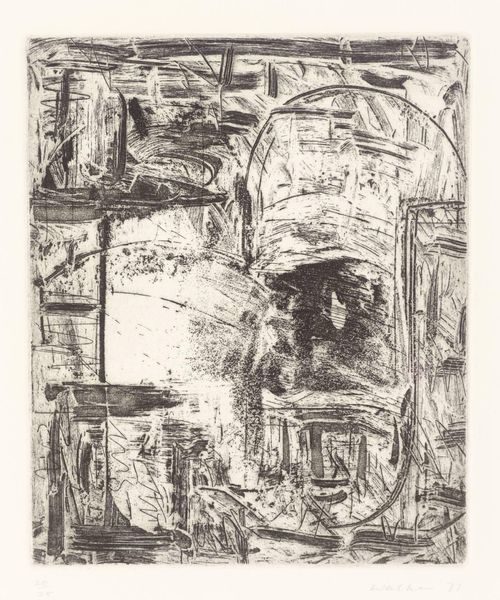
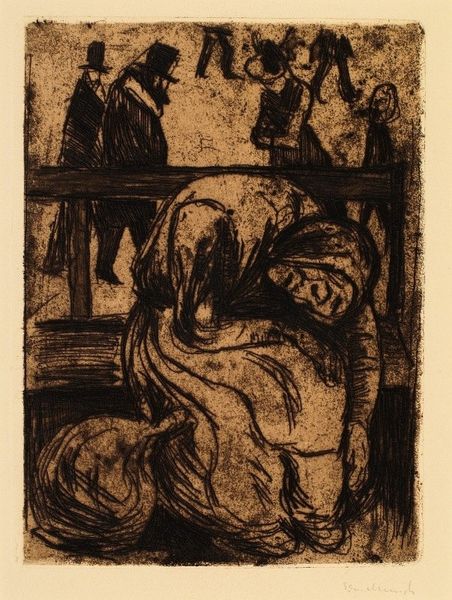
Curator: This is "Trumpets", a 1961 etching by Sid Hammer. The printmaking process renders an interesting composition, wouldn’t you agree? Editor: Yes, immediately, the somber and anxious mood jumps out at me. The rough, scratchy lines create a stark, almost apocalyptic atmosphere. What’s the story here? Curator: The means of production were undoubtedly laborious. The artist scratched lines into a metal plate, painstakingly layering to create these contrasting values of light and dark. It seems to highlight a real contrast. Look at the flat plain in contrast to the crowded lower portion. Editor: I see that contrast. And for me it’s as if two distinct social realities are presented. There's a mass of people, maybe refugees, clustered together under what appear to be ominous shapes looming above, maybe housing or just an oppressive sky. Curator: You're right, it’s quite heavy in the application of ink, isn’t it? Notice how the forms of the people are rendered. They seem pressed together, their individual identities somewhat blurred, almost consumed. A direct comment perhaps on their socio-economic situation. Editor: Exactly! Their collective vulnerability becomes a central theme. Are they seeking shelter? Or perhaps expressing some collective grief or anger? I am also thinking about how, post-World War Two, there was great displacement in many regions and also the rise of the fear of nuclear warfare, both being heavy socio-political anxieties. Curator: It’s interesting to see the abstraction, alongside figuration too. Hammer employed printmaking in the middle of the 20th century; his use of technique surely meant he was considering mass production. Print lends itself to the dispersal of ideas, just as much as images. Editor: That's a strong point. And it makes me consider the power dynamics inherent in image distribution during this era. Whose voices were amplified, and whose were marginalized? And this print could be a subtle commentary on those structures. Curator: This has made me consider the labour of producing art, against the possible socio-political contexts informing such an atmosphere, captured so effectively in lines of dark ink. Editor: I'll leave feeling concerned for humanity in times of displacement, and considering those artists reflecting society at various points in history, like this.