engraving
#
portrait
#
neoclacissism
#
engraving
Dimensions: height 236 mm, width 159 mm
Copyright: Rijks Museum: Open Domain
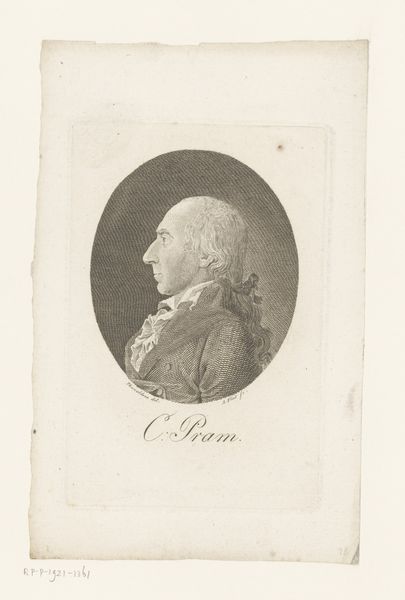
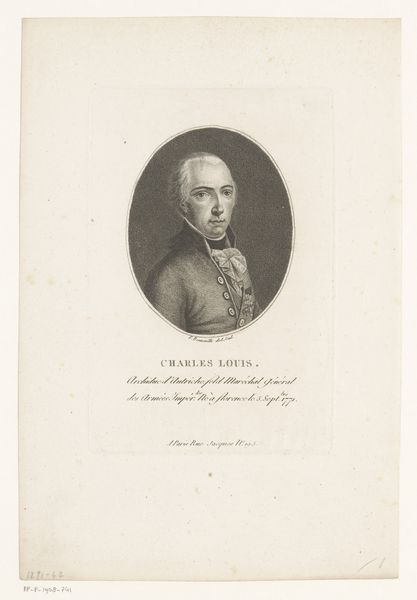
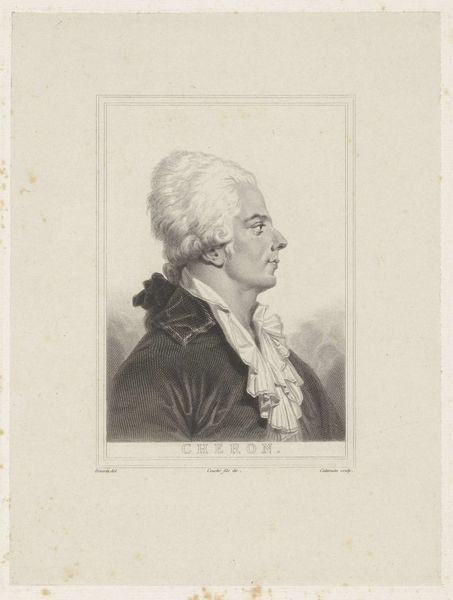
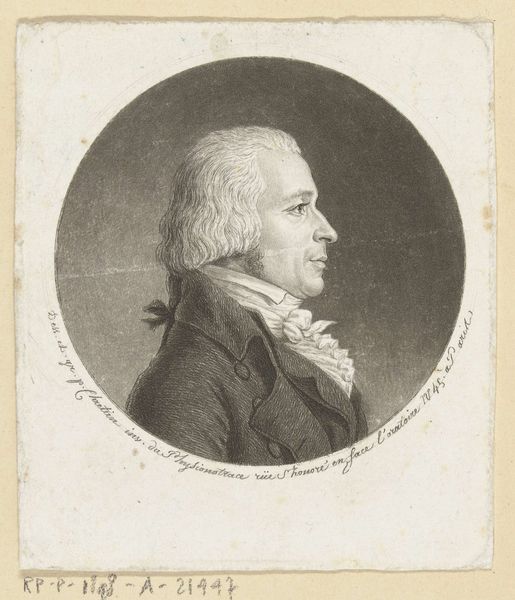
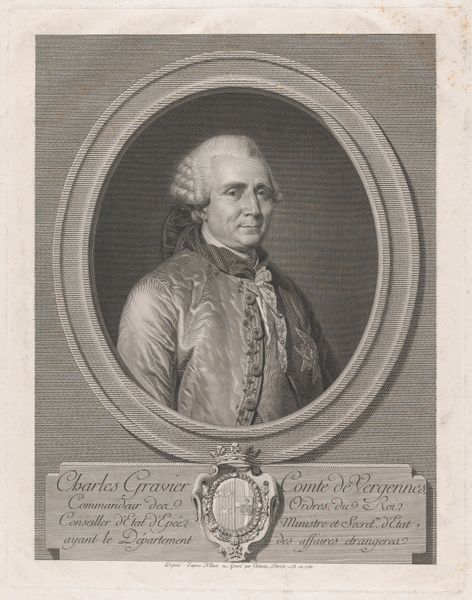
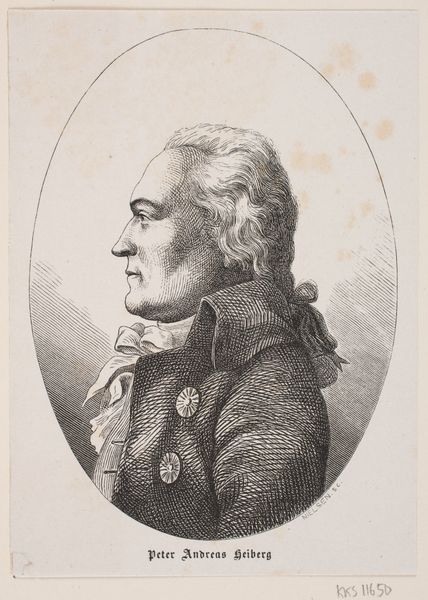
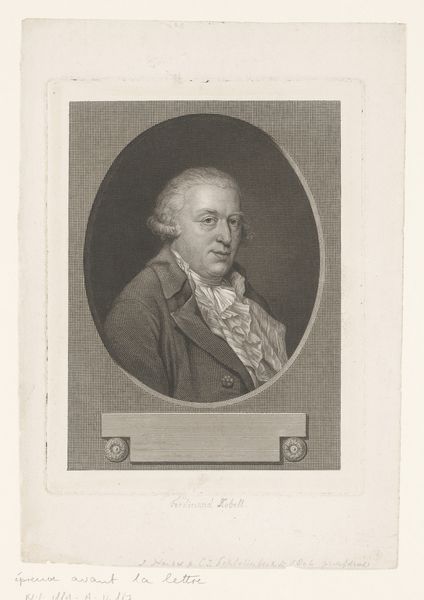
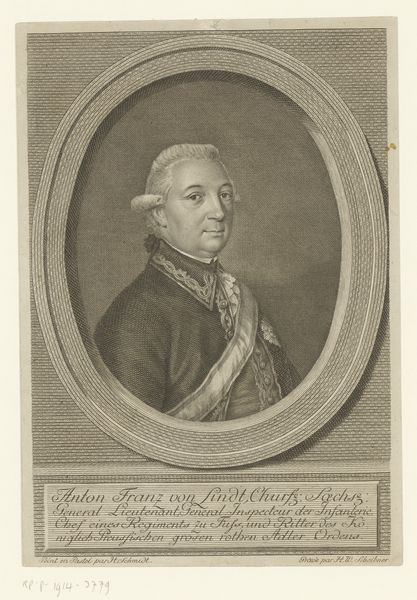
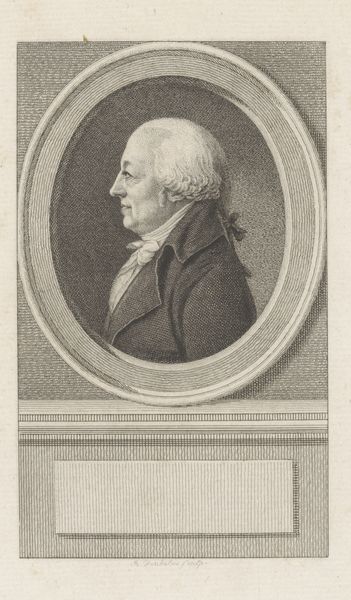
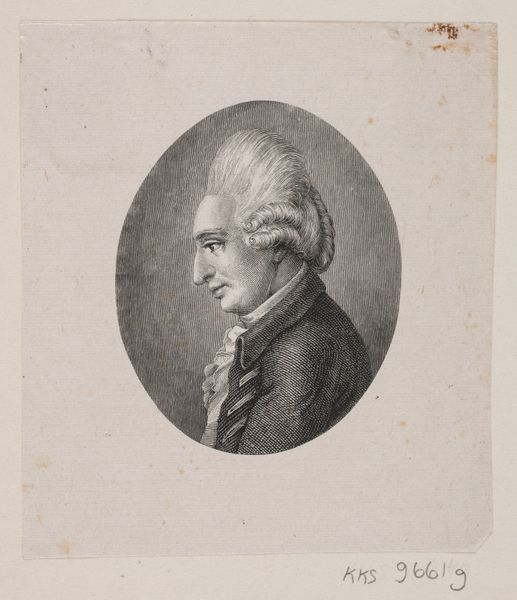
Editor: Here we have Adam von Bartsch's "Portret van Charles de Ligne" from 1780, an engraving currently held in the Rijksmuseum. It feels quite formal, a stoic profile captured within a neat oval. How do you interpret this work? Curator: Formally speaking, it presents a fascinating interplay of line and form. Notice the stark contrast between the meticulous detail within the oval, describing the sitter’s features and attire, and the smooth, almost ethereal, quality of the surrounding paper. The oval itself acts as a powerful structural device. It confines and focuses our gaze, thereby emphasizing the subject’s profile. Editor: So, the shape adds to the sense of formality? Curator: Precisely. The use of the oval – a classically-derived shape popular during the Neoclassical movement – reinforces the portrait's restrained elegance. The consistent hatching builds volume, modulating across the prince’s face to generate a subtly sculptural quality. Consider the delicate rendering of the hair; each strand contributes to a sense of controlled, yet dynamic energy. Do you see how that relates to the implied social standing? Editor: It does seem to reinforce the subject's status; like every detail is carefully considered and executed with precision, highlighting the importance of structure. It’s as if even the man's hair has to adhere to some kind of rigid structural system. Curator: An astute observation. What initially seemed to be a straightforward portrait unveils layers of technical sophistication and compositional mastery upon closer inspection. It prompts one to reflect on how form serves function in the art of portraiture. Editor: Absolutely. I hadn't initially considered how deliberately structured the image is. I appreciate that emphasis now.
Comments
No comments
Be the first to comment and join the conversation on the ultimate creative platform.
 Collect
 React
React Comment
More like this