19th century
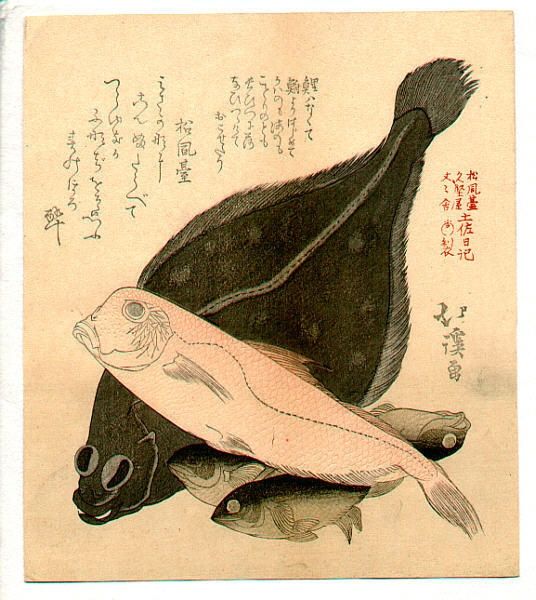
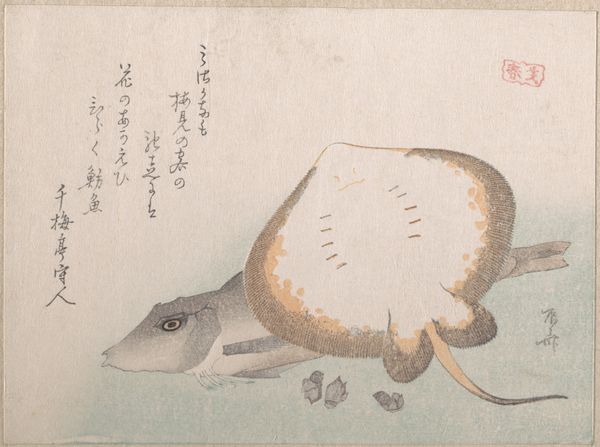
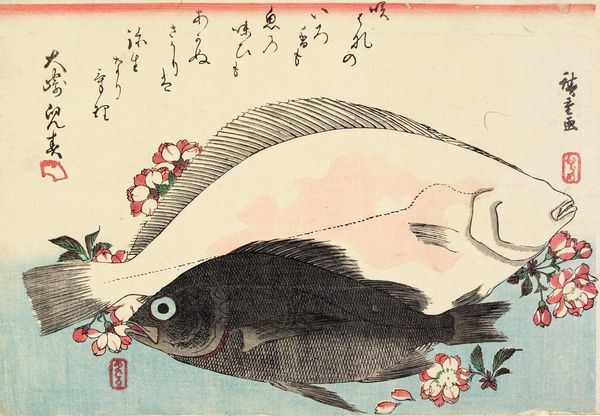
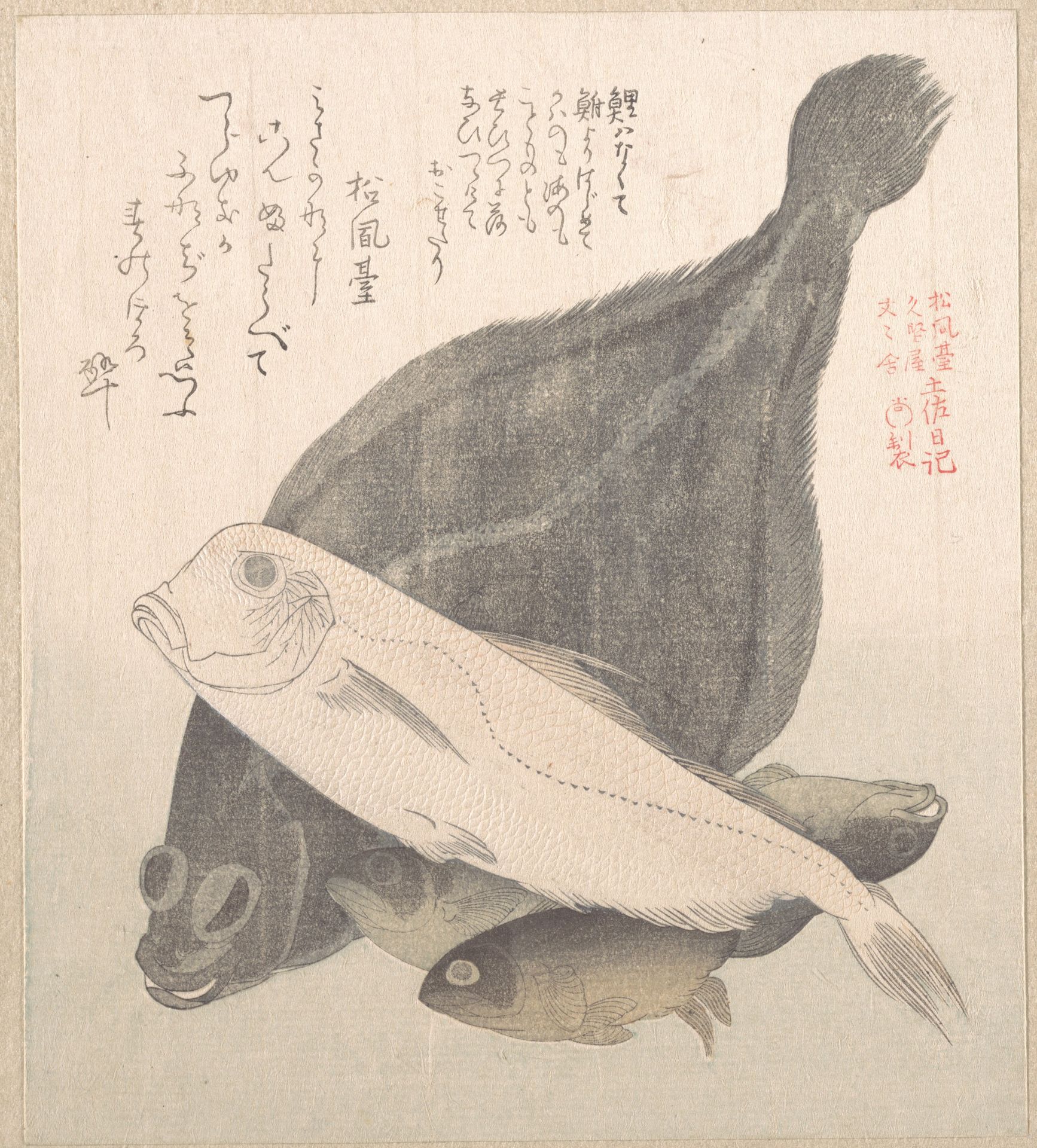
Flounder and Other Fishes


Listen to curator's interpretation
Curatorial notes
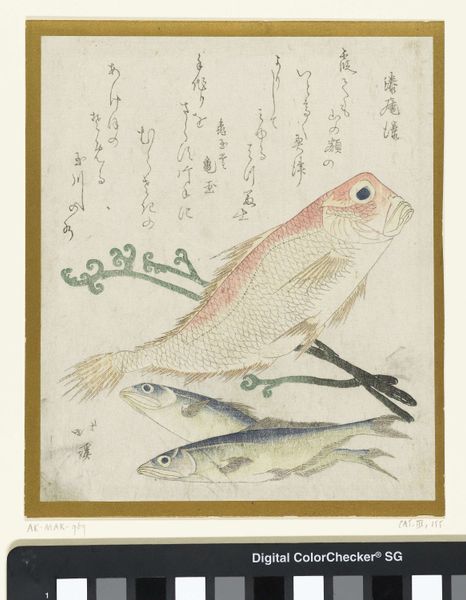
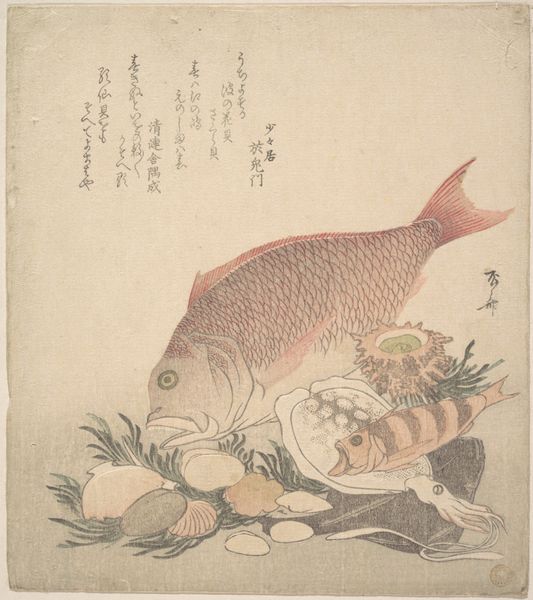
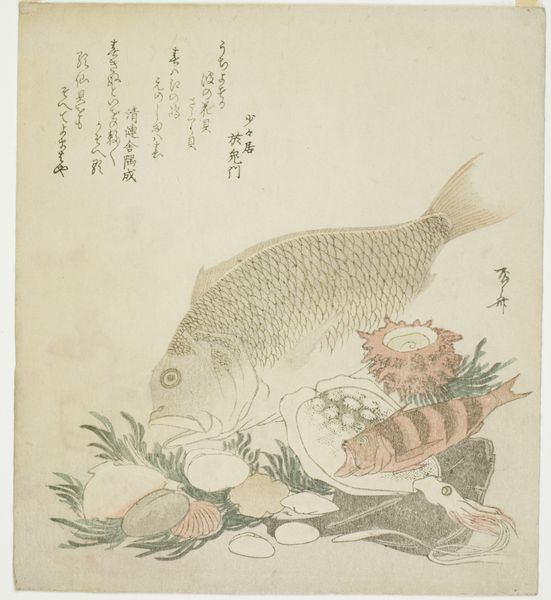
This is Kubo Shunman’s print, Flounder and Other Fishes. Although the print is undated, Shunman was active during the Edo period in Japan, a time of economic growth, strict social order, and flourishing arts. More than just a still life, this print reflects the Edo-period interest in the natural world, intertwined with social and cultural practices. In feudal Japan, where class distinctions were strictly enforced, depictions of everyday life, including food, provided a lens through which individuals could connect with their immediate environment. Food was not merely sustenance; it was a marker of identity, class, and regional culture. The poem inscribed on the print enhances this connection, speaking to a shared aesthetic sensibility. What is the relationship between the human and the natural? How do we give value and meaning to the things around us? This image is quietly radical; it elevates the ordinary and encourages us to find beauty in the mundane.