About this artwork
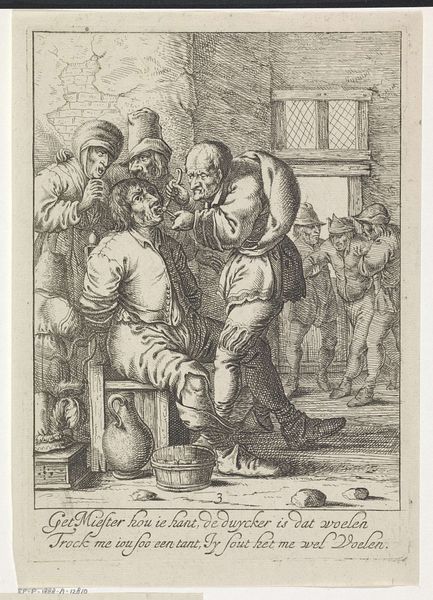
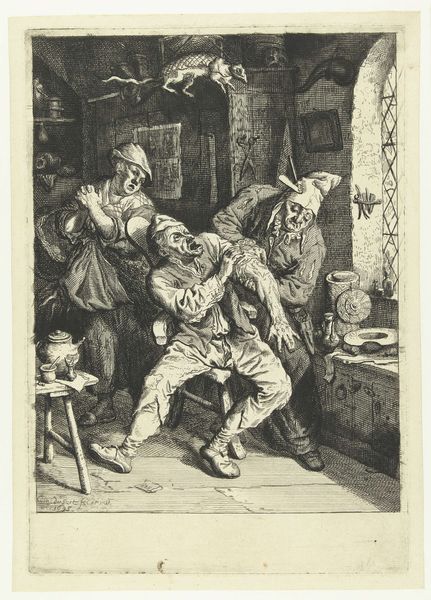
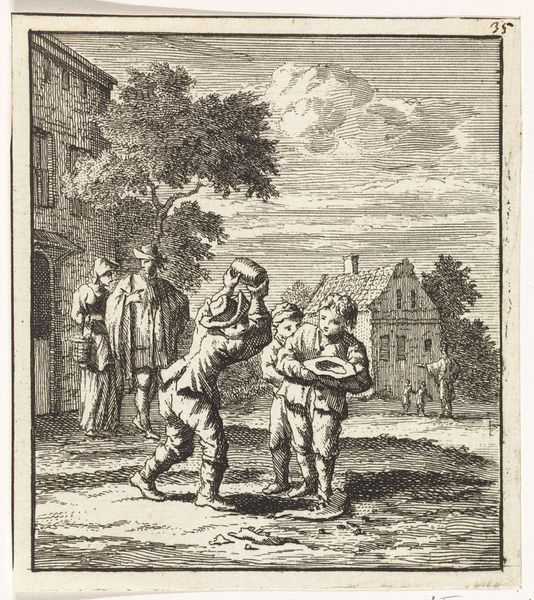
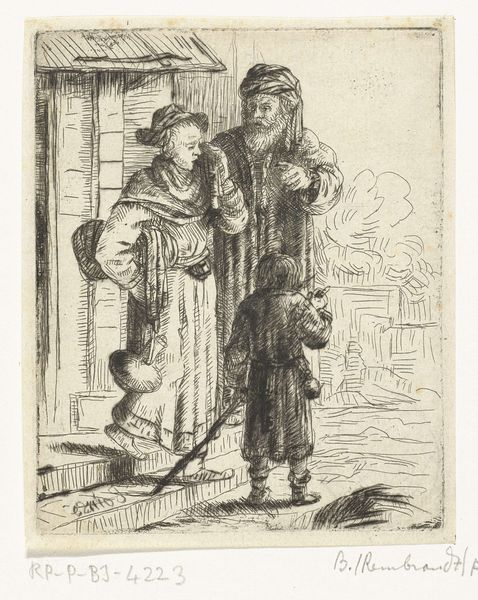
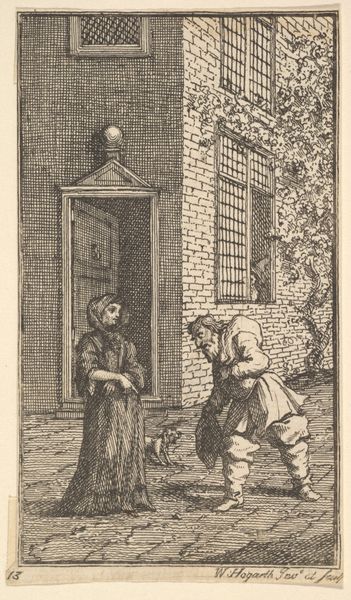
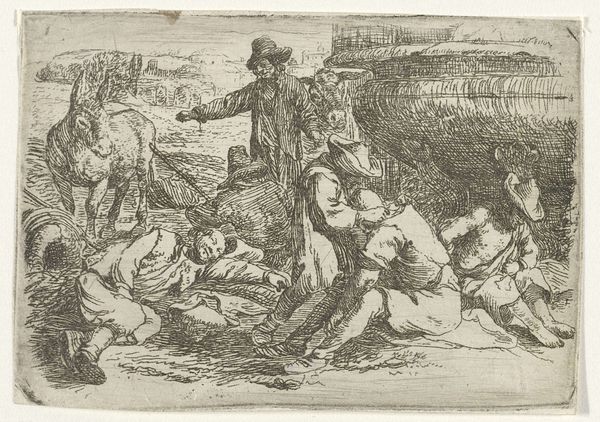
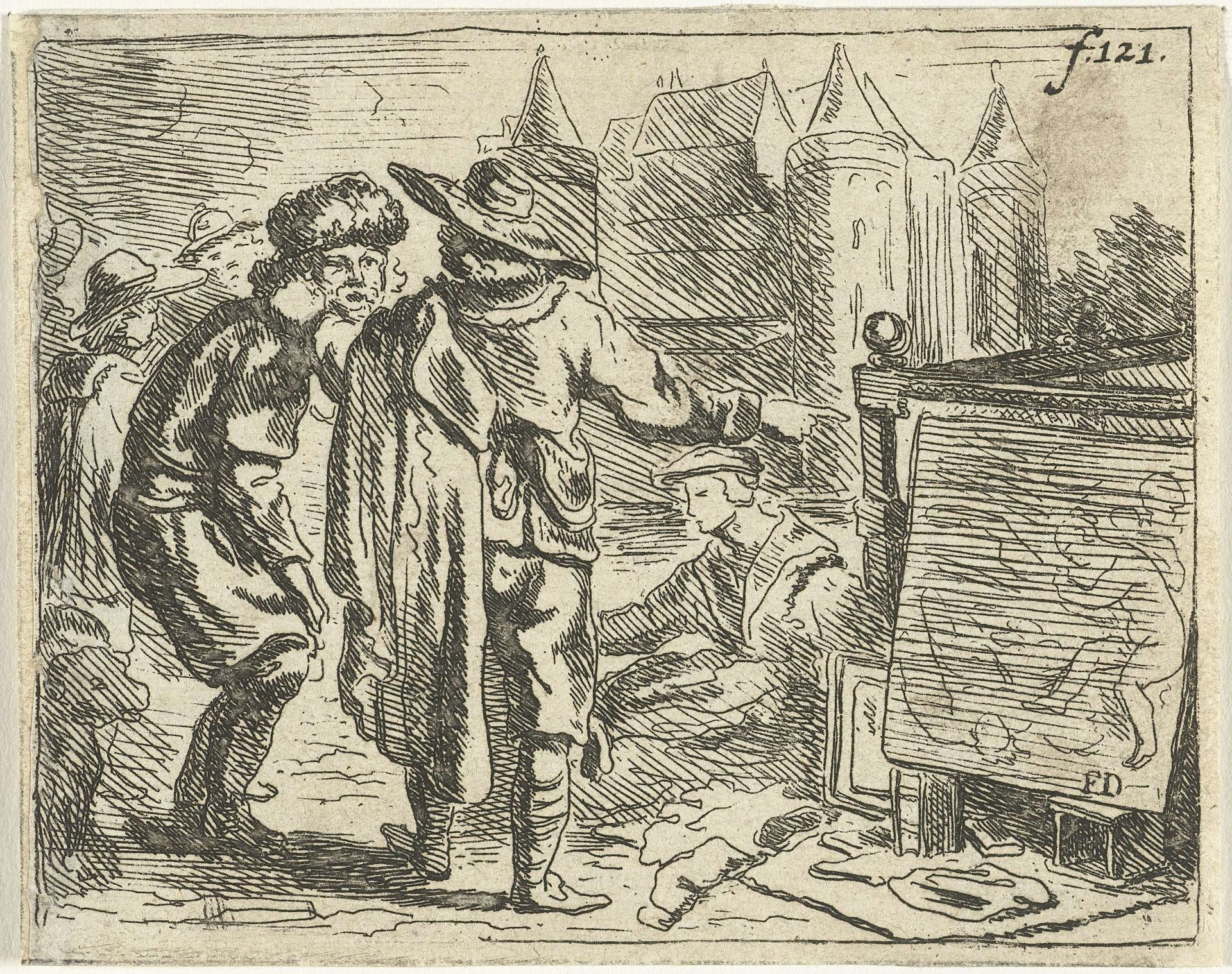
This etching, "Man met bontmuts wordt aan zijn oor getrokken," was made by Francoys Dancx in the 17th century, using a copper plate and etching tools. The material qualities of an etching are striking: the fine lines, created by acid biting into the metal, give a distinctive texture. Dancx likely used a needle to draw through a wax ground, exposing the copper before immersing it in acid. This process requires precision and control, skills honed through long apprenticeship. The resulting print captures a fleeting moment of social interaction. The very act of pulling an ear suggests a complex web of social norms and power dynamics. Moreover, the artist is represented at work, perhaps hinting at a world where art-making itself was a subject of curiosity or even contention. By understanding the labor-intensive process and the social context of this etching, we gain a deeper appreciation for the artistry of Dancx and the world he inhabited.
Man met bontmuts wordt aan zijn oor getrokken
1654

Francoys Dancx
1636 - 1703Location
RijksmuseumArtwork details
- Medium
- drawing, etching, ink
- Dimensions
- height 63 mm, width 85 mm
- Location
- Rijksmuseum
- Copyright
- Rijks Museum: Open Domain
Tags
Comments
Share your thoughts
About this artwork
This etching, "Man met bontmuts wordt aan zijn oor getrokken," was made by Francoys Dancx in the 17th century, using a copper plate and etching tools. The material qualities of an etching are striking: the fine lines, created by acid biting into the metal, give a distinctive texture. Dancx likely used a needle to draw through a wax ground, exposing the copper before immersing it in acid. This process requires precision and control, skills honed through long apprenticeship. The resulting print captures a fleeting moment of social interaction. The very act of pulling an ear suggests a complex web of social norms and power dynamics. Moreover, the artist is represented at work, perhaps hinting at a world where art-making itself was a subject of curiosity or even contention. By understanding the labor-intensive process and the social context of this etching, we gain a deeper appreciation for the artistry of Dancx and the world he inhabited.
Comments
Share your thoughts