#
abstract
#
geometric pattern
#
subtle pattern
#
abstract pattern
#
minimal pattern
#
repetition of pattern
#
vertical pattern
#
pattern repetition
#
layered pattern
#
funky pattern
#
combined pattern
Copyright: Modern Artists: Artvee
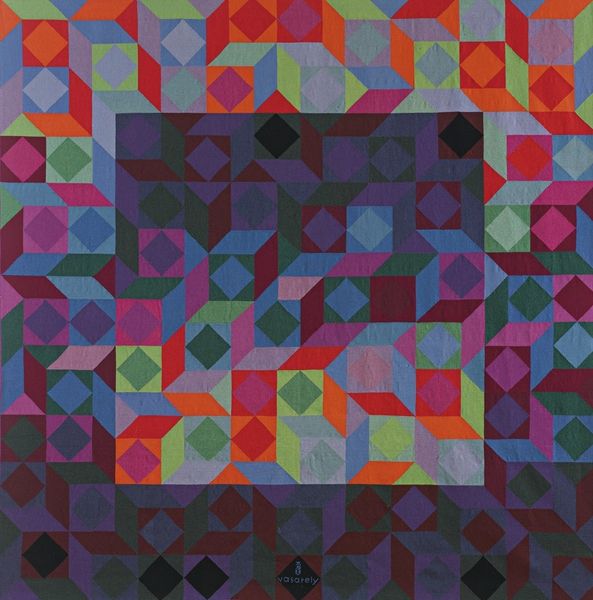
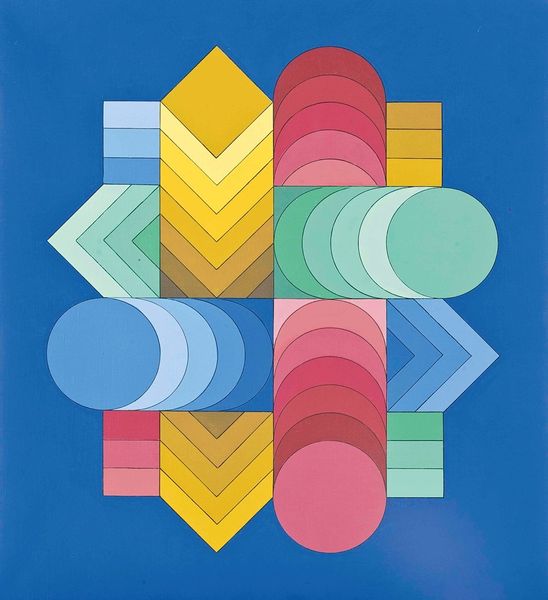
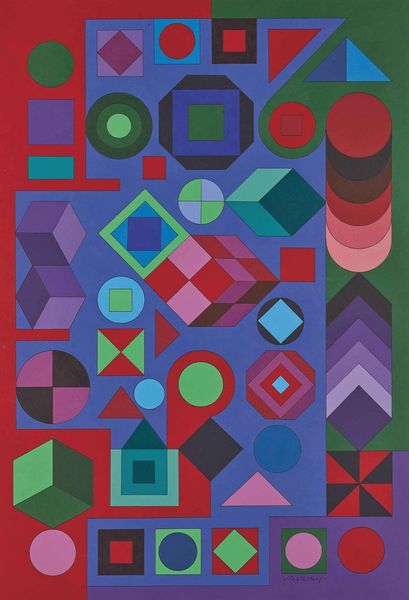
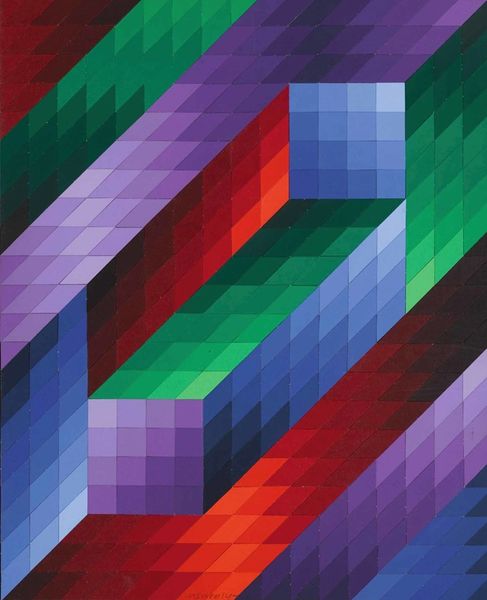
Editor: Here we have Victor Vasarely's "Folklore Planetaire," from around 1985. It’s striking how playful and vibrant it feels with its geometric shapes and bold colors, but there is also a rigid sense of structure to it. How do you interpret this work? Curator: Well, seeing Vasarely in the context of the mid-80s, we have to consider the rise of postmodernism. This piece feels like a commentary on order and chaos. Look at the tension between the flat, graphic planes of color, a holdover from modernist abstraction, and the dizzying optical effects. It creates a push and pull that reflects societal anxieties around control versus freedom. What do you make of the title, "Planetary Folklore?" Editor: I see that. It sounds almost contradictory, planetary and folklore. One is global and almost sterile, the other intimate and cultural. Curator: Exactly. Vasarely's works, particularly in this period, challenge us to consider how technology and globalization impact local narratives and identities. The hard-edged shapes could represent the dehumanizing forces of modernization, but the bright palette infuses a sense of rebellious joy. Do you feel a connection to that joy or a sense of unease? Editor: I feel both! There's an initial attraction to the colours, but the longer I look, the more unsettling it becomes. It's like a happy mask over something more complex. Curator: And that discomfort is productive! It reveals how art can be a tool for questioning power structures and prompting critical self-reflection. By grappling with that discomfort, we find new possibilities for collective action and reimagining the world around us. Editor: This has completely changed how I see Vasarely! Thank you for opening my eyes to all the layers of meaning. Curator: My pleasure! It's through these dialogues that we unlock the power of art to shape our understanding of the world.
Comments
No comments
Be the first to comment and join the conversation on the ultimate creative platform.
 Collect
 React
React Comment
More like this