About this artwork
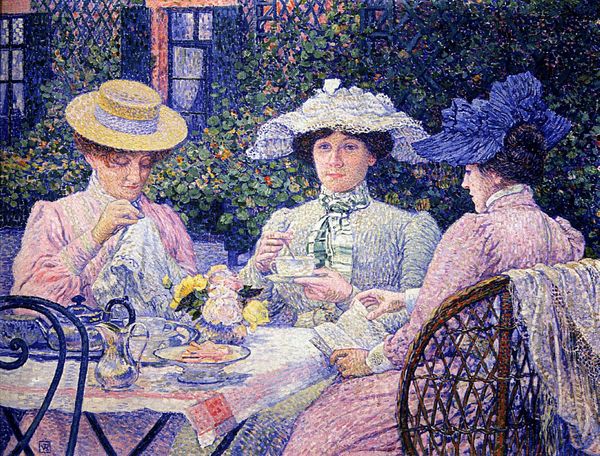
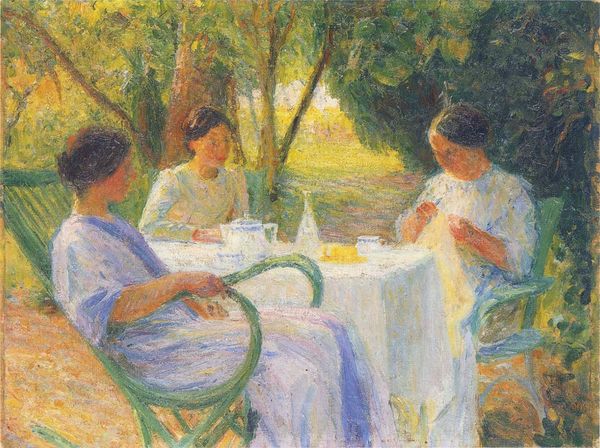
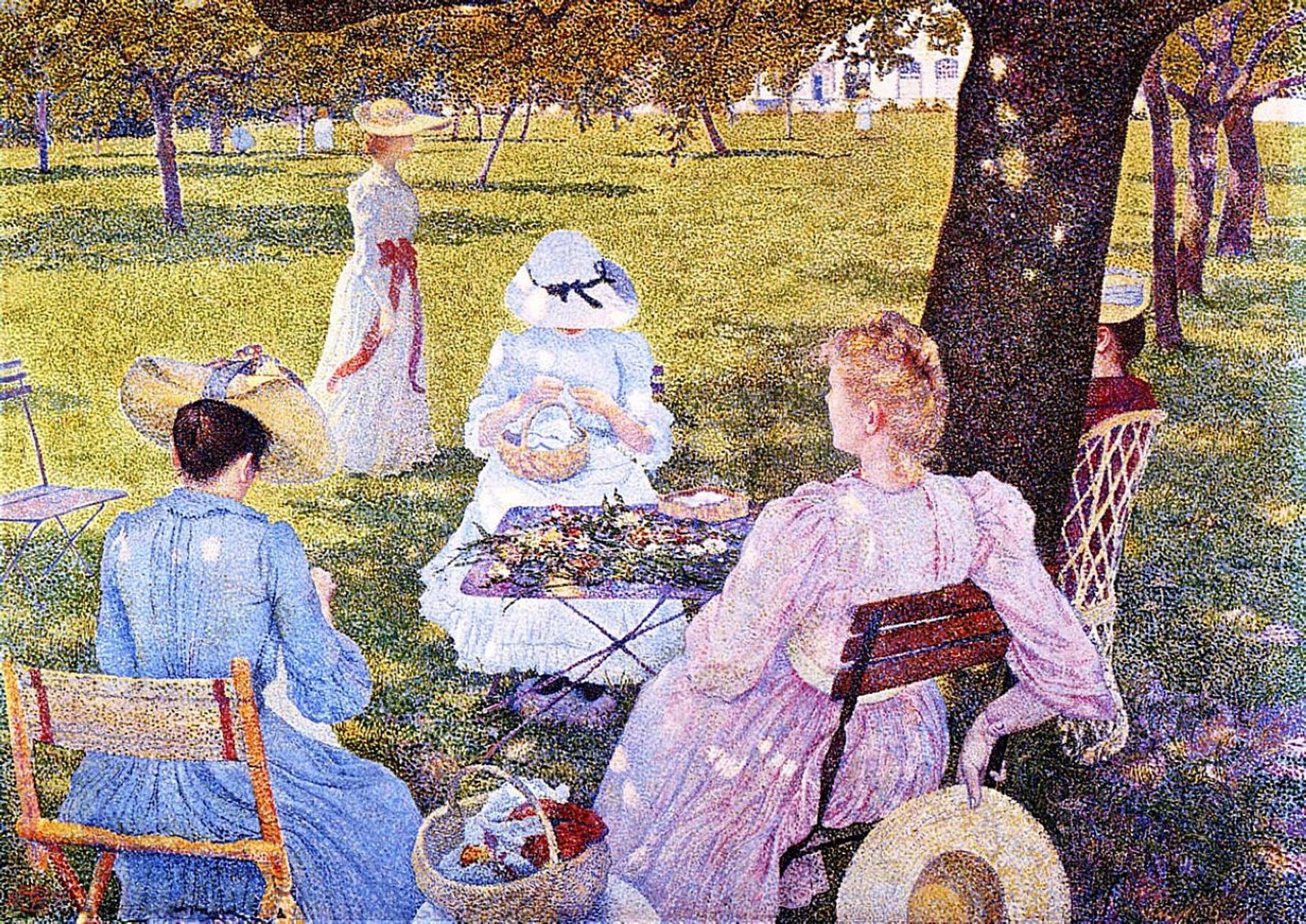
Theo van Rysselberghe painted this scene of a family in an orchard using the pointillist technique. The women’s hats immediately catch the eye. These are not merely fashion accessories, but potent symbols of femininity and domesticity. Think back to images of women adorning head coverings, veils or caps throughout European art history; they often signaled modesty, virtue, and a woman's role within the home. In van Rysselberghe's orchard, the hats take on a new twist. Though they no longer cover the hair completely, they still imply a certain protectiveness, hinting at the sheltered lives of these bourgeois women. Consider, too, how the basket of flowers on the table, a motif that appears in countless still lifes across the centuries, gains further significance when held by the figure in the hat. What does it mean to be productive, and to contribute to the home? The symbols are never static. They cycle through history, modified by our collective unconscious, reappearing when we least expect them.
Family in the Orchard
1890

Theo van Rysselberghe
1862 - 1926
The Kröller-Müller Museum
Kröller-Müller Museum, Otterlo, NetherlandsArtwork details
- Medium
- plein-air, oil-paint
- Dimensions
- 163 x 115.5 cm
- Location
- Kröller-Müller Museum, Otterlo, Netherlands
- Copyright
- Public domain
Tags
Comments
Share your thoughts
About this artwork
Theo van Rysselberghe painted this scene of a family in an orchard using the pointillist technique. The women’s hats immediately catch the eye. These are not merely fashion accessories, but potent symbols of femininity and domesticity. Think back to images of women adorning head coverings, veils or caps throughout European art history; they often signaled modesty, virtue, and a woman's role within the home. In van Rysselberghe's orchard, the hats take on a new twist. Though they no longer cover the hair completely, they still imply a certain protectiveness, hinting at the sheltered lives of these bourgeois women. Consider, too, how the basket of flowers on the table, a motif that appears in countless still lifes across the centuries, gains further significance when held by the figure in the hat. What does it mean to be productive, and to contribute to the home? The symbols are never static. They cycle through history, modified by our collective unconscious, reappearing when we least expect them.
Comments
Share your thoughts