1786 - 1832
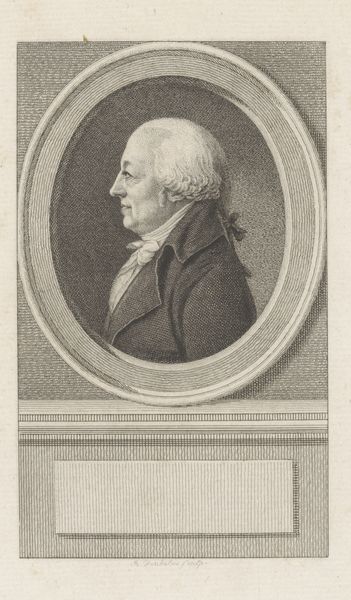
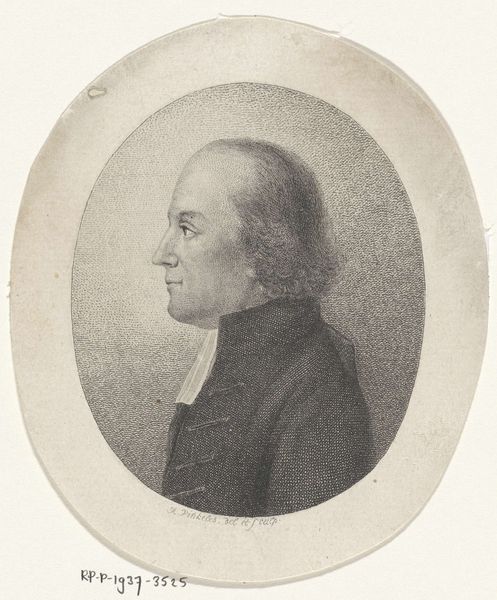
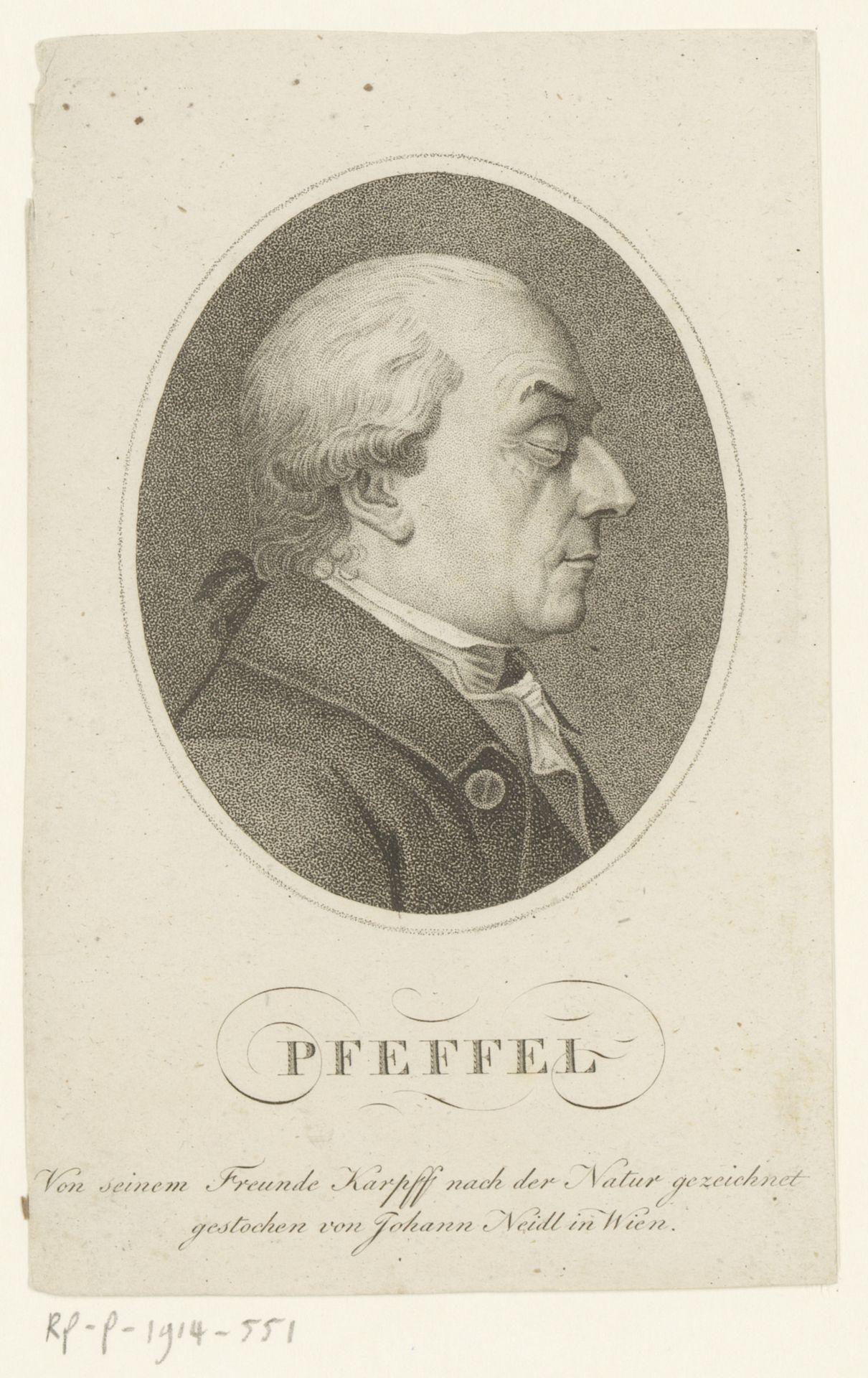
Portret van Gottlieb Conrad Pfeffel

Listen to curator's interpretation
Curatorial notes
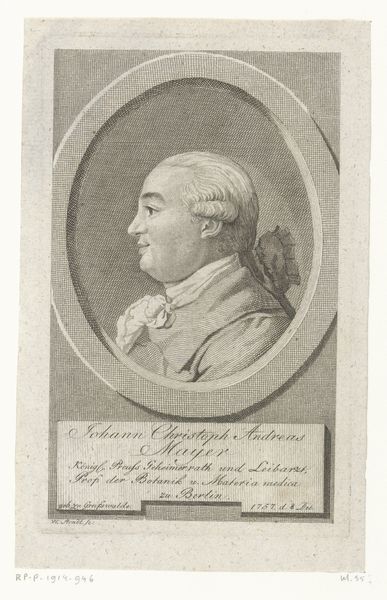
Editor: So, this is a portrait of Gottlieb Conrad Pfeffel by Johann Josef Neidl, dating from between 1786 and 1832. It looks like a pencil drawing or perhaps an engraving. The fine lines and aged paper give it such a formal and somber feeling. How do you interpret this work from a formalist perspective? Curator: Indeed. Let's consider the composition first. Note the oval frame. It contains the profile view, thereby creating a contained, almost classical structure. What effect does the use of line, specifically, have on the overall piece? Editor: Well, I notice the hatching and cross-hatching to build up the tonal range. It gives the portrait depth and volume but it also feels very controlled and precise, which adds to the formality I sensed earlier. Curator: Precisely. The artist meticulously employs this technique. Think of what that artistic choice conveys about the subject's perceived status, bearing in mind that the portrait is a study in tonal modulation. Editor: The textures and how light renders upon the coat and hair – the almost mathematical placement of strokes suggests formality but maybe also honesty in representing the sitter. Does the line become its own language? Curator: To some degree, yes. The severe, linear aesthetic achieves more than mere representation; it evokes an almost platonic ideal of portraiture. What do you make of the tonal variations then, particularly considering the paper is toned? Editor: The light reflecting off the forehead compared to the dark shadowing underneath his chin and the subtle blending on his cheek helps the form stand out from its background. The constraint creates the character. Curator: Precisely! Formalism allows one to notice the objective language of a picture in totality. The visual organization then allows meaning to rise forth on its own.