About this artwork
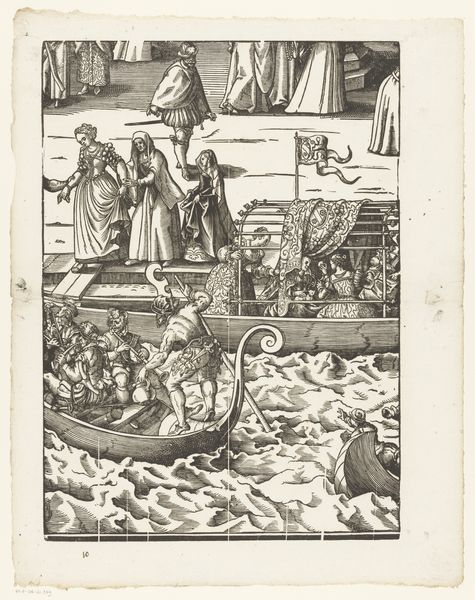
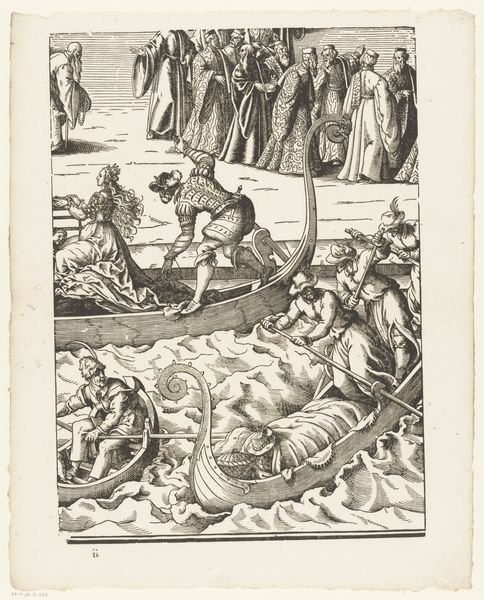
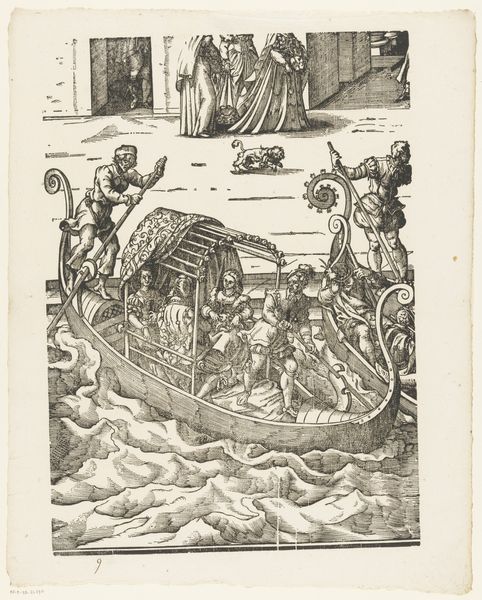
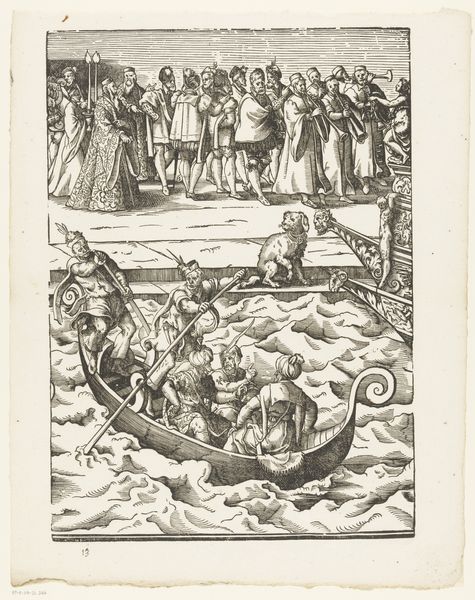
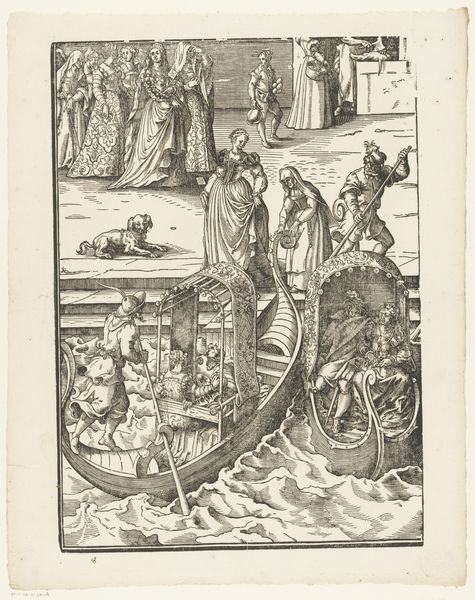
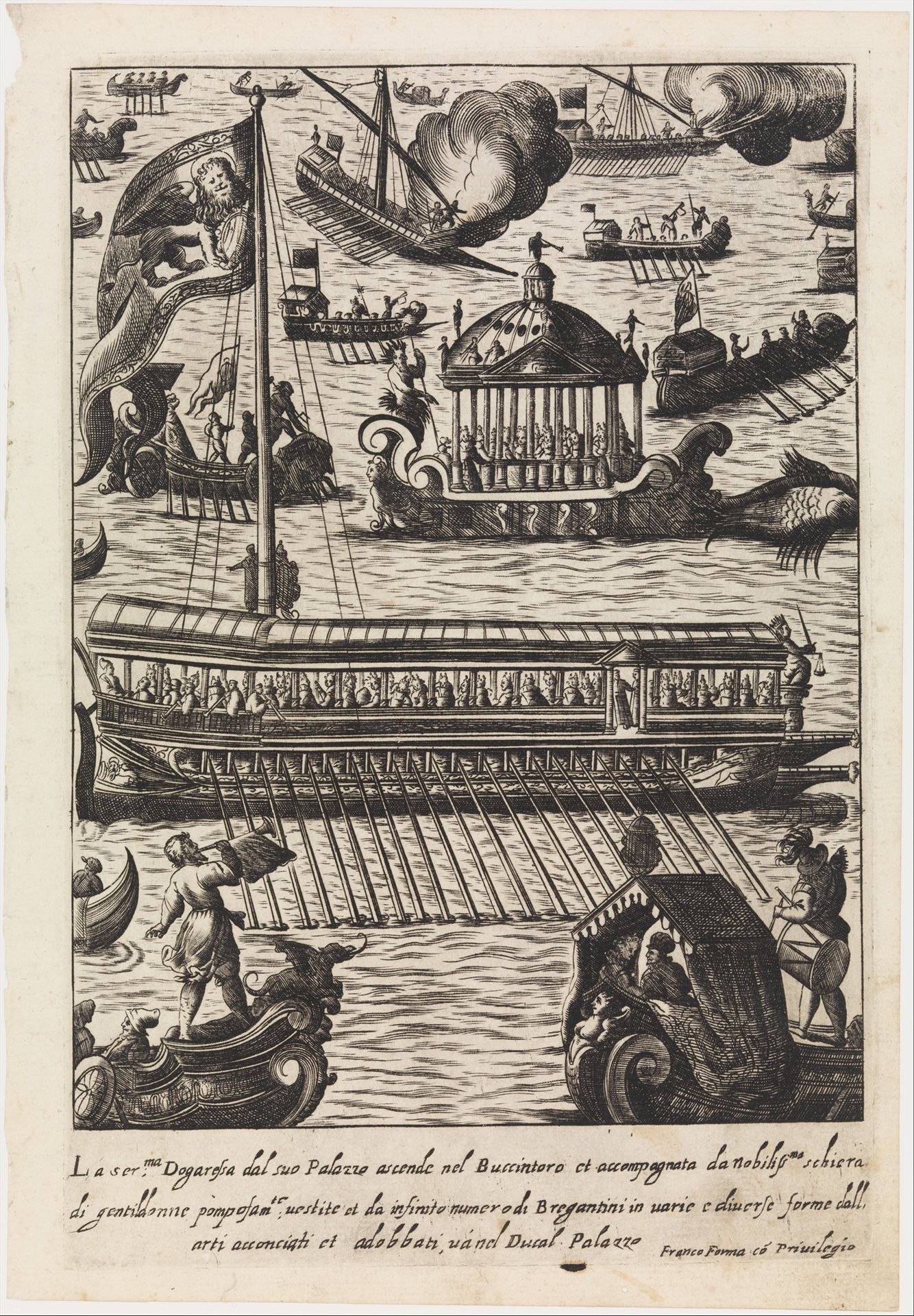
Giacomo Franco's engraving captures the Dogaressa of Venice aboard the Bucintoro, a state barge, amidst a flotilla of vessels. Dominating the scene is the winged Lion of Saint Mark, the symbol of Venice. This emblem signifies not merely the city's patron saint, but the strength, pride, and divine authority invested in the Venetian Republic. The Lion, a recurring motif, echoes through history, from ancient Mesopotamian art to medieval heraldry. Here, he stands as a guardian, a protector. Yet, consider how this image has been transmuted: the fierce, untamed lion tamed, its power harnessed to represent civic might. This taming reflects a broader cultural phenomenon—the channeling of raw, instinctual energies into the service of civilization. The image carries an emotional weight, the Lion embodies the city's aspirations and collective identity, resonating deeply within the Venetian psyche and shaping the perception of Venice as a beacon of power. This is a powerful, cyclical emblem, resurfacing and evolving across epochs.
La serenissima Dogaressa dal suo palazzo...Bucintoro from Habiti d'huomeni et donne Venetiane
1605 - 1615


Artwork details
- Medium
- drawing, print, engraving
- Dimensions
- Plate: 10 9/16 x 7 1/16 in. (26.8 x 17.9 cm) Sheet: 11 5/16 x 7 13/16 in. (28.7 x 19.9 cm)
- Location
- Metropolitan Museum of Art, New York, NY
- Copyright
- Public Domain
Tags
Comments
Share your thoughts
About this artwork
Giacomo Franco's engraving captures the Dogaressa of Venice aboard the Bucintoro, a state barge, amidst a flotilla of vessels. Dominating the scene is the winged Lion of Saint Mark, the symbol of Venice. This emblem signifies not merely the city's patron saint, but the strength, pride, and divine authority invested in the Venetian Republic. The Lion, a recurring motif, echoes through history, from ancient Mesopotamian art to medieval heraldry. Here, he stands as a guardian, a protector. Yet, consider how this image has been transmuted: the fierce, untamed lion tamed, its power harnessed to represent civic might. This taming reflects a broader cultural phenomenon—the channeling of raw, instinctual energies into the service of civilization. The image carries an emotional weight, the Lion embodies the city's aspirations and collective identity, resonating deeply within the Venetian psyche and shaping the perception of Venice as a beacon of power. This is a powerful, cyclical emblem, resurfacing and evolving across epochs.
Comments
Share your thoughts