1756
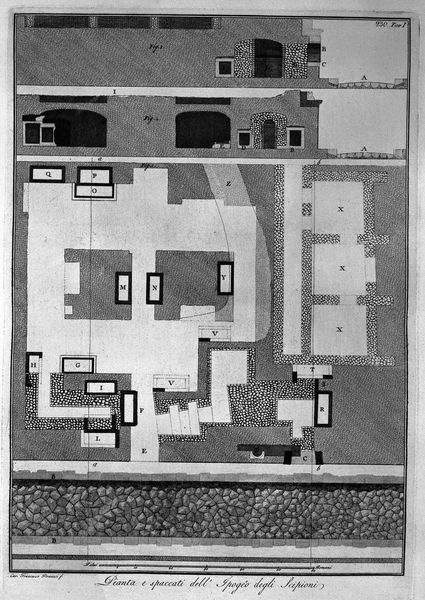
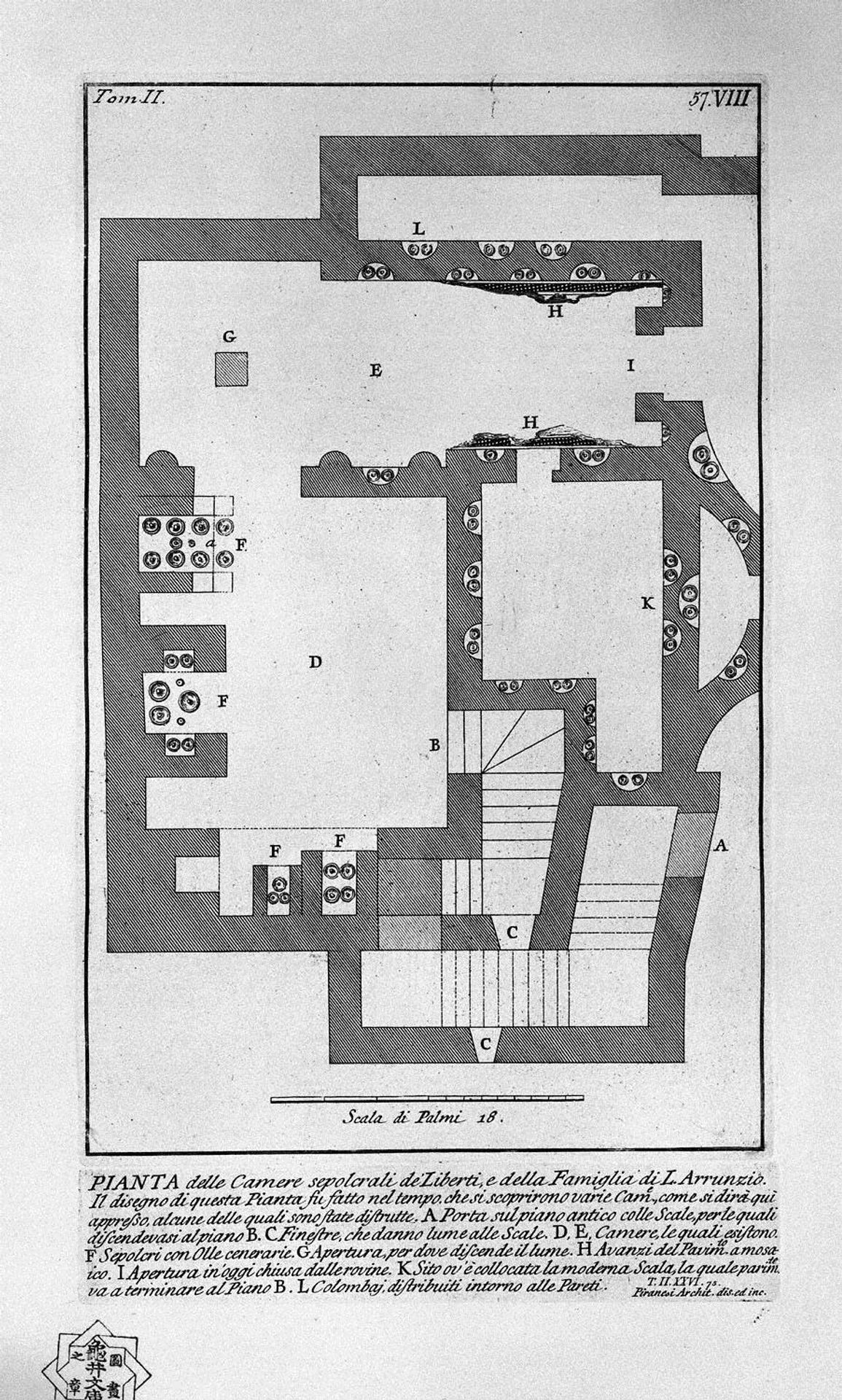
The Roman antiquities, t. 2, Plate VIII. Entry of the burial chamber of L. Liberti and Family Arrunzio.

Listen to curator's interpretation
Curatorial notes
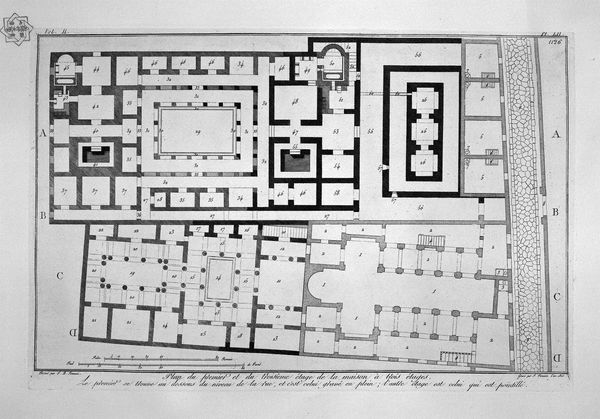
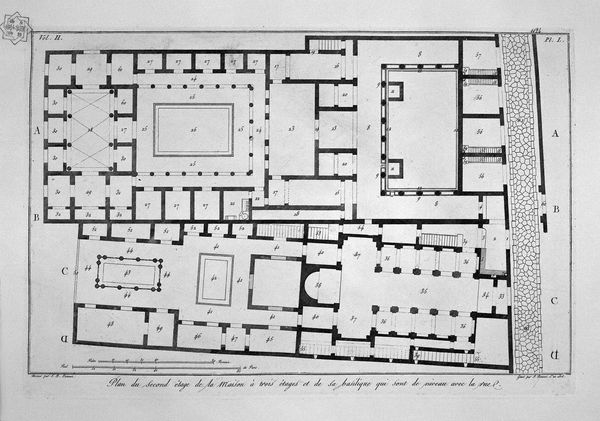
Giovanni Battista Piranesi created this etching titled "Entry of the burial chamber of L. Liberti and Family Arrunzio" in the 18th century. At the time, the rediscovery of Roman antiquities sparked widespread interest in classical architecture and design. Piranesi, straddling the roles of artist, architect, and antiquarian, was known for his detailed and dramatic depictions of Roman ruins. Here, Piranesi presents a plan of a tomb, offering us an intimate glimpse into the burial practices of the past. The print meticulously maps out the chambers, stairs, and the placement of the sepulchers. Consider how the layout suggests a hierarchical structure, perhaps reflecting the social status of the deceased, and how this spatial arrangement creates a narrative about family, memory, and legacy. Piranesi said he aimed to "to produce great ideas," and through his work, he invites us to contemplate our relationship with history and to see the past not as a distant relic but as a vital part of our cultural identity.