c. 1937
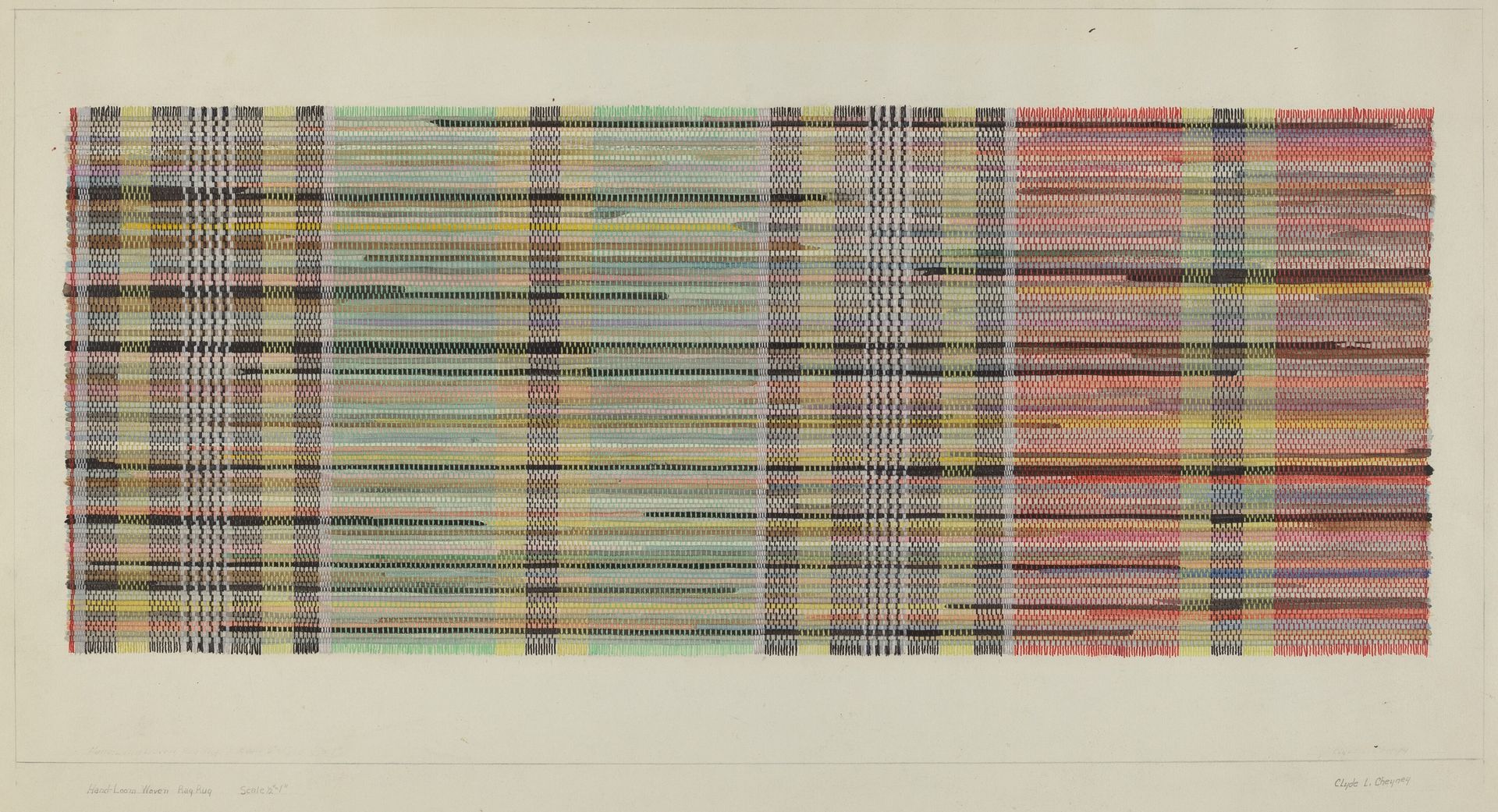
Rag Carpet


Listen to curator's interpretation
Curatorial notes
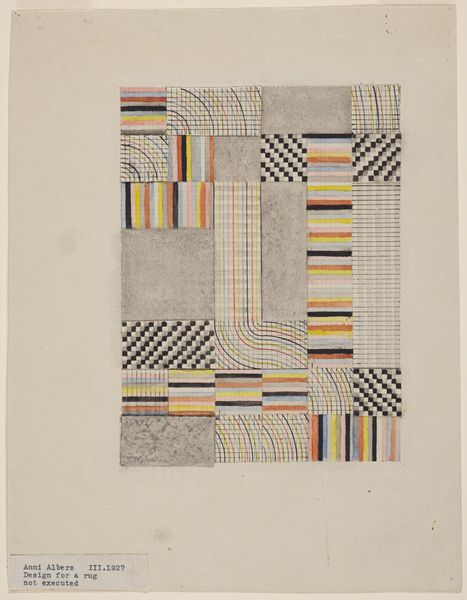
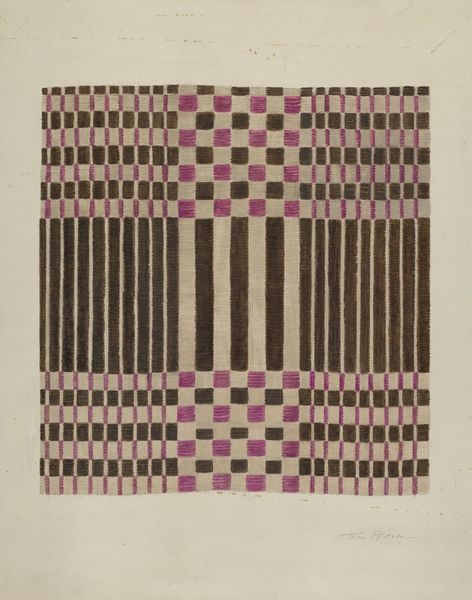
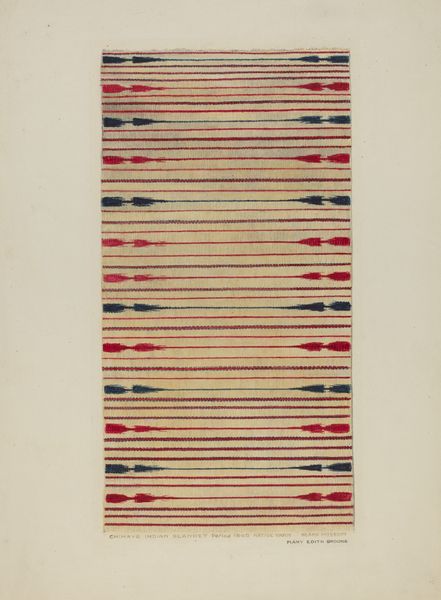
Editor: Here we have Clyde L. Cheney's "Rag Carpet," created around 1937. It seems to be a drawing depicting a textile, judging by the detailed pattern. The parallel lines and color blocks give it a very ordered feeling. What social stories do you see in this piece? Curator: That sense of order is key. On one level, it reflects the geometric aesthetics often associated with industrial design and early modernism. But, given its title and date, I think we should consider the historical and social context. The Great Depression profoundly impacted American life, especially in rural communities. Rag rugs were a common form of resourcefulness, repurposing old materials to create something new and functional. Editor: So, this drawing might not just be about aesthetics, but also about representing that lived experience? Curator: Exactly. Cheney isn't just depicting a pretty pattern; he's hinting at a whole set of social practices linked to necessity and making-do. This was a gendered activity as well, largely the domain of women turning household scraps into useful objects. Consider what is left out; Whose labor made the textile? Editor: It's easy to overlook those everyday skills that kept families going. I never considered it in a political and social framework. Curator: These rugs became symbols of both economic hardship and the resilience of communities facing difficult circumstances. What initially appears decorative becomes a statement of material culture. This elevates it. Editor: I'm going to remember that! I had a simplistic reading before, focusing on surface appearances. Now, I see layers of meaning reflecting social history and gender roles in "Rag Carpet," elevating it. Curator: Precisely, looking beneath the visual, toward broader questions about history, identity, and cultural production always enriches our interpretation.