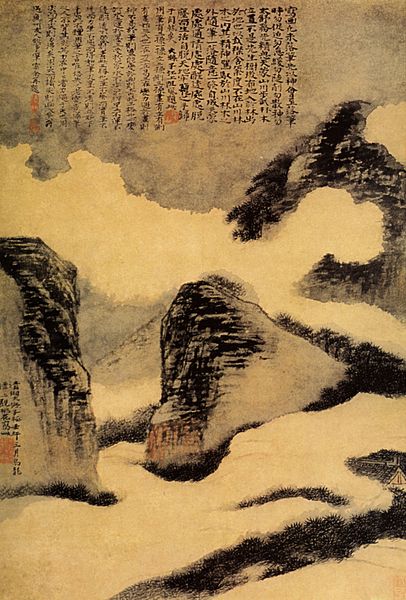
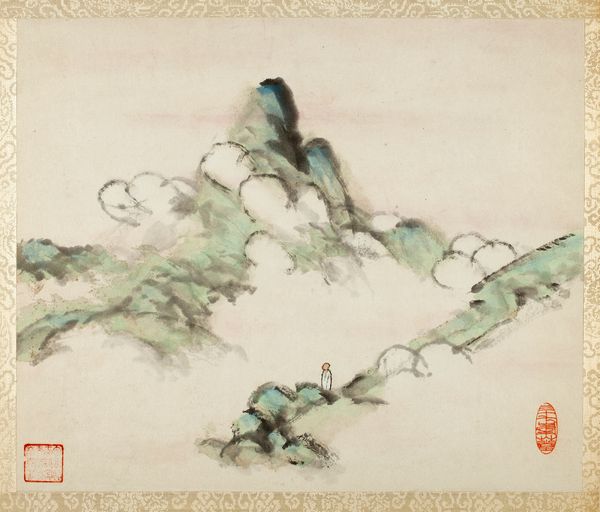
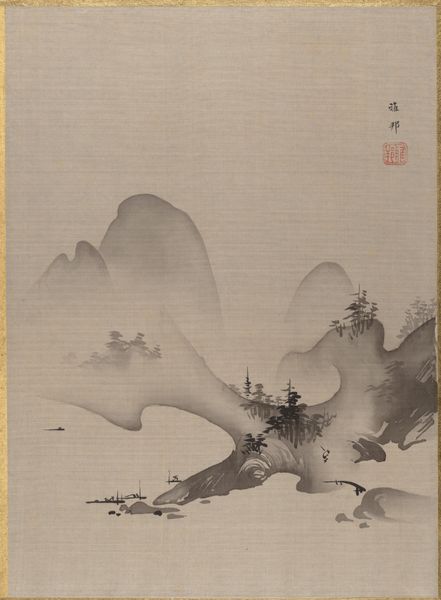
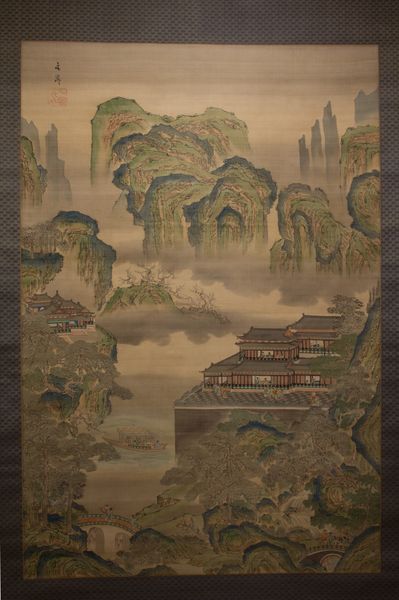
![Mountains [center from the triptych Three Evening Scenes] by Suzuki Kiitsu 鈴木基一](https://d2w8kbdekdi1gv.cloudfront.net/eyJidWNrZXQiOiAiYXJ0ZXJhLWltYWdlcy1idWNrZXQiLCAia2V5IjogImFydHdvcmtzLzEwOTBiNTU4LTY3MTUtNDQ0ZS1iZTgwLTNkODIzYzRiMDE1ZC8xMDkwYjU1OC02NzE1LTQ0NGUtYmU4MC0zZDgyM2M0YjAxNWRfZnVsbC5qcGciLCAiZWRpdHMiOiB7InJlc2l6ZSI6IHsid2lkdGgiOiAxOTIwLCAiaGVpZ2h0IjogMTkyMCwgImZpdCI6ICJpbnNpZGUifX19)
c. 19th century
Mountains [center from the triptych Three Evening Scenes]


Listen to curator's interpretation
Curatorial notes
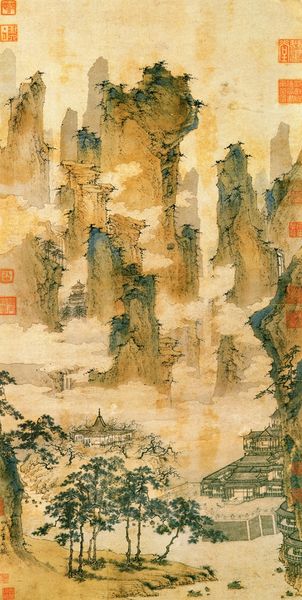
"Mountains," part of the "Three Evening Scenes" triptych, was created by Suzuki Kiitsu, a Japanese artist who died in 1858. His work reflects a period of social change, as Japan transitioned from feudalism toward a more open, modern society. This ink-on-paper landscape invites us to consider Kiitsu’s personal relationship with the natural world, mediated as it was by his social standing. Born into a textile-dyeing family, he later became a student of Sakai Hōitsu, an artist associated with the Rinpa school, known for its decorative and stylized depictions of nature. In "Mountains," Kiitsu employs soft washes of ink to create a scene that feels both intimate and expansive. The mountains emerge from a misty background, their forms softened by the atmospheric perspective. A cluster of trees stands atop the central peak, adding a touch of human scale to the vastness of the landscape. Kiitsu’s "Mountains" offers a window into the soul of an artist navigating a world in flux, and it reminds us of the enduring power of art to connect us to our environment.