ceramic, earthenware
#
ceramic
#
earthenware
#
stoneware
#
ceramic
#
decorative-art
Dimensions: 6 x 13 x 11 5/8 in. (15.24 x 33.02 x 29.53 cm)
Copyright: Public Domain
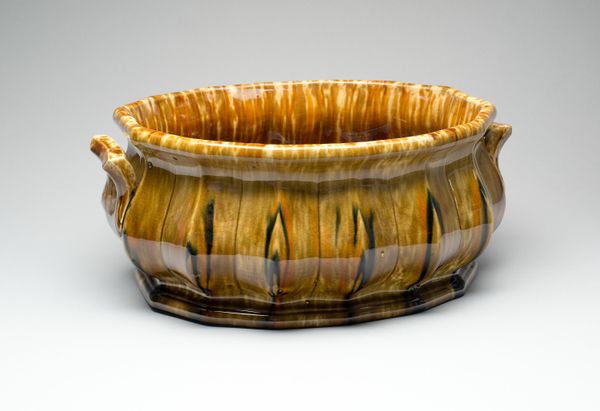
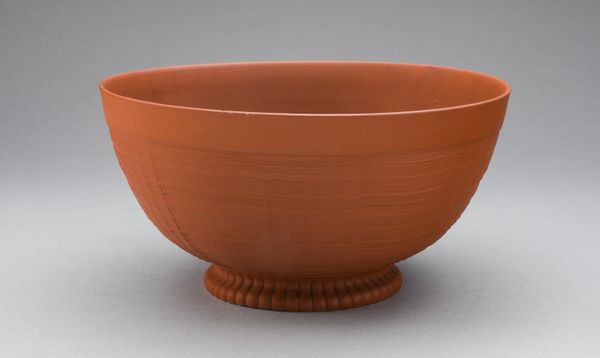
Curator: Looking at this object, I'm immediately struck by its unexpectedly elegant form, considering its purpose. There’s almost a neoclassical feel. Editor: Indeed! What you’re seeing is an earthenware Chamber Pot, believed to have been crafted sometime between 1815 and 1817, and potentially attributable to George Bullock. It resides here at the Minneapolis Institute of Art. Curator: It seems like a significant upgrade in the bathroom accessory department. The graceful curves, those stylized leaf motifs... even the handles look purposefully designed to elevate the ordinary. Editor: Absolutely, and think about the historical context. The Regency era saw a rise in decorative arts even for utilitarian objects, a reflection of societal aspirations for refinement, but also access to hygiene and what that means in class terms. Chamber pots, while essential, could be statements about one's social standing. Curator: The symbols and motifs speak to that desire for a cultivated image, a life well-appointed. A beautiful object even for the most private acts of nature, signaling control and order. Do you see in the choice of earthenware here an interest in hygiene, even unconsciously? Editor: It certainly points to developments in understanding public health at the time, alongside that desire for domestic decorum. Though hygiene might not have been the *sole* motivating factor in the choice of materials, the smoother surfaces would absolutely make this ceramic chamber pot much more hygienic compared to older, more porous options. Beyond that, you can see, too, a sort of tension in an object like this. What is considered obscene or unspeakable and who gets to decide that? The hidden in plain sight. Curator: Fascinating... The artist almost seems to be engaging in a dance between necessity and propriety, elevating what is often relegated to the realm of the unseen. We give objects certain functions and yet the human desire to make something more beautiful is an enduring one, is it not? Editor: Absolutely! We pour ourselves and our values into even the most mundane things. Considering this object pushes me to think more about gender and class implications, domestic labour, sanitation, decorum, access, and the beautiful banality of a toilet. Curator: Thank you!
Comments

minneapolisinstituteofart over 2 years ago
⋮
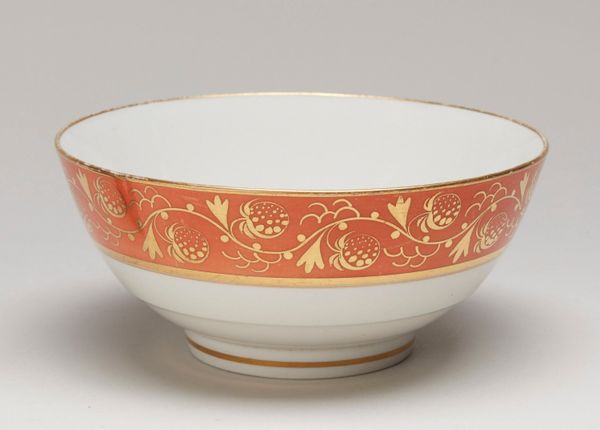
Following the Battle of Waterloo in 1815, the British government provided the defeated French emperor Napoleon Bonaparte with a retirement home called New Longwood House on the island of St. Helena and employed the sculptor and cabinetmaker George Bullock to design most of the furnishings. Nothing seems to have escaped Bullock’s attention, including the toothbrush holder, soap dish, ewer and basin which would have been en suite with this Grecian krater-shaped pot as part of Napoleon’s chamber set. As the laurel wreath decoration within the Pompeian red border is traditionally associated with the victor rather than the vanquished, the chamber set never saw service on St. Helena. Rather, it spent all of its useful life in an English country house called Tew Park in Oxfordshire. Bullock ordered ceramics from several factories for the St. Helena commission; so the basin may have been manufactured by Wedgwood, Derby, Spode, or the Herculaneum Pottery in Liverpool.


Join the conversation
Join millions of artists and users on Artera today and experience the ultimate creative platform.
 Collect
More like this