ceramic
#
asian-art
#
ceramic
#
stoneware
#
decorative-art
Dimensions: 3 7/8 x 6 1/8 x 6 1/8 in. (9.84 x 15.56 x 15.56 cm)
Copyright: No Known Copyright
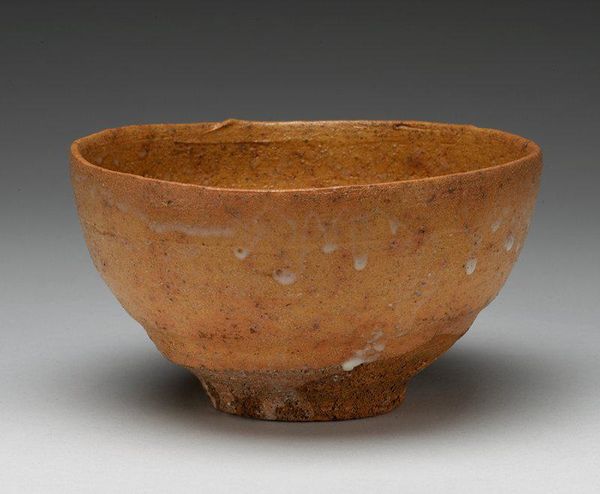
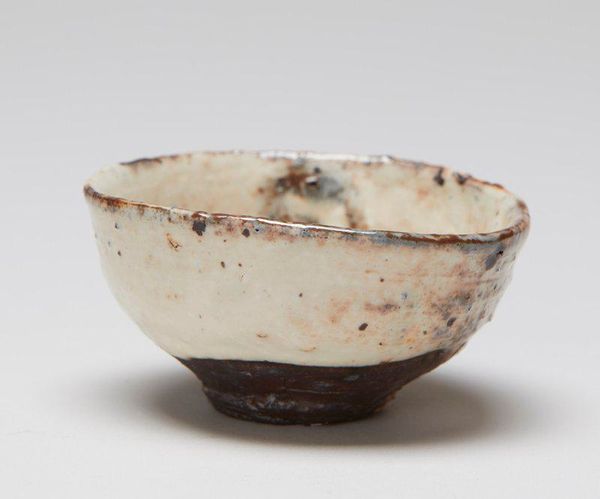
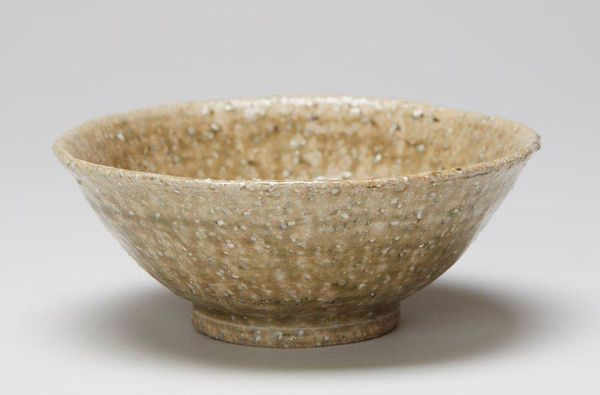
Editor: Here we have Tsujimura Shiro’s “Ido-style tea bowl” made of stoneware, crafted in 2002. I find it has such a wonderfully imperfect feel about it. How would you approach an interpretation of this piece? Curator: Initially, note the asymmetry and the somewhat coarse texture. This stoneware tea bowl is a study in contrasts. The creamy glaze is punctuated by dark speckles, which draws attention to its material qualities. We must attend to the piece’s formal properties first: how do line, form, color and texture create a unified aesthetic experience? Editor: I see what you mean. So you are saying that its imperfections and shape are intrinsic and deliberate parts of the work itself. Curator: Precisely. The deliberate lack of perfect symmetry creates an organic, almost wabi-sabi effect. The color, too, appears to have depth created by the glazing. Do you see how the subtle variations affect the texture and contribute to a deeper understanding? Editor: Now that you mention it, yes! It’s not just a bowl, it is a conversation between form and function and between control and spontaneity, and of course, craftsmanship and intention. Curator: And ultimately, it shows that it’s the totality of these aspects that defines its character, not just any one singular part in isolation. It seems we're on the same page about this stoneware tea bowl! Editor: Definitely! It highlights the complexity even in apparently simple forms. Thanks for sharing that perspective.
Comments

minneapolisinstituteofart over 2 years ago
⋮
Like many contemporary Japanese ceramists, Tsujimura Shiro produces pottery in a variety of historic styles. For this tea bowl, he was inspired by the simple bowls first imported from Korea in the sixteenth century. Because of their generous proportions, the Japanese dubbed these bowls "ido" or "deep well," and they became popular for use in the tea ceremony. Typically, the potter covered the rough clay body with a light-colored slip before applying a transparent ash glaze. Pieces of sand in the clay broke through the slip in the intense heat of the kiln, creating the mottled coloration and appealing texture that characterizes this bowl.


Join the conversation
Join millions of artists and users on Artera today and experience the ultimate creative platform.
 Collect
More like this