print, photography, gelatin-silver-print
#
still-life-photography
# print
#
landscape
#
flower
#
photography
#
gelatin-silver-print
#
naturalism
#
modernism
Dimensions: height mm, width mm
Copyright: Rijks Museum: Open Domain
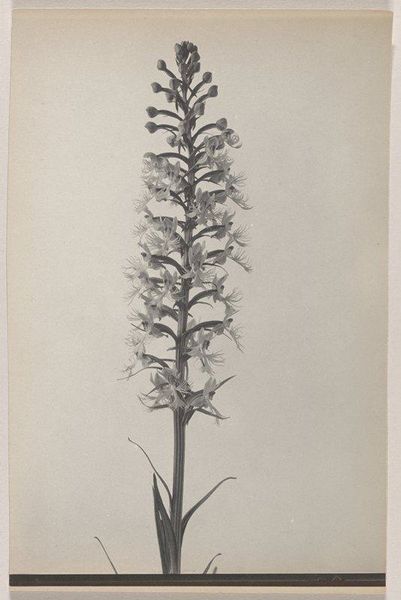
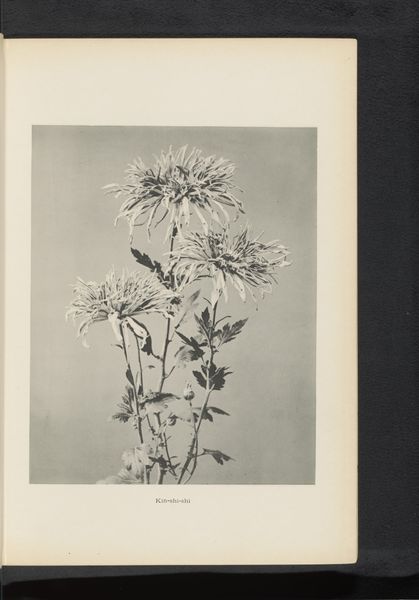
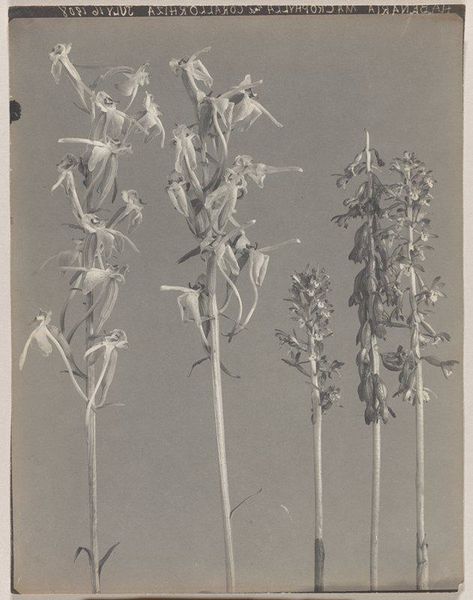
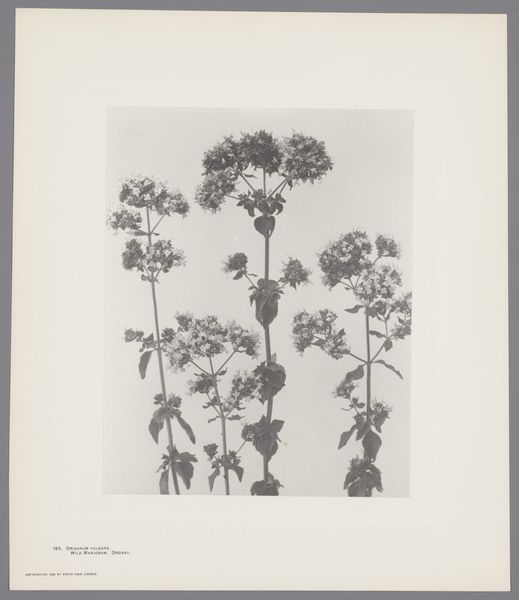
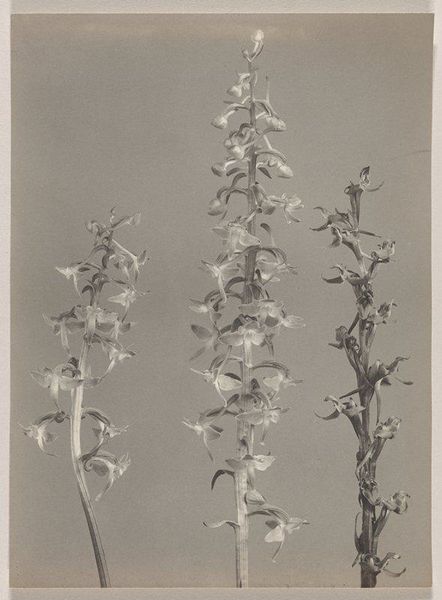
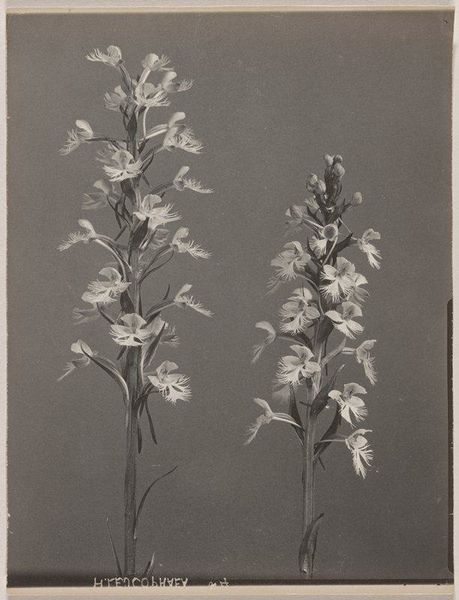
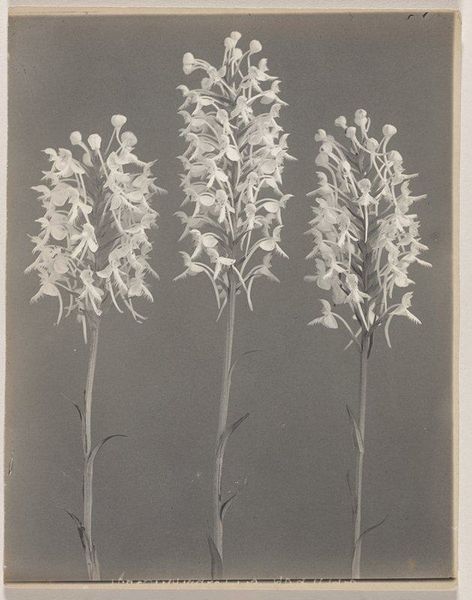
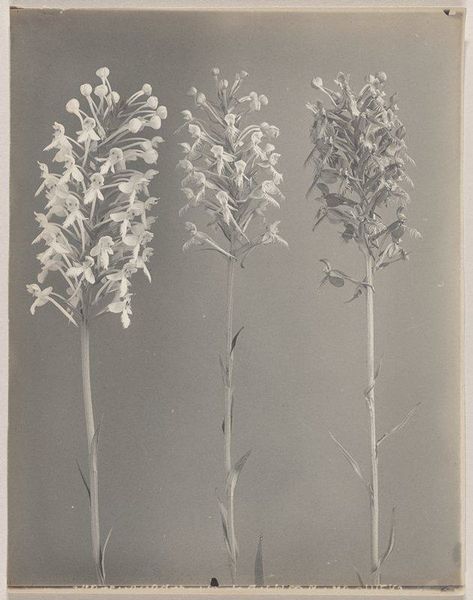
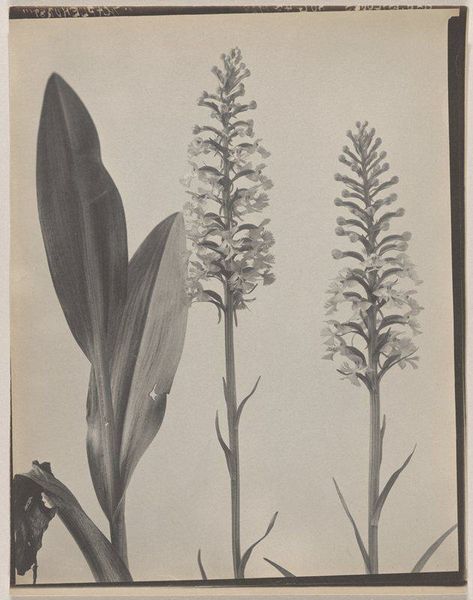
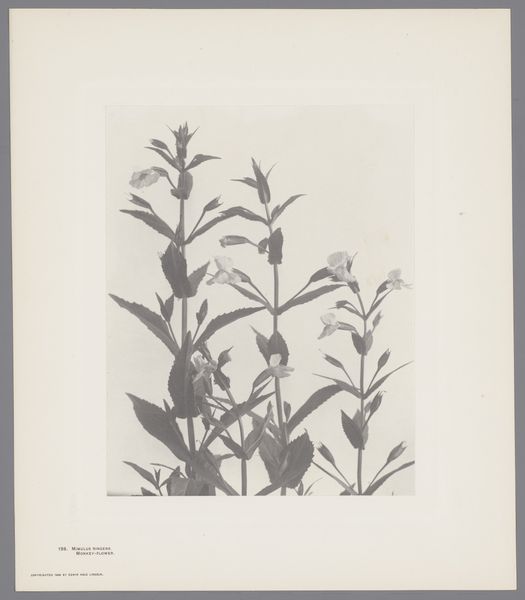
Curator: What strikes me first is the incredible detail captured in this gelatin silver print by Edwin Hale Lincoln. It’s titled “Drie bloemstillevens uit Wild Flowers of New England,” dating back to 1905. Editor: My immediate impression is one of serene simplicity. The monochrome palette and the stark arrangement of the plants evoke a feeling of quiet contemplation, wouldn’t you say? It looks less like capturing “wild” flowers and more about controlled botanical observation. Curator: Precisely. Lincoln’s approach challenges conventional photography of his time. He uses the medium not just to document, but to meticulously craft compositions. Think about the labor involved in staging and photographing each flower so clearly. It becomes less about the inherent “wildness” and more about presenting them almost as specimens for study. Editor: That’s interesting because at that time, institutions like museums were grappling with how to display natural specimens in ways that would engage a broad audience. Do you think these photographs reflect some of those broader efforts in public education and scientific display? Curator: Absolutely. And considering photography's emergence as a dominant visual medium, we might also look at the socio-political role this artwork had back in 1905. Think about how accessible the art became because of being printed, against what were mostly unique paintings made accessible to a few. It gives art to more people! Editor: True. This touches on a broader shift. Photography, through prints like this, offered an almost democratic access to imagery. Also, in this case, access to flowers that folks might never encounter! Beyond the political, returning to my initial response, its effect on me lingers. It transcends being merely informative; the contrast is striking and brings drama to what could otherwise be simple stalks. Curator: Yes, the high contrast enhances their textural qualities too. Knowing the production of these pieces adds layers to appreciate it even more. Thanks for shining light onto it with your insight! Editor: And thank you. Considering its history helps connect this photographic still-life back to relevant cultural, political moments. Fascinating to think about even now.
Comments
No comments
Be the first to comment and join the conversation on the ultimate creative platform.
 Collect
 React
React Comment
More like this