About this artwork
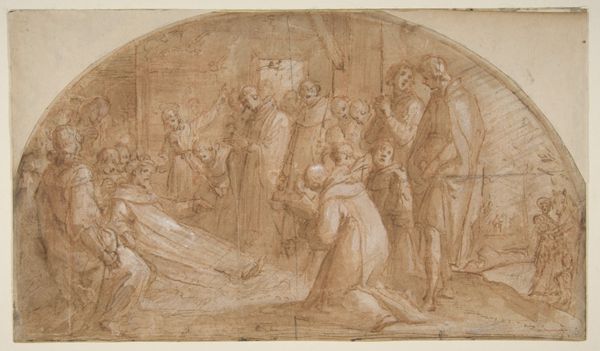
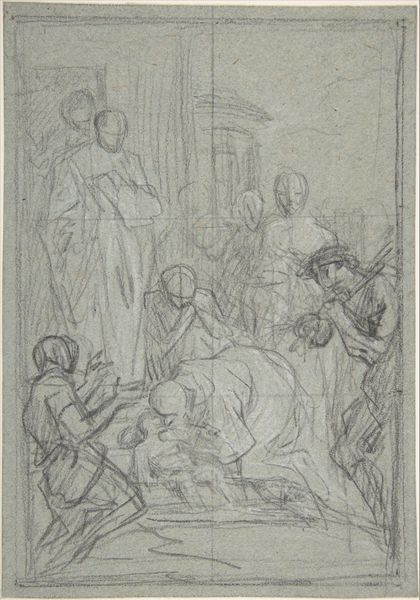
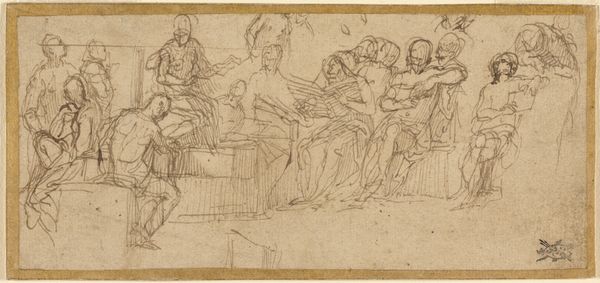
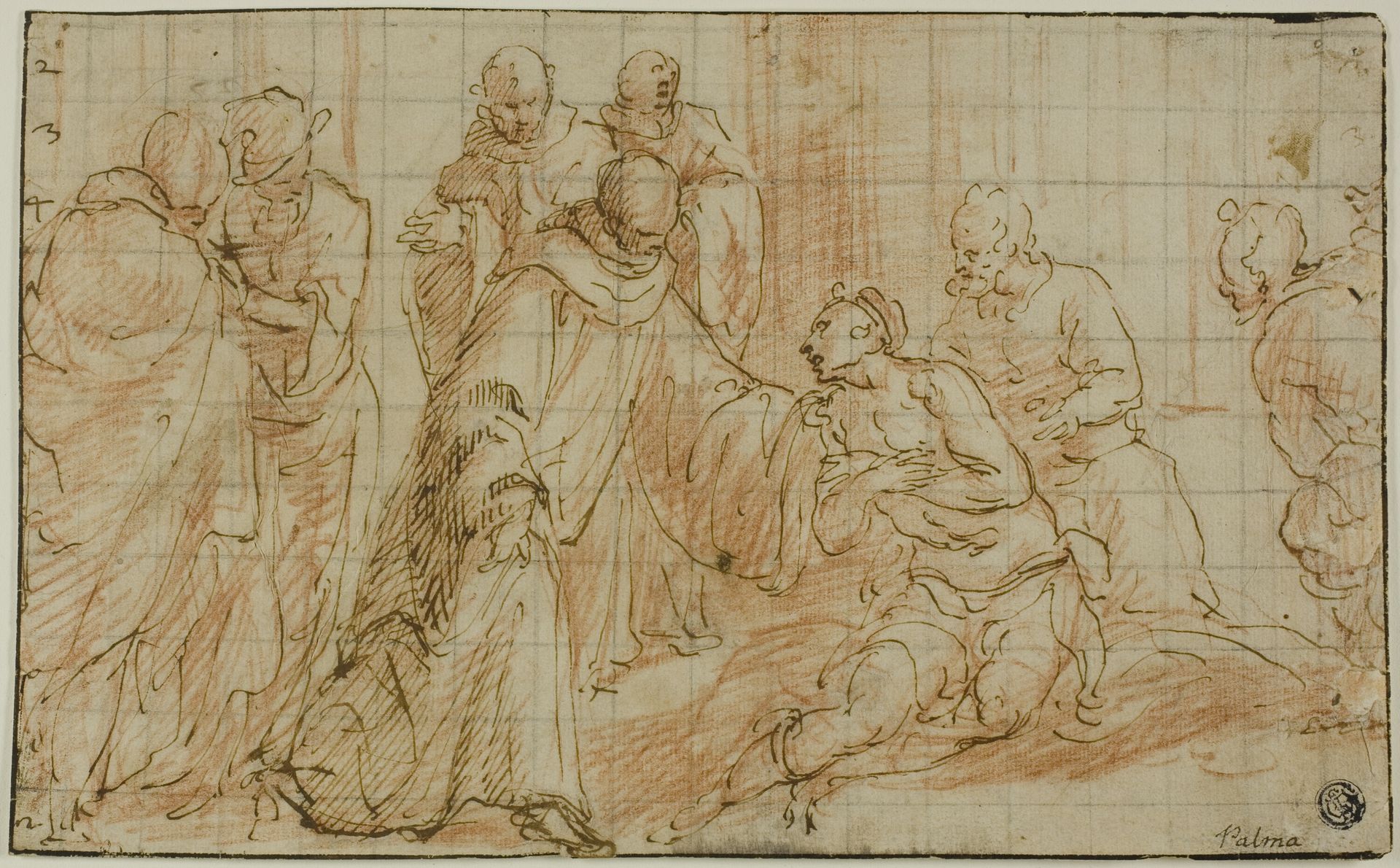
Curator: This is "Monastic Healing," a drawing currently residing at the Art Institute of Chicago. It's composed of pen, ink, chalk, and charcoal on paper, attributed to Pietro Malombra. The dating is, unfortunately, unknown. Editor: My first impression? It feels incredibly raw and immediate. Like witnessing a secret moment, maybe a pivotal one, caught in the sketchiest of terms. Curator: Indeed. It speaks to the core values inherent to monastic life. The symbolism here is direct, really. The supplication of the figure seeking comfort and healing contrasts vividly with the standing monks. Editor: Right, they form this wall, don't they? Between suffering and... what? Divine grace? Or maybe just institutional indifference? Curator: A stark interpretation! I see their formation as one of collective intention, communal strength focused on the ailing individual. Consider the tradition of "healing miracles" often depicted in medieval art. The act of healing affirms faith. Editor: I see your point about faith. But what strikes me about the composition is how much uncertainty there is, a precarity almost. I mean, the figures are so minimally drawn! Like ghosts inhabiting this grid-marked paper. Curator: Ah, yes. The grid implies process, doesn't it? This might have been a preliminary sketch, perhaps for a larger history painting. Think of how historical accounts were shaped in paintings, legitimizing dynasties or emphasizing critical historical narratives. Editor: I was fixating on the rawness and feeling… not to contradict but... that maybe that incompleteness *is* the point? The ambiguity enhances the humanity, the shared vulnerability. Less a grand history painting, more of a whisper of a moment. Curator: I do concede that feeling can be quite compelling! It invites the viewer into the drawing, filling in the missing details and completing the narrative for themselves. Editor: Exactly! Artistically, I appreciate the balance between intention and the freedom suggested. Curator: So, it’s an open text, wouldn't you say? Open to interpretation, speculation and perhaps ultimately...to empathy? Editor: Right. It’s in our silences, those sketchy places, that we truly begin to participate in it and almost, feel its reality.
Monastic Healing
n.d.


Artwork details
- Medium
- drawing, paper, ink, chalk, pen
- Dimensions
- 175 × 285 mm
- Location
- The Art Institute of Chicago
- Copyright
- Public Domain
Tags
drawing
medieval
charcoal drawing
figuration
paper
ink
chalk
pen
history-painting
Comments
Be the first to share your thoughts about this work.
About this artwork
Curator: This is "Monastic Healing," a drawing currently residing at the Art Institute of Chicago. It's composed of pen, ink, chalk, and charcoal on paper, attributed to Pietro Malombra. The dating is, unfortunately, unknown. Editor: My first impression? It feels incredibly raw and immediate. Like witnessing a secret moment, maybe a pivotal one, caught in the sketchiest of terms. Curator: Indeed. It speaks to the core values inherent to monastic life. The symbolism here is direct, really. The supplication of the figure seeking comfort and healing contrasts vividly with the standing monks. Editor: Right, they form this wall, don't they? Between suffering and... what? Divine grace? Or maybe just institutional indifference? Curator: A stark interpretation! I see their formation as one of collective intention, communal strength focused on the ailing individual. Consider the tradition of "healing miracles" often depicted in medieval art. The act of healing affirms faith. Editor: I see your point about faith. But what strikes me about the composition is how much uncertainty there is, a precarity almost. I mean, the figures are so minimally drawn! Like ghosts inhabiting this grid-marked paper. Curator: Ah, yes. The grid implies process, doesn't it? This might have been a preliminary sketch, perhaps for a larger history painting. Think of how historical accounts were shaped in paintings, legitimizing dynasties or emphasizing critical historical narratives. Editor: I was fixating on the rawness and feeling… not to contradict but... that maybe that incompleteness *is* the point? The ambiguity enhances the humanity, the shared vulnerability. Less a grand history painting, more of a whisper of a moment. Curator: I do concede that feeling can be quite compelling! It invites the viewer into the drawing, filling in the missing details and completing the narrative for themselves. Editor: Exactly! Artistically, I appreciate the balance between intention and the freedom suggested. Curator: So, it’s an open text, wouldn't you say? Open to interpretation, speculation and perhaps ultimately...to empathy? Editor: Right. It’s in our silences, those sketchy places, that we truly begin to participate in it and almost, feel its reality.
Comments
Be the first to share your thoughts about this work.