About this artwork
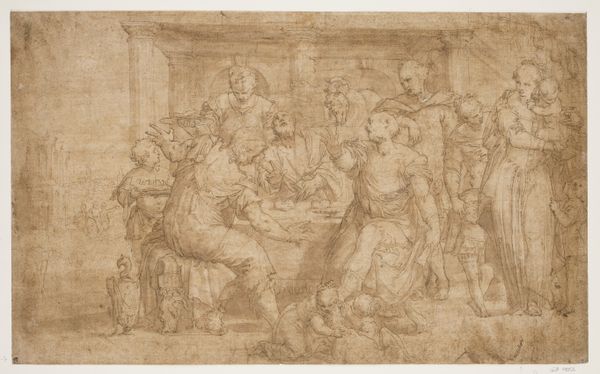
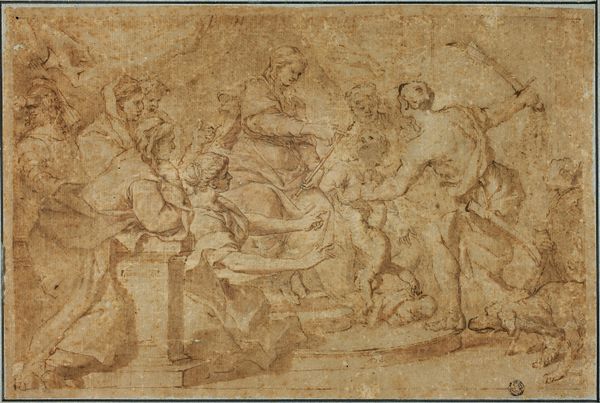
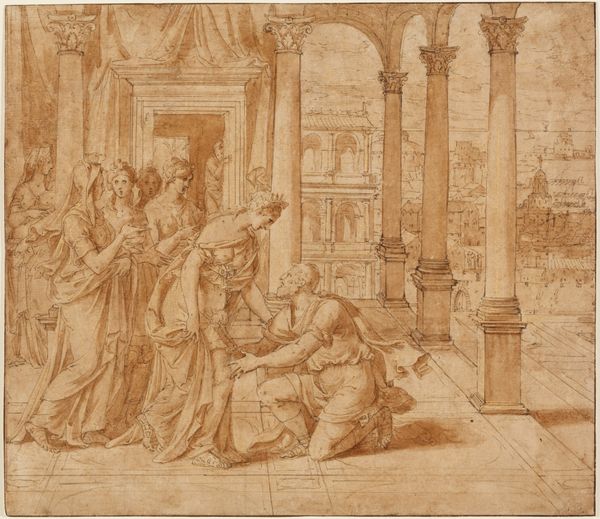
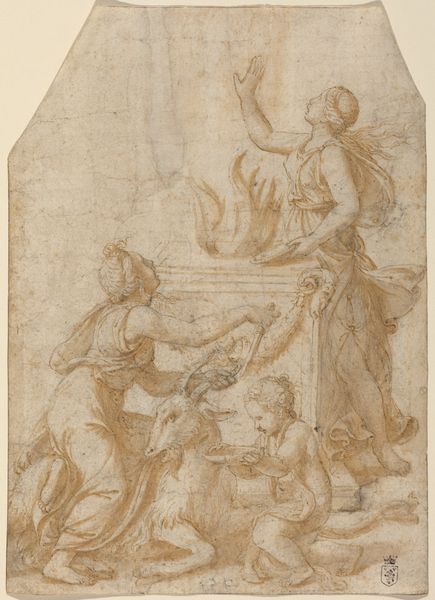
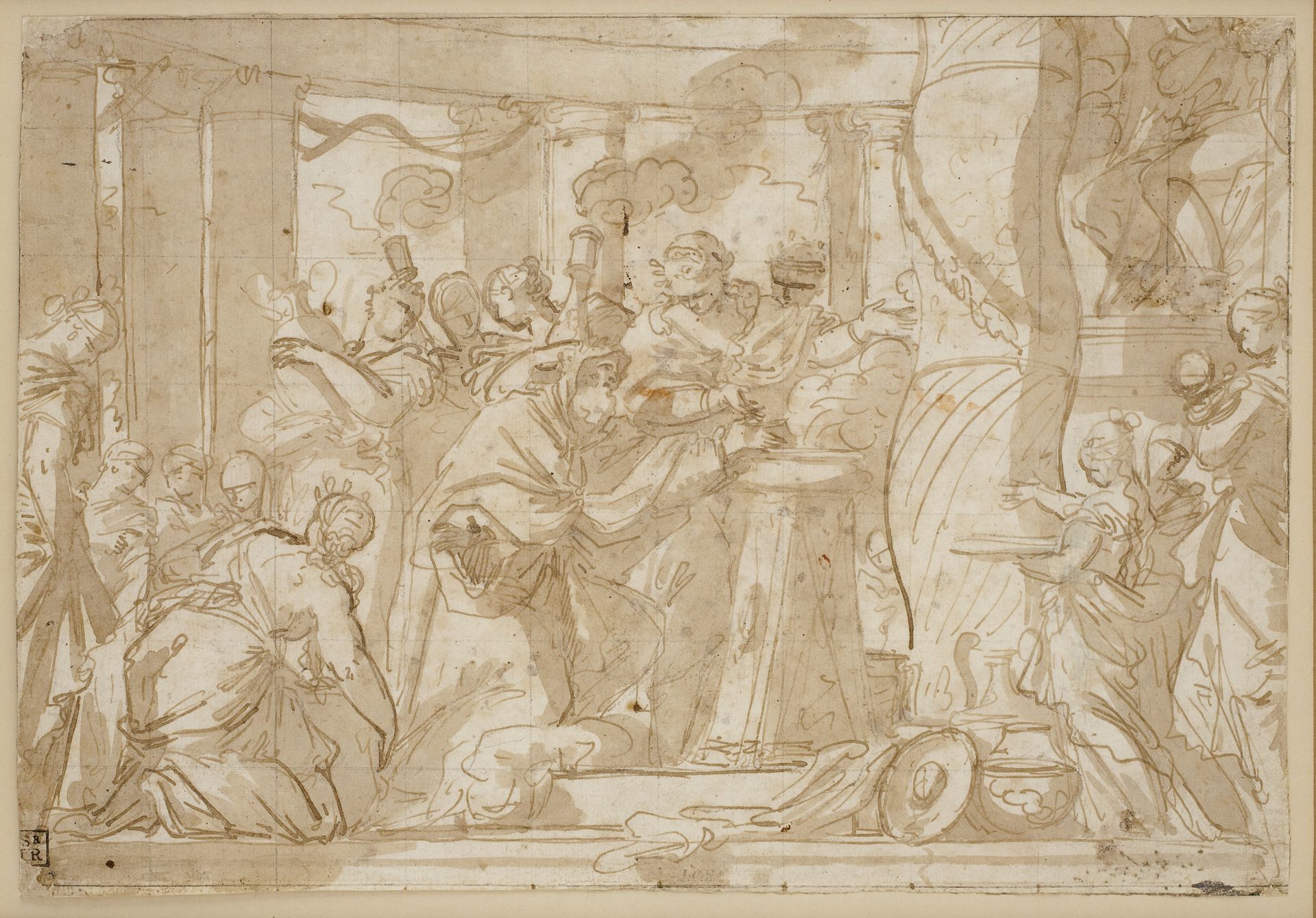
This drawing, "The Idolatry of Solomon," of unknown date, presents a narrative steeped in cultural and religious tension. It was made by an anonymous artist. The scene depicts King Solomon, a figure revered in Jewish tradition, led astray into idolatry, often interpreted as succumbing to the influence of his foreign wives. The artist captures a pivotal moment of cultural transgression. The act of idolatry undermines the uniqueness of the Hebrew God. The drawing invites reflection on the dangers of cultural assimilation, particularly how relationships and personal desires intersect with religious convictions. The expressions and gestures of the figures add an emotional layer, hinting at the internal conflicts and the external pressures at play. Ultimately, the drawing serves as a reminder of the complexities inherent in navigating cultural and religious boundaries. The artist compels us to consider the consequences of power, desire, and cultural exchange.
The idolatry of Solomon
1637 - 1677


Artwork details
- Medium
- drawing, paper, ink, charcoal
- Dimensions
- 210 mm (height) x 302 mm (width) (bladmaal)
- Location
- SMK - Statens Museum for Kunst
Tags
Comments
Share your thoughts
About this artwork
This drawing, "The Idolatry of Solomon," of unknown date, presents a narrative steeped in cultural and religious tension. It was made by an anonymous artist. The scene depicts King Solomon, a figure revered in Jewish tradition, led astray into idolatry, often interpreted as succumbing to the influence of his foreign wives. The artist captures a pivotal moment of cultural transgression. The act of idolatry undermines the uniqueness of the Hebrew God. The drawing invites reflection on the dangers of cultural assimilation, particularly how relationships and personal desires intersect with religious convictions. The expressions and gestures of the figures add an emotional layer, hinting at the internal conflicts and the external pressures at play. Ultimately, the drawing serves as a reminder of the complexities inherent in navigating cultural and religious boundaries. The artist compels us to consider the consequences of power, desire, and cultural exchange.
Comments
Share your thoughts