c. 19th century
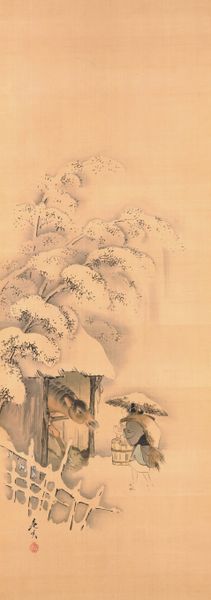
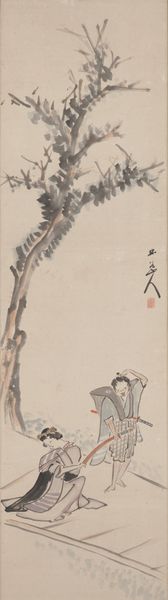
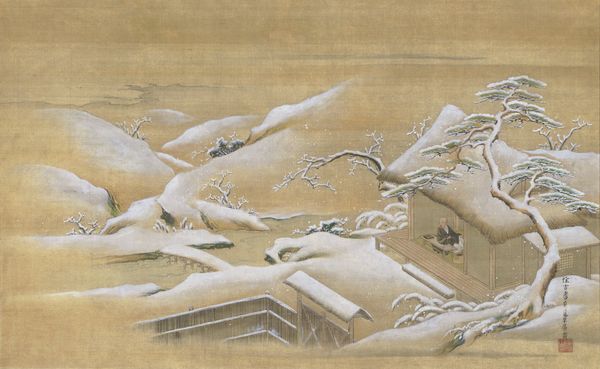
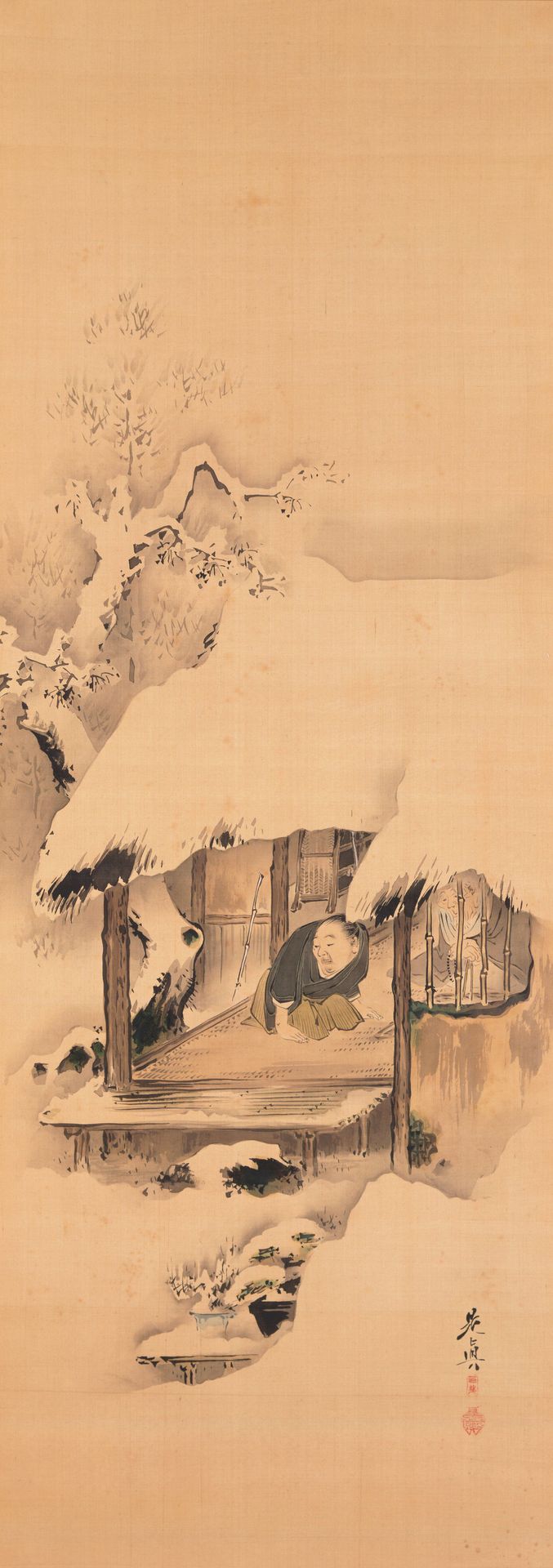
Noh Play Hachinoki


Listen to curator's interpretation
Curatorial notes
Editor: Here we have Shibata Zeshin’s "Noh Play Hachinoki," likely from the 19th century, using ink, watercolor, and tempera on a hanging scroll. It's so serene, a solitary figure in a snow-laden hut. What story does this image tell? Curator: Well, on the surface, we see a humble dwelling buried in snow, reflective of a quiet poverty. But look closer—it illustrates a scene from the Noh play "Hachinoki," which romanticizes the samurai ethic of frugality and hidden valor. Consider when and for whom this was made; Meiji-era Japan was actively constructing a national identity rooted in carefully selected narratives about the past. Editor: So it's not just about the image itself, but how that image functions within a larger cultural framework. Was Zeshin commenting on this romanticized view? Curator: Possibly. Zeshin was an innovative artist acutely aware of both traditional techniques and Western styles. He wasn't simply illustrating the tale, but actively engaging with its ongoing social relevance, perhaps subtly questioning the idealization of poverty within a rapidly modernizing society obsessed with forging a sense of national unity. Notice how the starkness emphasizes a sense of hardship which aligns perfectly with how Bushido values austerity. Editor: I hadn’t considered the socio-political undercurrent. It really prompts you to look past the surface-level narrative! I wonder how contemporary audiences reacted? Curator: Exactly! The art world isn’t simply separate, but an arena of these very same issues, which gives greater depth to each interpretation. Editor: This completely shifted my perspective. Thanks so much!